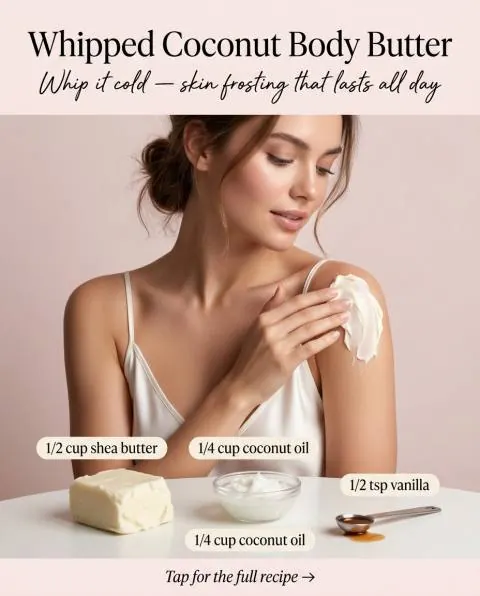
Shea & Vanilla Whipped Body Butter
A fluffy whipped butter that drenches dry skin in richness — shea and coconut melt in while vanilla wraps you in warm sweetness.

You will need
- 1/2 cup shea butter
- 2 tbsp coconut oil
- 1 tbsp almond oilno almond oil? use light olive oil
- 1/2 tsp vanilla extract
The ritual
- Gently melt shea and coconut oil over a warm water bath, then stir in almond oil and vanilla.
- Chill 30-40 minutes until half-set and cloudy.
- Whip with a hand mixer 3-4 minutes until light and fluffy like frosting.
- Scoop into a jar; smooth over damp skin after showering.
The mistake most people make
Graininess is the heartbreak here, and it nearly always comes from heat. When shea gets too hot and then cools slowly, some of its fats crystallise into tiny hard beads, and the finished butter turns sandy instead of silky. Melt it gently over barely simmering water, lift it off the moment it turns liquid, and chill it promptly before whipping. If grains appear anyway, re-melt the batch fully and cool it fast in the fridge before whipping again.
Why these ingredients
- 1/2 cup shea butter
- The body of the whip — a rich butter that sits on skin and slows water loss, which is why dry skin feels better for longer.
- 2 tbsp coconut oil
- Firms the texture as it cools and gives that satiny slip.
- 1 tbsp almond oil
- Lightens the blend so it sinks in instead of sitting greasy.
- 1/2 tsp vanilla extract
- Scent only — it's what makes the jar smell like a bakery.
Smart swaps
- 1/2 cup shea butter → Mango or cocoa butter (cocoa sets harder).
- 2 tbsp coconut oil → Olive oil for a softer, more spreadable whip.
- 1 tbsp almond oil → Jojoba or sunflower oil (better for nut allergies).
- 1/2 tsp vanilla → A few drops of any skin-safe essential oil, or nothing at all.
Keep it clean
Mix with freshly washed hands and clean, dry bowls and spoons. If a recipe is stored, use a jar or bottle washed in hot soapy water and dried completely, and never dip wet fingers into the batch.
Who should skip it
Anyone with a tree-nut allergy should treat this with respect: almond oil is pressed from a nut, and coconut disagrees with some people too. Very oily or breakout-prone skin may find it too rich for the chest and back. Whatever your skin type, smooth a little on your inner arm and give it a full day as a patch test.
Storage & when to let go
Room temp, sealed, 2-3 months. In hot weather it softens; a quick re-whip brings it back.
What to expect — honestly
On dry arms, legs and elbows this is genuinely lovely — richer than most lotions, and it lasts. It is an occlusive moisturiser, so it seals in water rather than adding any: apply on slightly damp skin for the best of it. Keep it off the face if you're acne-prone, and know that it melts above roughly 24°C — a grainy jar just needs re-melting and re-whipping cold.
Where it fits in your week
Use it the way you would any body cream — straight after a shower, on skin still slightly damp, as often as every day. Elbows, heels and shins drink it up. Once a week, pair it with a gentle body scrub or a flannel buff first so it sinks in rather than sitting on dry flakes. Allow a few minutes before dressing; it wants a moment to absorb.
Common questions
Is it greasy?
A little goes far — use a pea-size scoop and massage in; it absorbs in a minute.
Face too?
It's rich for the body; on the face only try it on very dry patches at night.
How long will a jar last before it goes off?
Because there is no water in it, this butter keeps well — around three months at room temperature, longer somewhere cool. The vanilla extract adds a whisper of moisture, so always scoop with clean, dry fingers or a small spoon. If the smell turns sharp or crayon-like, the oils have oxidised and it is time for a fresh batch.
It melted into a puddle in my bathroom — is it ruined?
Not ruined, just warm. Shea and coconut both soften near body temperature, so a sunny windowsill or a steamy bathroom will collapse the whip. The mixture is still perfectly usable as a solid balm, or you can chill it until half-set and whip it again to bring the fluff back. Store it somewhere consistently cool.
Can I use it on my hair?
A tiny amount smoothed over dry ends works nicely as a finishing balm, and many people find it tames frizz on thick or curly hair. Keep it well away from the roots, though — this much butter near the scalp tends to weigh fine hair down and takes more than one wash to shift.
This recipe is shared for general cosmetic enjoyment, not medical advice — see how we research and write in our editorial policy and the full safety guide.