Vanilla Coffee Body Polish
✨ Your morning coffee can give you baby-soft skin
Wake up your skin with fresh-ground coffee, brown sugar and warm vanilla.
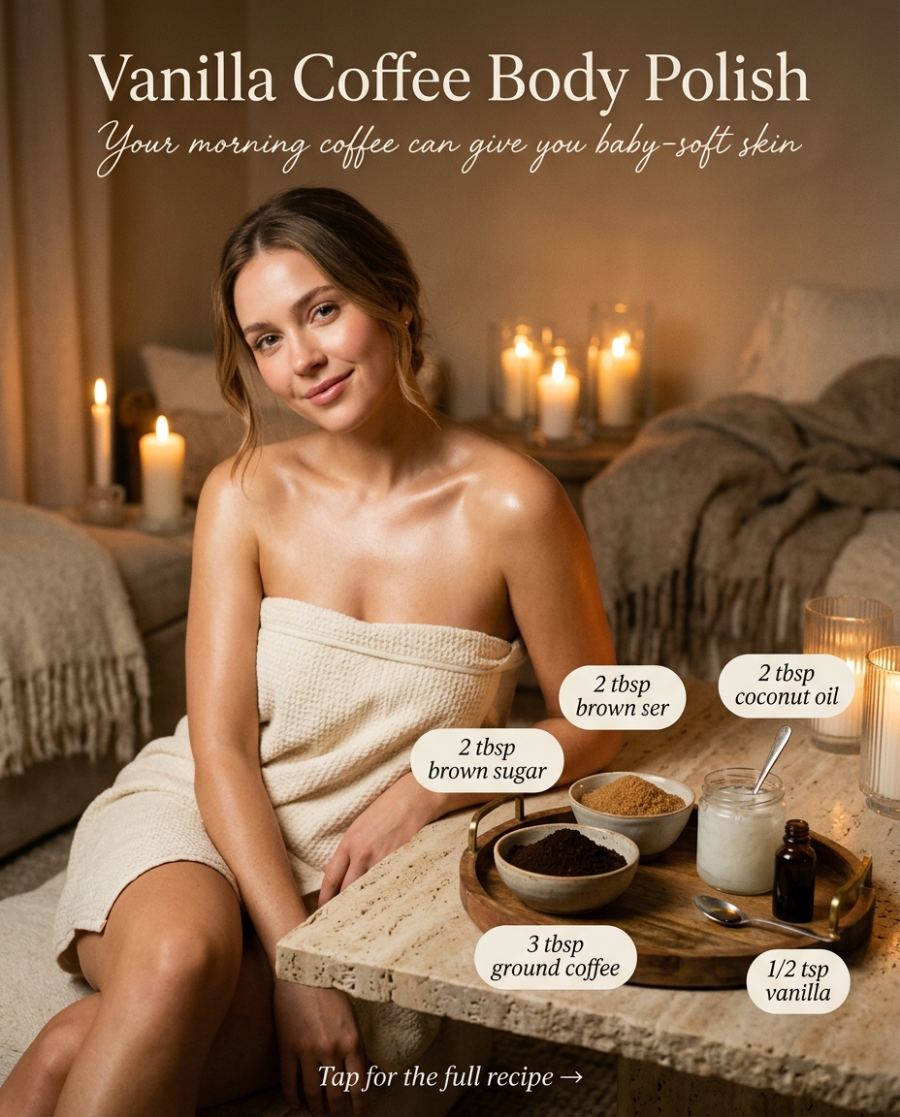
- 3 tbsp ground coffee
- 2 tbsp brown sugarno brown sugar? use white sugar
- 2 tbsp coconut oil, meltedno coconut oil? use olive oil
- ½ tsp vanilla extract
- Stir coffee and brown sugar together.
- Pour in melted coconut oil and vanilla; mix to wet sand.
- Massage in slow circles from ankles up.
- Rinse warm and pat dry.
Coffee earns its place here twice over. The grounds are a firm yet rounded physical exfoliant, buffing away the dry, flaky layer that makes skin look grey, while the caffeine they hold is a familiar cosmetic ingredient — many people find skin looks briefly smoother and more awake where it has been massaged in.
Brown sugar plays the softer partner. Its crystals dissolve as you work, so the polish becomes gentler the longer you massage, and the molasses that gives it colour is mildly humectant, leaving a whisper of moisture behind rather than a scoured feeling.
Melted coconut oil binds the jar together and stays on as a fine emollient layer after rinsing — it is rich in lauric acid, so you step out of the shower already lightly moisturised. The vanilla extract does no heavy lifting at all; it simply makes the whole ritual smell like breakfast pastries, which is reason enough.
Pressing too hard is the one that catches everyone. The coffee grounds are doing the work already, so grinding them into your skin with force leaves you pink and tender rather than polished. Use flat palms and slow, light circles, letting the texture — not your muscles — do the exfoliating, and spend no more than a minute or so on each area. Skin should look warm and rosy afterwards, never scratched or sore.
The finished polish looks and behaves like damp, fragrant dark sand — it should clump softly in your hand and smell of coffee and warm vanilla, like the corner of a good café. If a pool of oil sits on top, simply stir it back through; if it smells musty or you spot any dark fuzz, water has got in and the jar must go.
- 2 tbsp coconut oil, melted → 2 tbsp sweet almond oil If coconut is off the menu for allergy reasons, or you prefer an oil that stays liquid in a cold bathroom.
- 3 tbsp ground coffee → 3 tbsp used, dried espresso grounds For a thriftier, slightly gentler scrub — spent grounds have softer edges and cost nothing.
- 2 tbsp brown sugar → 2 tbsp fine white sugar When brown sugar has run out — the polish loses its caramel note but scrubs just the same.
Give this one a miss if coconut disagrees with you, and go gently if your skin is very reactive, as coffee can tingle. Avoid freshly shaved or waxed areas, sunburn and any broken skin — sugar and grounds are not kind to them. Test a small patch on your forearm the day before your first full scrub.
Once or twice a week in a morning shower is the sweet spot; the coffee scent alone argues for daylight hours. Scrub before shaving rather than after, and follow with body cream while skin is still damp. On the days between, let skin rest — daily scrubbing tends to undo the very softness you are chasing.
Can I use it on my face?
No — the grains are too coarse. Use the Rosewater Lip Scrub or a soft oat mask for the face.
Does coffee really help with cellulite?
It smooths and firms the look of skin temporarily thanks to circulation — lovely, but not permanent. We keep it honest here.
Will it stain my shower or towels?
The grounds rinse cleanly from tiles and most bathtubs, though pale grout appreciates a quick rinse-down afterwards. Towels are the real risk — coffee and coconut oil can both mark white cotton, so pat dry with a dark towel and wash it warm. A drain cover saves you fishing out grounds later.
Can I use this polish on my face?
It is built for the body — coffee grounds and sugar crystals are too abrasive for facial skin, which is thinner and quicker to complain. Stop at the collarbone. If you want gentle facial exfoliation, finely ground oats in a mask are the kinder route.
Does the grind size of the coffee matter?
Very much. A fine espresso-style grind gives a smooth, even polish, while coarse French-press grounds feel sharp and can be too much for softer areas like the chest and inner arms. If your coffee is coarsely ground, pulse it briefly in a grinder before measuring your 3 tablespoons.