Rosewater Sugar Lip Scrub
✨ 30 seconds to lips soft as rose petals
Two teaspoons of sweetness for petal-soft lips before your favourite lipstick.
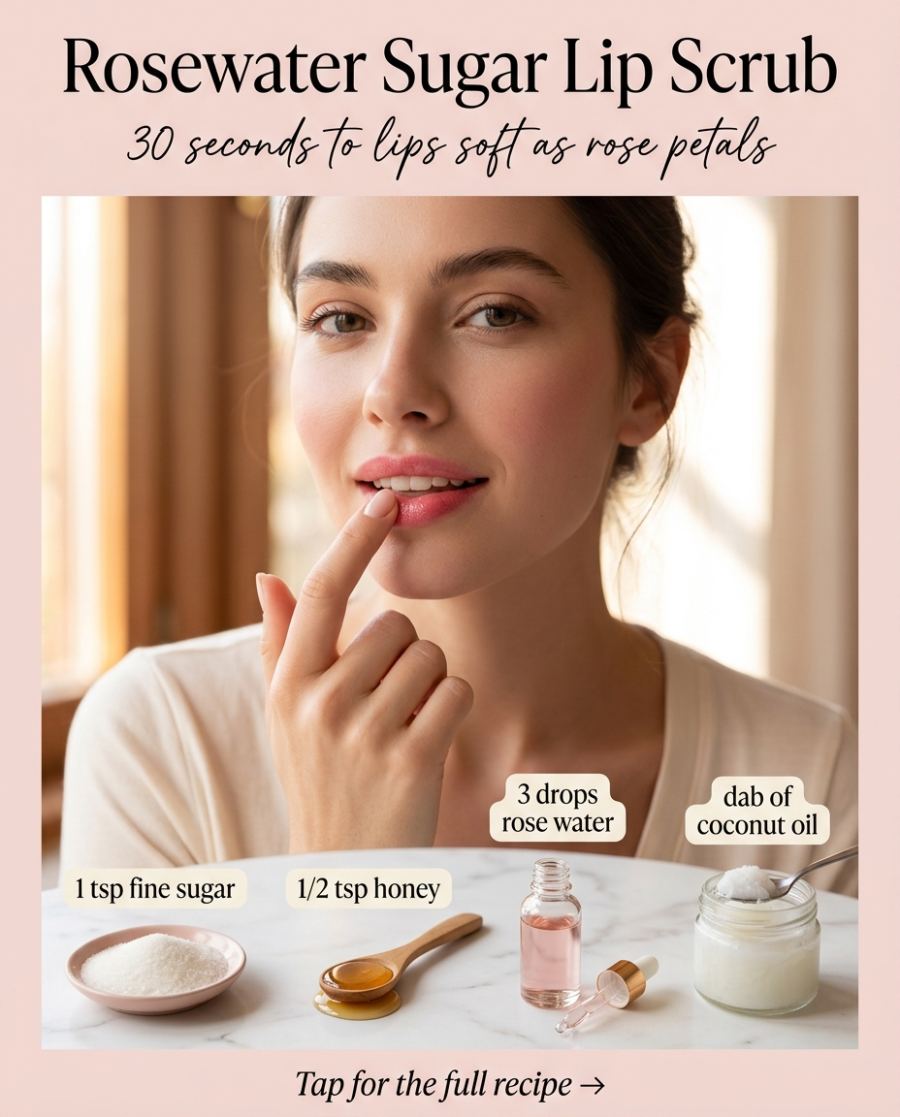
- 1 tsp fine sugarno fine sugar? use finely ground brown sugar
- ½ tsp honeyno honey? use maple syrup
- 3 drops rose waterno rose water? use cooled chamomile tea
- A dab of coconut oilno coconut oil? use olive oil
- Mix everything into a glossy paste.
- Massage onto lips in tiny circles for 30 seconds.
- Wipe away with a warm, damp cloth.
- Seal with a touch of coconut oil.
Fine sugar earns its place as the workhorse of this scrub. Each granule is a tiny, water-soluble polisher — firm enough to lift dry flakes from the lip surface, yet quick to dissolve as you massage, so it stops exfoliating before it can overdo things.
Honey is the quiet partner. As a natural humectant it draws water towards the skin and holds it there, which is why honey-based scrubs tend to leave lips feeling plumper rather than stripped. It also gives the paste its glossy slip, cushioning the sugar as it moves.
Rose water adds more than fragrance. Its gentle, slightly acidic character sits comfortably with the skin's own balance, and many people find it softens the whole experience — the scrub smells like a ritual rather than a chore.
Coconut oil finishes as an emollient seal, smoothing over freshly polished skin so the moisture you have just encouraged stays exactly where you want it.
The classic error is scrubbing too long and too hard, as though pressure equals softness. Lips have some of the thinnest skin on the face, and a full minute of enthusiastic rubbing leaves them raw rather than petal-soft. Keep to the thirty seconds in the recipe, use only the weight of your fingertip, and let the sugar dissolve as it works. If your lips feel hot or look bright red afterwards, you pressed too hard — go gentler next time.
Made right, the paste looks like glossy wet sand — thick, golden and faintly rose-scented, holding together without dripping. On the lips it feels gritty for the first few seconds, then increasingly silky as the sugar melts. Afterwards, lips should look pink and feel smooth under lipstick. If the mix turns watery or the sugar dissolves before you begin, it sat too long — stir up a fresh spoonful.
- 1 tsp fine sugar → 1 tsp soft brown sugar White sugar feels too sharp — brown granules are rounder and kinder on delicate lips.
- ½ tsp honey → ½ tsp maple syrup You avoid honey or keep a vegan routine; it gives a similar slip and sweetness.
- A dab of coconut oil → A dab of sweet almond oil or plain balm Coconut doesn't agree with you or simply isn't in the cupboard.
Anyone with a honey or coconut allergy should sit this one out, and the same goes for cold sores, cracked corners or freshly bitten lips — exfoliating broken skin only slows things down. If the skin around your mouth is reactive, patch-test the finished paste on your inner wrist and wait a day before using it on your lips.
Once or twice a week is plenty — lips renew themselves more slowly than they're given credit for. It slots most naturally into an evening ritual, or ten minutes before a matte lipstick when you want the colour to sit evenly. Don't follow it with peppermint balms or plumping glosses; freshly polished lips will find them stingy. A plain balm is the kinder finish.
How often should I scrub my lips?
1–2 times a week — before a big lipstick day is the classic move.
Can I swallow a little by accident?
Everything in it is food-grade, so yes — it's fine (and a little sweet).
Can I use coarse or golden granulated sugar instead of fine?
Fine sugar is the safer choice because its smaller crystals have gentler edges and dissolve before they can over-polish. Coarse or raw sugar tends to feel scratchy on lip skin. If it's all you have, pulse it briefly in a grinder or crush it between two spoons until it resembles fine sand before mixing.
Is it a problem if I taste a little while scrubbing?
Every ingredient here is food-grade, so a stray taste is nothing to worry about — one reason this scrub is such a pleasure to use. That said, try not to lick your lips deliberately during or straight after; saliva dries the lip surface and undoes some of the softness you've just created.
Why are my lips flaky again a day later?
A scrub removes what's already loose; it doesn't change why lips dry out in the first place. Central heating, sun, lip-licking and matte formulas all keep the cycle going. Seal with balm morning and night between scrubs, and many people find the flakes return far more slowly within a week or two.