Honey Lip Sleeping Mask
✨ Wake up with pillow-soft lips
A honey-shea pillow mask that repairs lips while you dream.
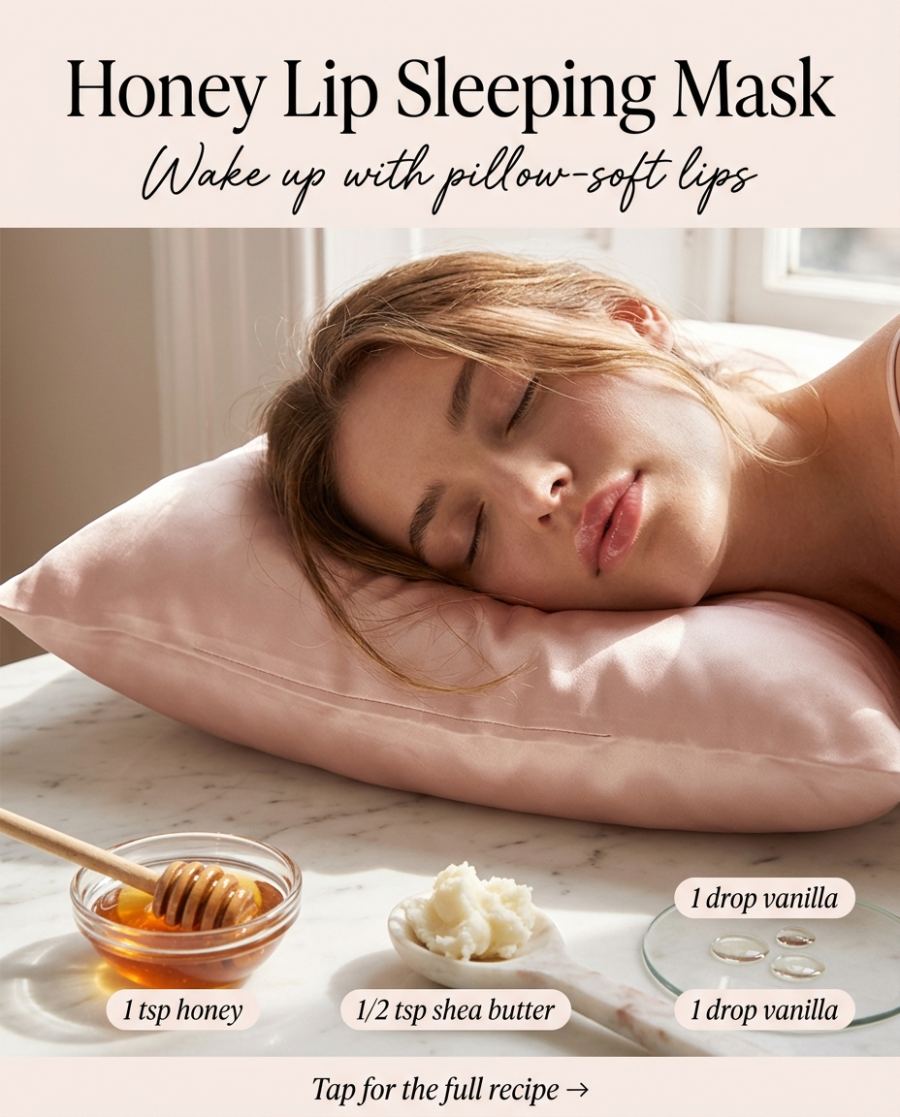
- 1 tsp honeyno honey? use maple syrup
- 1/2 tsp shea butterno shea butter? use chilled coconut oil
- 1 drop vanilla
- Soften shea butter between your fingertips.
- Blend in honey and vanilla to a silky balm.
- Press a thick layer onto lips at bedtime.
- Wake up, wipe the excess, smile.
Honey earns its place through humectancy: its concentrated sugars draw water towards the lip surface and hold it there, while its naturally low water activity makes it an unfriendly home for the microbes that spoil homemade balms. That is a large part of why this mask keeps happily in a jar for a fortnight.
Shea butter answers honey's water-pulling with water-keeping. Rich in stearic and oleic fatty acids plus a generous unsaponifiable fraction, it melts at body temperature into an occlusive film — a soft seal that slows moisture escaping overnight, which is exactly when lips, having no oil glands of their own, lose water fastest.
The drop of vanilla is there for the ritual as much as anything, though a pleasant scent does honest work too: a mask you enjoy wearing is a mask you actually reapply, and gentle consistency is what tends to turn rough lips smooth.
Most people ruin this balm at the very first step by melting the shea rather than softening it. Fully melted shea that cools slowly recrystallises into hard little grains, and no amount of stirring rescues a gritty balm. Work the butter between clean fingertips, or against the side of a warm bowl, until it is merely creamy, then blend in the honey. If you have melted it by accident, chill the jar quickly so any crystals stay small.
Expect a thick, glossy, amber-tinted balm with the scent of warm vanilla toast, and a texture that clings rather than drips. On lips it should feel cushioned, almost upholstered. If the honey separates into a syrupy layer, or the balm turns grainy like semolina, the blend has failed — soften and re-mix rather than persevering.
- 1/2 tsp shea butter → 1/2 tsp cocoa butter tree nuts are a worry, or you fancy a firmer balm with a faint chocolate note
- 1 tsp honey → 1 tsp agave syrup you are vegan or allergic to honey — you lose some of honey's keeping power, so make even smaller batches
- 1 drop vanilla → nothing at all your lips are cracked or easily upset — flavourings are the most common tinglers in lip products
Give this one a miss if honey allergies run in your life, and approach thoughtfully if you react to tree nuts, since shea is technically one. Deeply cracked or split lips may sting under honey's sugars, so let them settle first. Dab a trace on the inner wrist and wait overnight before committing to a full lip layer.
Run it nightly for the first week — consecutive nights are where this mask does its best work — then drop to two or three nights weekly for upkeep. It is the true final step of the evening, after skincare and after the toothbrush. Pair it with a soft lip scrub once a week at most; scrubbing more often undoes the softness you are building.
Will it stain my pillow?
Use a thin-but-generous layer and give it 2 minutes to settle before lights out.
How many nights until soft lips?
Most feel the difference after 2–3 nights straight.
Does the type of honey matter?
Any real honey works, but a thicker set or raw honey clings to lips better than runny squeeze-bottle types, which tend to migrate towards your chin by midnight. Darker honeys also bring slightly more of the trace acids and antioxidants, though for a lip mask the texture matters more than the pedigree.
Can I wear it during the day instead?
You can, in a thinner layer, though honey stays tacky and catches hair and wind-blown everything — which is why night is its natural home. For daytime, wipe most of it away after ten minutes and let the shea residue act as your balm; the softness lingers longer than you would expect.
Why has my balm gone grainy after a few days?
Temperature swings are usually the culprit — shea that warms on a sunny shelf and cools again forms gritty crystals. Keep the jar somewhere with a steady, coolish temperature, away from radiators and bathroom steam. If graininess appears anyway, simply soften the balm between your fingers as you apply; it melts smooth on contact.