Yogurt Cooling After-Sun
✨ The cold spoonful your summer skin asks for
Cold yogurt, aloe and cucumber — the fridge-door rescue for a long sunny day.
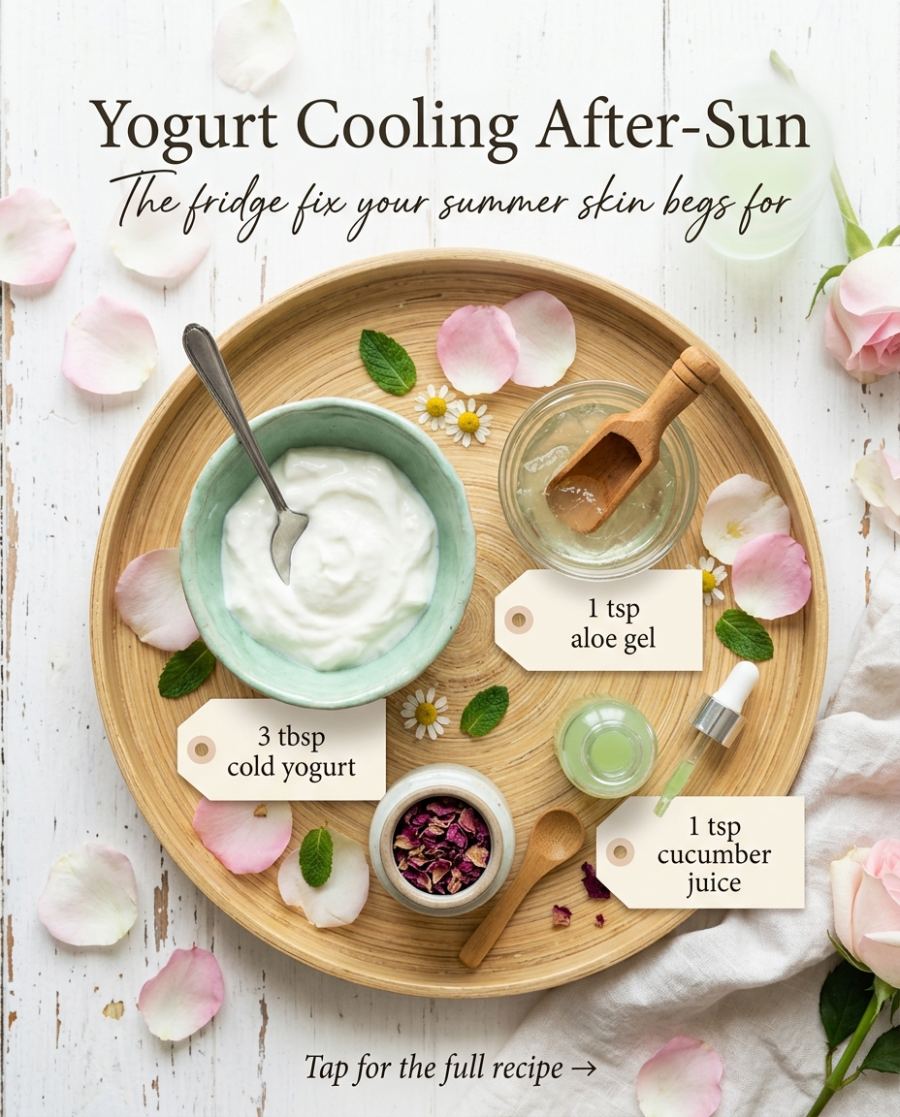
- 3 tbsp cold yogurtno yogurt? use sour cream or kefir
- 1 tsp aloe gelno aloe gel? use chilled cucumber pulp
- 1 tsp cucumber juice
- Stir cold yogurt with aloe and cucumber juice.
- Chill the bowl 10 minutes for extra relief.
- Smooth a thick layer over warm skin.
- Rest 15 minutes, rinse with cool water.
Temperature is half the recipe. Anything chilled eases the heat of sun-stressed skin, but yogurt holds its cold unusually well because it is dense, so the relief lasts the full fifteen minutes rather than a fleeting moment.
Beyond the chill, yogurt offers lactic acid at a very gentle, food-grade level, along with milk proteins and fats that settle over tight, dehydrated skin like a soft compress. Many people find that combination takes the shrink-wrapped feeling out of a sunned face and shoulders.
Aloe gel is the classic after-sun for good reason: its polysaccharides form a light, breathable film that holds water against the skin while everything calms down. Cucumber juice, meanwhile, is mostly water with trace minerals — its job here is simple hydration and that unmistakable green, spa-day scent, thinning the mixture so it glides on without dragging across tender areas.
Reaching for the wrong pot. Flavoured, sweetened or fruit-layered yogurts leave sugar sitting on already-stressed skin, and low-fat versions lack the very fats that make this mask feel soothing. You want plain, full-fat, unsweetened yogurt — thick Greek-style is ideal. Read the label before you stir: if sugar appears high in the ingredients list, that pot belongs at breakfast, not on a sun-pink shoulder.
Made right, this is a thick, cold, pale-green cream that goes on like chilled custard and smells milky and fresh, with a green whisper of cucumber. The first sensation should be a genuine temperature drop, then ease. Stinging that builds instead of fading means the skin is too compromised for dairy — rinse gently and switch to plain aloe.
- 3 tbsp cold yogurt → 3 tbsp cold coconut yogurt you are dairy-free — you lose the lactic acid but keep the cooling, cushioning fats
- 1 tsp cucumber juice → 1 tsp chilled chamomile tea there is no cucumber in the house — brew it strong and cool it completely first
- 1 tsp aloe gel → 1 tsp fresh gel scraped from an aloe leaf you grow the plant — rinse away the yellow sap under the rind before using
Anyone with a dairy allergy should swap the yogurt out entirely, and skin that is blistered, broken or weeping is a matter for a pharmacist, not the fridge. Very reactive skin may also find lactic acid too much straight after sun. Try a small patch on your inner arm before smoothing it anywhere tender.
This is a rescue, not a fixture — reach for it on the evening of a long outdoor day, ideally after a cool shower and before bed. Follow with a plain, bland moisturiser once rinsed. Give exfoliants, retinoids and perfumed products the night off, and keep the next few days gentle while your skin settles back to normal.
Why yogurt on sunburn?
Cold, probiotics and lactic acid calm the heat and tightness — an old lifeguard trick.
How soon after sun?
The sooner the better — same evening ideally.
Can I use it on my body as well as my face?
Yes — shoulders, chest and the back of the neck are exactly where a sunny day tends to land hardest. Simply scale the mixture up in the same proportions, keep everything cold, and rope in a helper for the places you can't reach. The fifteen-minute rest and cool rinse stay the same.
Why does it have to be made fresh each time?
Once yogurt, aloe and cucumber juice are stirred together and carried to a warm bathroom, the mixture becomes a very happy home for bacteria — and nothing in the recipe preserves it. Leftovers are not worth saving, even overnight in the fridge. Happily, it takes three minutes to make, so fresh costs you almost nothing.
Will it help once my skin starts to peel?
It may soften the tight, flaky stage and make peeling skin feel less itchy, and the cool application is welcome in itself. What it cannot do is stop the peeling — that is skin replacing itself on its own schedule. Keep the layer thin over flaking areas, moisturise well afterwards, and resist picking.