Overnight Rice Sleeping Mask
✨ Sleep in the glass-skin secret
Rice water, honey and aloe — sleep inside the glass-skin secret.
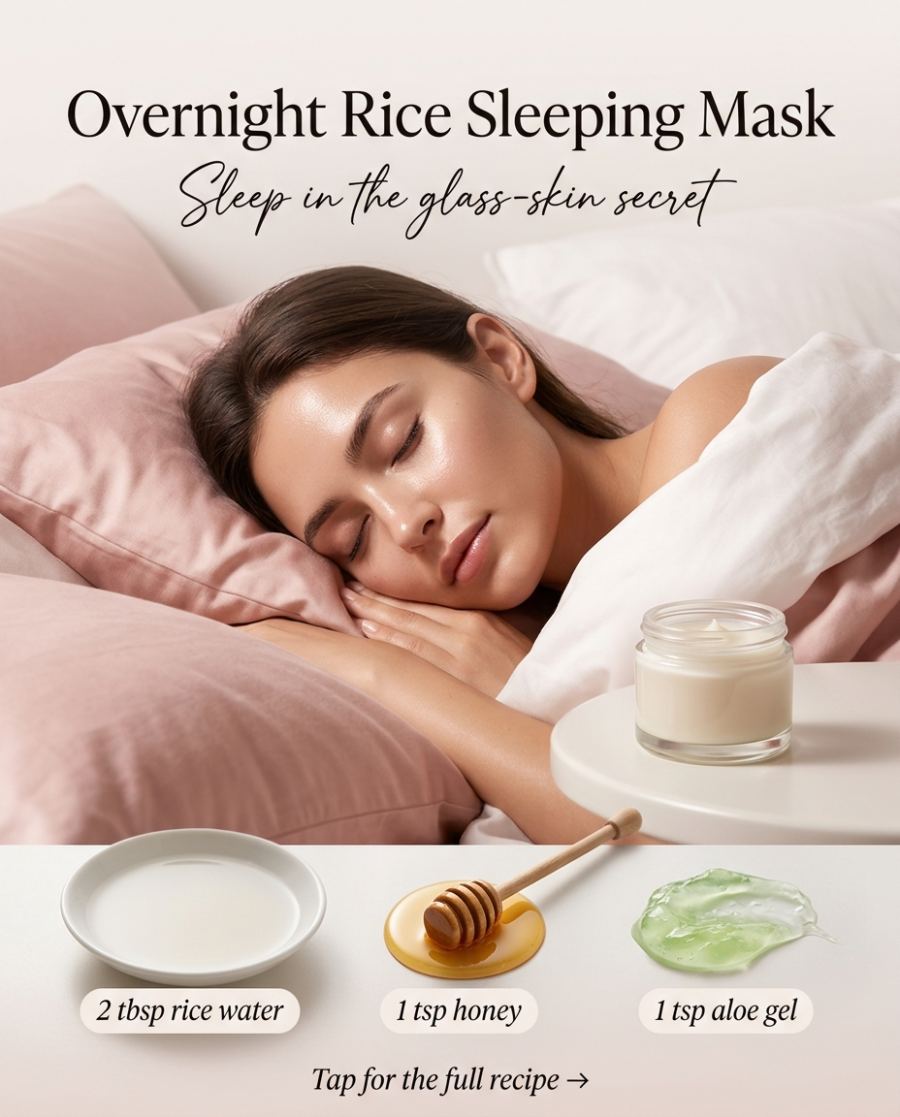
- 2 tbsp rice water
- 1 tsp honeyno honey? use maple syrup
- 1 tsp aloe gelno aloe gel? use chilled cucumber pulp
- Whisk rice water, honey and aloe.
- Press a thin layer onto clean skin at bedtime.
- Let it settle 5 minutes before the pillow.
- Rinse in the morning and admire.
Rice water carries dissolved starches and traces of amino acids left behind when the grains soak. On skin, that starch dries into a fine, flexible film that holds water against the surface overnight — which is precisely what dehydrated skin is short of. Many people find their face looks smoother and more light-reflective by morning simply because it is better hydrated, not because anything dramatic has happened.
Honey pulls in the same direction by a different route. It is a natural humectant, drawing moisture from the air and from deeper skin layers towards the surface, and its dense texture slows evaporation through the night.
Aloe gel supplies the slip. Its polysaccharides form a light, cooling layer that helps the mask spread thinly and settle without stickiness, and it tends to ease the tight feeling dehydrated skin develops by evening. Three humectant-leaning ingredients, one quiet overnight film — that is the whole trick behind the glass-skin reputation.
Almost everyone applies far too much the first time, treating it like a wash-off mask rather than a sleeping one. A thick layer never sets, transfers straight onto the pillowcase, and leaves honey in your hair by two in the morning. Press on the thinnest veil you can manage — skin should feel damp and slightly tacky for five minutes, then dry to the touch. Still sticky at lights-out? Blot once with a tissue.
Whisked properly, the mixture is a milky, faintly golden liquid with the loose slip of a light serum and a soft, sweet scent from the honey. On skin it dries to a barely-there film with a subtle sheen. A sour or fermented smell, or bubbles forming in the jar, means the rice water has turned — tip it out and mix a fresh batch.
- soaked rice water → the cloudy water left from rinsing rice before cooking you are cooking rice anyway and want the zero-effort version
- 1 tsp honey → 1 tsp vegetable glycerine you are vegan or find honey too tacky under a sleeping mask
- bottled aloe gel → fresh gel scraped from an aloe leaf, mashed smooth you keep a plant on the windowsill — use it the same night, as fresh aloe spoils fast
Skip this if honey or aloe has ever disagreed with you, and go carefully if you are acne-prone — leave-on overnight layers suit some skins better than others. Anyone using prescription night treatments should keep them on separate evenings rather than stacking. As with any new leave-on recipe, patch test along the jaw for a night or two first.
Two or three nights a week is plenty — treat it as the recovery shift between your more active evenings. Apply it as the last step after cleansing, in place of night cream rather than on top of it. Keep it away from nights when you use exfoliating acids or retinoids; a sleeping mask does its best work over calm, unoccupied skin.
Every night?
2–3 nights a week keeps skin plump without overload.
Silk or cotton pillow?
Silk if you have it — less friction, less absorbed product.
Which rice makes the best rice water?
Plain white rice — jasmine, basmati or short-grain — releases the most starch and gives the classic milky water. Rinse the grains once to remove dust, then soak in fresh water for thirty minutes. Brown rice works but yields a thinner, less starchy water, so many people find the film it leaves less noticeable.
Will it ruin my pillowcase?
Not if the layer is thin and you give it the full five minutes to settle before lying down. Anything that transfers washes out easily, since there is no oil or pigment involved. If you sleep face-down, lay an old cotton pillowcase over your usual one for the first few tries until you trust your application.
Why does my skin sometimes feel tight when I wake up?
Usually it means the layer went on too thick, so the starch dried into a firmer film than intended, or your room is very dry overnight. Use less next time, make sure skin is lightly damp when you apply, and rinse with lukewarm rather than hot water in the morning. The tightness should lift as soon as you moisturise.