Coconut Fresh Deodorant Cream
✨ Three kitchen ingredients — fresh all day, no metal salts
A soft cream deodorant without baking soda's sting — coconut oil fights odor-causing bacteria naturally, arrowroot keeps you dry, shea keeps skin calm.
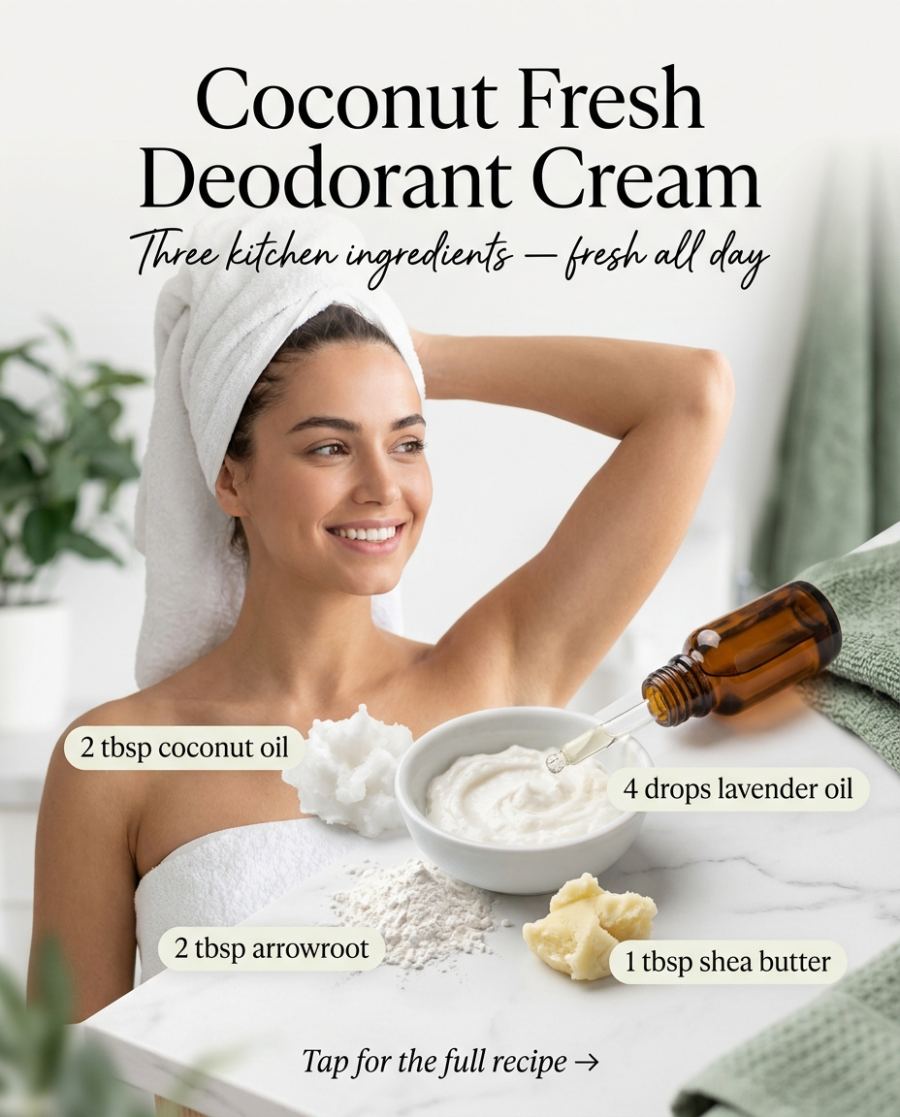
- 2 tbsp coconut oilno coconut oil? use olive oil
- 2 tbsp arrowroot powder (or cornstarch)no cornstarch? use rice flour
- 1 tbsp shea butterno shea butter? use chilled coconut oil
- 4 drops lavender or tea tree oil
- Melt coconut oil and shea together gently.
- Stir in arrowroot until silky, then the essential oil.
- Pour into a small jar and let it set at room temperature.
- Use a pea-size amount per underarm, massaged in until invisible.
Underarm odour doesn't come from sweat itself — it comes from bacteria feeding on sweat. That's the logic of this whole jar. Coconut oil is unusually high in lauric acid, a fatty acid that tends to make life difficult for the very bacteria responsible, which is why many people find it keeps them fresher for longer than a plain balm would.
Arrowroot powder handles the second half of the job. Its fine starch granules soak up surface moisture, keeping the area drier so bacteria have less to work with, and it lends the cream that silky, powder-soft glide.
Shea butter is the peacekeeper: rich in cushioning fatty acids, it keeps a friction-prone fold of skin supple and stops the starch feeling chalky. The four drops of lavender or tea tree add a clean scent, and both oils bring their own mild bacteria-unfriendly character to back up the coconut.
Adding extra essential oil for a stronger scent. Underarm skin is thin, warm and constantly creased, so it amplifies irritation — four drops across four tablespoons of base is already the sensible ceiling. Doubling it is the fastest route to itching that people then wrongly blame on the coconut or the starch. If you want more fragrance, dab a scented lotion on the outer arm instead and leave the formula alone.
Set properly, it looks like pale buttercream — smooth, opaque, soft enough to scoop with a fingertip but not runny. It should smell mostly of lavender or tea tree with a whisper of coconut, and rub in to nothing. Gritty streaks mean the arrowroot sank before setting; a clear oily layer on top means the same — remelt briefly and stir as it cools.
- 1 tbsp shea butter → 1 tbsp cocoa butter In hot climates or summer months — cocoa butter's higher melt point keeps the cream firmer in the jar.
- 2 tbsp arrowroot powder → 2 tbsp tapioca starch If arrowroot is hard to find locally — tapioca absorbs and glides in much the same way.
- 4 drops lavender or tea tree oil → no essential oil at all For very reactive underarms, or during pregnancy if you prefer to keep essential oils minimal — the coconut still does its quiet work.
Take extra care if your underarms are eczema-prone or freshly waxed, and hold off entirely for a day after shaving — broken skin and essential oils are a poor pairing. Coconut-sensitive skin exists, too, though it's uncommon. Try a pea-size amount on your inner arm for 24 hours before it goes anywhere near your underarms.
Once each morning after washing and fully drying the underarms — trapped dampness undoes the arrowroot's work. Shave at night so skin has calmed by the time you apply. On workout days, a second pea-size dab afterwards is all you need. During the first switch-over week, pair it with breathable fabrics and a little patience.
Does it stain clothes?
Use only a pea-size amount and let it absorb one minute — then no marks, even on black.
Why no baking soda like other DIY deodorants?
Baking soda's high pH causes the famous red-itchy underarm rash. Arrowroot does the drying job without the burn.
How long does one application last?
Most people find a morning pea-size amount carries them through a full working day. Heat, exercise and stress sweat shorten that, so keep a small travel jar in your bag for gym days. If you're not lasting past lunch in normal weather, massage it in more thoroughly rather than using more.
Why does mine feel gritty?
The arrowroot settled to the bottom before the oils firmed up, so the starch is concentrated in clumps. Melt the jar gently over warm water, stir well, then let it set in a cooler spot — stirring once or twice as it thickens keeps everything evenly suspended.
Can I press it into an empty deodorant stick?
In a cool home, yes — pour it in while liquid and chill until firm, and it swipes on like a soft stick. Anywhere warm, coconut oil's low melt point makes the stick slump, so the jar-and-fingers method stays the reliable option through summer.