Whipped Coconut Body Butter
✨ Whip it cold — skin frosting that lasts all day
Shea and coconut whipped into a cloud — frosting for your skin.
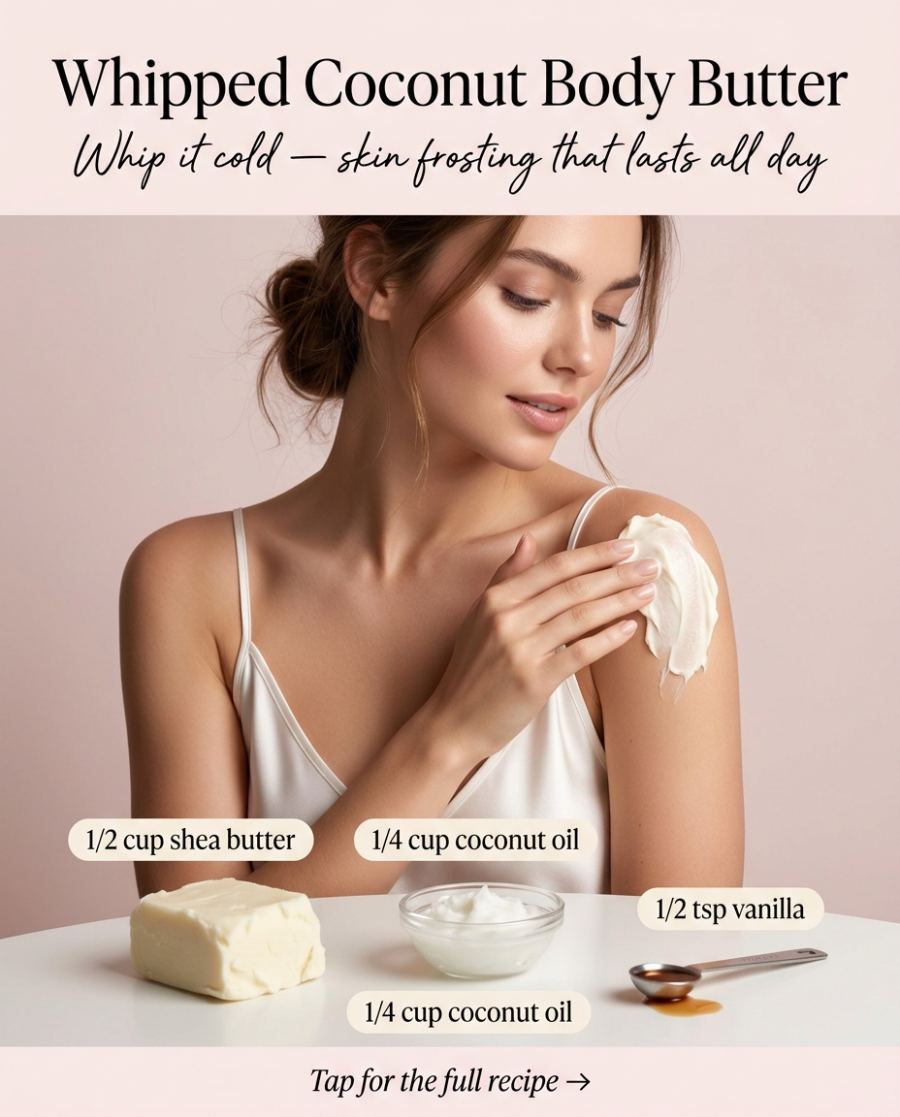
- ½ cup shea butterno shea butter? use chilled coconut oil
- ¼ cup coconut oilno coconut oil? use olive oil
- ½ tsp vanilla extract
- Gently melt shea and coconut together, then cool.
- Chill until just set, about 20 minutes.
- Whip with a hand mixer until fluffy peaks form.
- Fold in vanilla and spoon into a jar.
The body of this butter comes almost entirely from shea. It is rich in stearic and oleic fatty acids plus a generous unsaponifiable fraction — the waxy, vitamin-bearing part that stays on skin as a supple, breathable film. That film acts as an occlusive, slowing the evaporation of your skin's own water, which is why dry shins tend to stay comfortable for hours rather than minutes.
Coconut oil plays the lightener. Its smaller, mostly saturated fatty acids melt at skin temperature, so it thins the shea on contact and lets it spread without dragging. It is also what allows the mixture to trap air when whipped — the fluffy texture is real structure, not decoration, and it makes a rich butter spread far more thinly and evenly.
Vanilla is there purely for pleasure. Scent turns an after-shower chore into something you look forward to, and with dry skin, it is the regular habit — not the occasional grand gesture — that shows.
Impatience at the chilling stage undoes more batches than anything else. Whip the mixture while it is still liquid or barely cloudy and you will beat it for ten minutes, get nothing but sloshing, then watch it set solid as a candle later. Wait until it is opaque and yields like soft butter when pressed — set at the edges, only just firm in the middle — before the mixer touches it. Cold fat holds air; warm fat refuses.
Done properly, it is pale ivory and glossy, holding soft peaks like buttercream, with a mild coconut-vanilla warmth rather than a strong perfume. It should melt the moment it meets skin and settle in within a few minutes. Gritty beads that feel like semolina, or a jar collapsed into an oily pool, mean the temperature got away from you — melt, chill fast, whip again.
- shea butter → mango butter if tree-nut allergies are a concern in your household, or you prefer a lighter, less earthy scent
- coconut oil → sweet almond oil if coconut tends to leave you shiny or congested — the butter whips softer and sinks in faster
- vanilla extract → a few drops of lavender essential oil for an evening, wind-down version — keep it to a few drops, well folded through
Anyone with a tree-nut allergy should approach shea carefully, and a coconut allergy rules out the recipe as written. If your chest or back breaks out easily, keep the butter to arms and legs, where coconut oil sits more happily. Smooth a little inside your elbow and wait 24 hours — patch test first.
This is an after-shower staple rather than a treatment, so use it as often as skin feels tight — nightly through winter, a few times a week in summer. Apply to slightly damp skin within a couple of minutes of towelling off, so the butter can seal that surface water in. Give it five minutes before dressing, and save it for evenings if you dislike a soft sheen under daytime clothes.
Can I use it on my face?
Best kept for the body — coconut oil can clog pores on oily or acne-prone faces.
Why did mine turn grainy?
It cooled too slowly. Melt it again and chill it fast in the fridge before whipping.
My butter deflated after a week — is it spoiled?
Almost certainly not. Whipped butters hold air the way cream does, and warmth lets that air escape, so the texture settles from mousse to dense balm. It is still perfectly usable as it is. If you miss the fluff, chill the jar for twenty minutes and whip it up again.
Can I swap the vanilla for essential oils?
Yes, sparingly. For this batch size, stay around 10–15 drops of a skin-friendly oil such as lavender, folded in at the whipping stage. Avoid citrus oils if the butter will sit on sun-exposed skin, and patch-test any new oil on your inner arm before using it widely.
How much do I actually need per use?
Far less than you think — a fingertip-sized scoop covers a whole shin once it melts. Because the whip spreads it thin, over-applying just leaves clothes greasy without softening skin any further. Start small, warm it between your palms, and add more only where skin still feels tight.