Peach Fuzz Glow Mask
✨ Peach season = glow season
Ripe peach and yogurt — summer's softest glow mask.
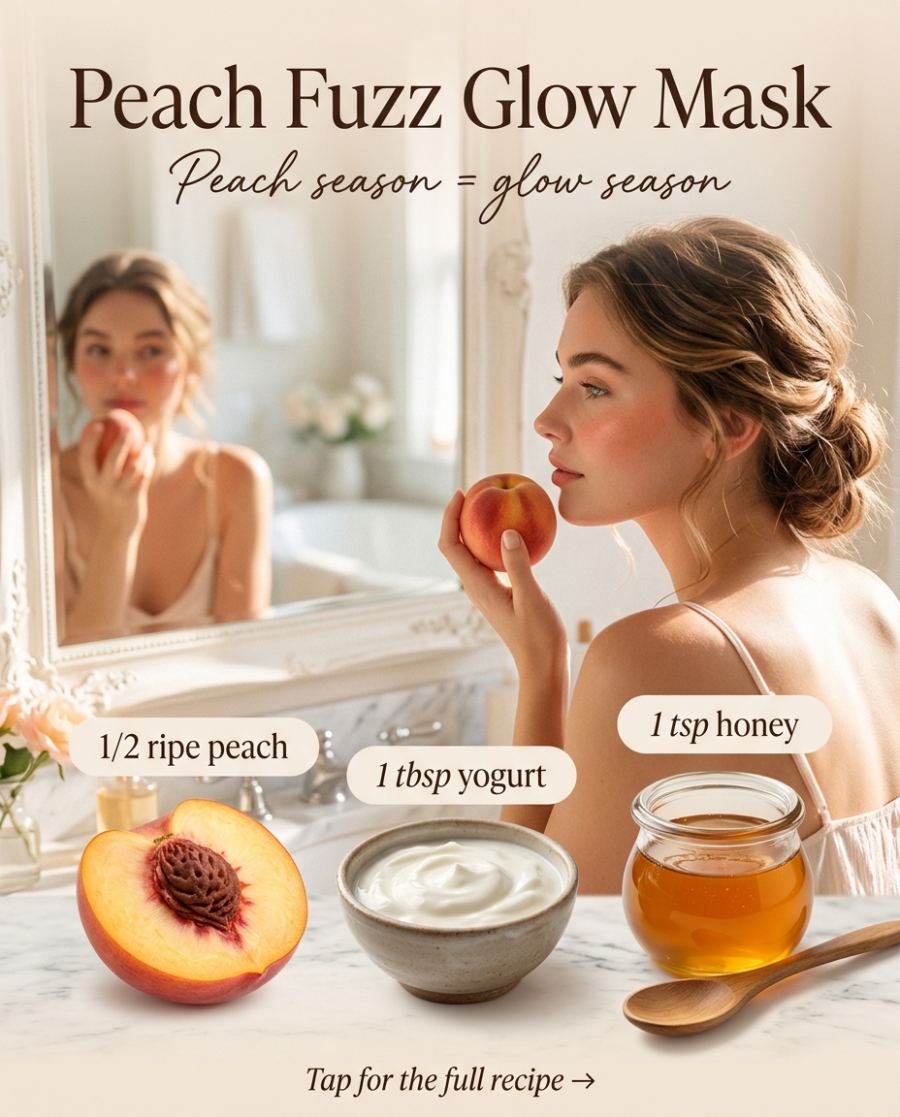
- 1/2 ripe peach
- 1 tbsp yogurtno yogurt? use sour cream or kefir
- 1 tsp honeyno honey? use maple syrup
- Mash the peach flesh smooth.
- Stir in yogurt and honey.
- Smooth over clean skin; rest 10 minutes.
- Rinse cool and pat dry.
Ripeness is doing the real work in this mask. A soft peach is full of fruit enzymes and mild alpha hydroxy acids that develop as the fruit matures, and these tend to loosen the dull surface cells that make skin look tired — which is why the tip about choosing the ripest fruit is chemistry, not romance. Peach flesh also carries vitamins A and C in modest, skin-friendly amounts.
Yogurt layers in a second, equally gentle polish. Its lactic acid is among the mildest exfoliating acids in cosmetic use, and it arrives buffered by milk proteins and fats, so it smooths without the sting of stronger acids. The creaminess also turns slippery peach purée into a mask that actually stays put for ten minutes.
Honey ties the two together as a humectant, drawing water to the skin's surface so all that soft exfoliation reveals a plump, hydrated face rather than a parched one.
Reaching for a firm, crunchy peach is the mistake almost everyone makes first. An underripe peach hasn't yet developed the enzymes and fruit acids this mask depends on, and its flesh won't mash smooth — you end up with gritty lumps and none of the glow. Buy the peach a few days ahead and let it ripen on the counter until it smells sweet and yields to a gentle thumb press. If it drips when you cut it, it is perfect.
Expect a blush-gold cream, softly flecked, smelling exactly like a peach dessert — you will want to eat it, which is the correct instinct with the other half. On skin it feels cool and creamy with the faintest tingle from the fruit acids. Sharp stinging, a sour or fizzy smell, or a watery, split texture means the fruit or yogurt has turned; start over with fresh.
- 1 tbsp yogurt → 1 tbsp coconut yogurt you're dairy-free — you lose a little lactic acid but keep the creamy base
- 1/2 ripe peach → 1/2 ripe mango peaches are out of season and you'd like the same enzyme softness
- 1 tsp honey → 1 tsp agave syrup honey isn't part of your kitchen; it's a fair humectant stand-in
Stone-fruit allergies rule this out entirely, and anyone with birch-pollen hay fever should know peaches are a common cross-reactor. If dairy on skin disagrees with you, take the coconut yogurt route. Skin mid-flare or fresh from a peel deserves a quieter week first. As ever, trial a small patch on the inner arm 24 hours before the full mask.
Once or twice a week through peach season is plenty — enzyme masks are gentle, but gentleness adds up. Evening suits it best, since freshly polished skin prefers moonlight to midday sun; whenever you exfoliate, be faithful to your morning SPF. Cleanse first, moisturise after, and don't schedule it on the same day as the grape mask or any acid product.
Nectarine okay?
Perfectly — same family, same glow.
Why yogurt again and again?
Lactic acid — the gentlest natural polish there is.
Canned peaches — yes or no?
No, sadly. The heat of canning destroys the fragile enzymes that make this mask worth making, and the syrup adds nothing but stickiness. Frozen peach slices are the better compromise: thaw them fully, drain well, and mash as usual. Fresh and ripe remains the gold standard.
Do I eat the other half?
Absolutely — that is the house rule with fruit masks. If you'd rather bank it, mash the spare half and freeze it flat in a small bag; thawed and drained, it becomes next week's mask in seconds. Just don't leave it mashed and uncovered in the fridge, as it browns quickly.
Which yogurt works best?
Plain, unsweetened and full-fat — Greek if you like a thicker mask that stays put. Flavoured and sweetened yogurts bring sugars and additives your skin doesn't need, and low-fat versions run watery. Live-culture yogurt is a lovely choice, though any plain full-fat pot does the job.