Sunflower Soft-Skin Balm
✨ The gentle balm for skin that wants nothing fancy
Sunflower oil, shea and beeswax — the fragrance-free balm gentle enough for baby cheeks.
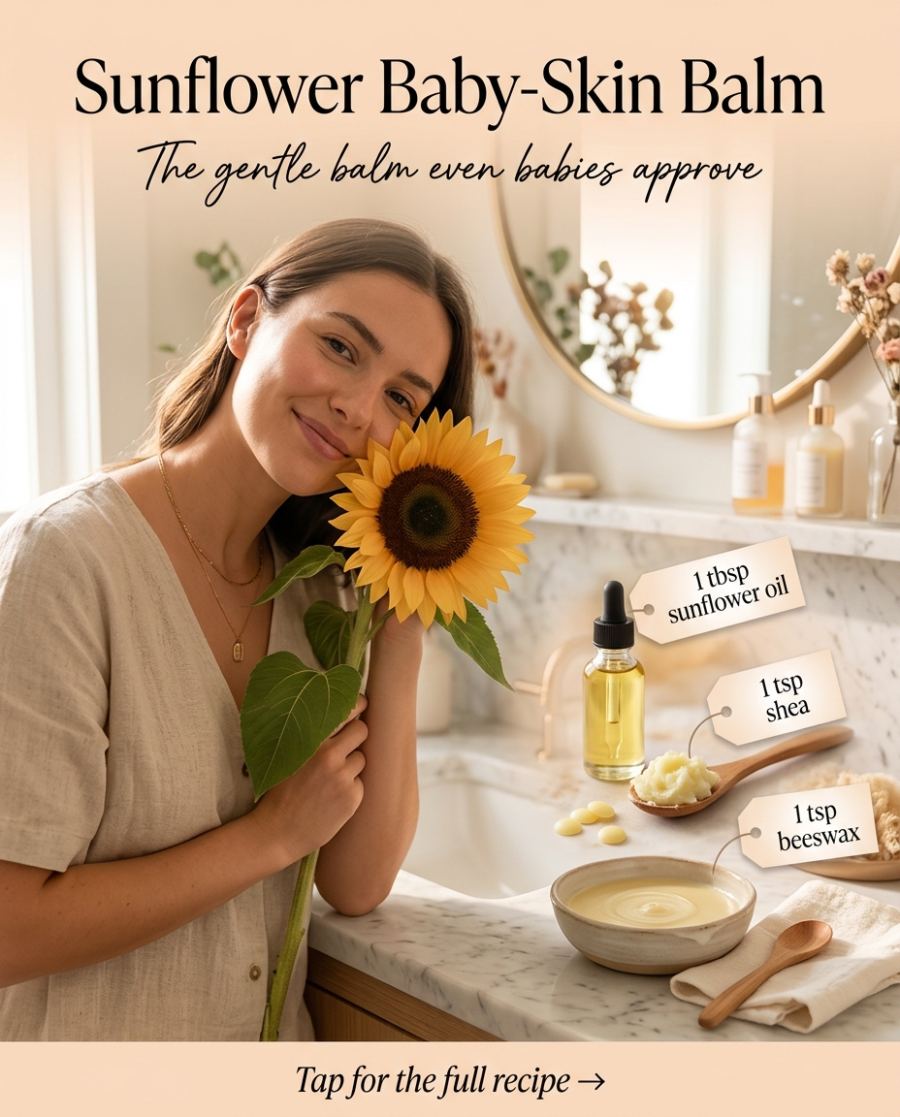
- 1 tbsp sunflower oil
- 1 tsp shea
- 1 tsp beeswax
- Melt beeswax with shea.
- Stir in sunflower oil off the heat.
- Pour into a tin and set.
- Use anywhere skin complains — cheeks, elbows, wind-burn.
Sensitive skin tends to run short on linoleic acid, and sunflower oil happens to be one of the richest, most affordable sources of it. Linoleic acid is a building block skin uses to make its own ceramides — the mortar between skin cells — which is why sunflower oil has such a quiet reputation for suiting reactive, easily upset skin. It absorbs cleanly and brings no fragrance to argue with.
Shea supplies the cushion. Its blend of stearic and oleic fatty acids, plus naturally occurring triterpenes, gives the balm its soft buttery melt and a comforting, faintly occlusive richness that sunflower oil alone can't manage.
Beeswax is the architect. That 1 tsp sets the oils into a solid, swipeable balm, and once on skin it forms a light, breathable film that slows water loss without sealing the skin shut — the classic barrier trick for wind-burned cheeks and scaly elbows. Three ingredients, each with one clear job.
Overheating — specifically, adding the sunflower oil while the pot is still on the heat. High temperatures scorch the wax's soft honeyed scent and can leave the finished balm grainy, and cooking sunflower oil dulls the delicate fatty acids you chose it for. Melt the beeswax and shea gently, take the pot off the heat, then stir the oil in. Patience here is texture insurance.
Set properly, this is a smooth, pale-golden balm with a faint honeyed-wax scent and a surface like soft candle wax — firm in the tin, melting the instant a fingertip warms it. On skin it leaves a fine, non-sticky sheen. Grittiness, a beaded oily layer on top, or a rancid-crayon smell all mean something went wrong.
- shea → cocoa butter If shea's nutty scent bothers you — cocoa butter sets a little firmer and smells faintly of chocolate.
- sunflower oil → grapeseed oil The bottle has run out — grapeseed is also linoleic-rich, though it shortens shelf life slightly.
- sunflower oil alone → sunflower oil plus a drop of vitamin E Making tins to gift — the vitamin E helps the oils stay fresh across the full 3 months.
Shea comes from a tree nut, and while reactions are rare, anyone managing a serious nut allergy should weigh their comfort or swap it out. Bee-product sensitivities point towards the candelilla version instead. For babies under one, check with a health professional first. Everyone else: one small patch test on the inner arm, then wait a day.
Balm logic is simple: it goes on last, and only where needed. Nightly on elbows, heels and wind-chapped cheeks through the cold months; as-needed the rest of the year. Apply it over damp skin or a light cream — it seals in whatever sits beneath, so put the moisture there first. Keep one tin by the bed and one in your bag.
Really baby-safe?
The ingredients are used in baby products, yes — but ask a paediatrician for under-1s. For grown-up sensitive skin: heaven.
Vegan version?
Candelilla wax swaps for beeswax 1:2.
Why did my balm turn out grainy?
Shea is the usual culprit — when it cools slowly, its fatty acids crystallise at different speeds and form gritty little beads. The fix is easy: remelt the balm gently, then chill the tin quickly in the fridge. The grains are harmless and melt on contact, but fast cooling keeps the texture silky.
Can I add lavender or another essential oil?
You can, but you'd be trading away the point — this balm is fragrance-free precisely because very sensitive and baby skin tends to do best without essential oils. If you'd like a scented version for yourself, pour a separate grown-up tin, add your drop there, and label the two clearly.
What size tin does this batch fill?
Roughly 30 ml — a standard small balm tin with a little room to spare. Pour it in one go rather than topping up later, or you'll see faint layer lines in the set surface. Gifting? Double every quantity but keep the ratios; the recipe scales without fuss.