Lavender Sleep Balm
✨ Rub on wrists — sleep like a queen
A lavender-shea wrist balm for the queenly art of falling asleep.
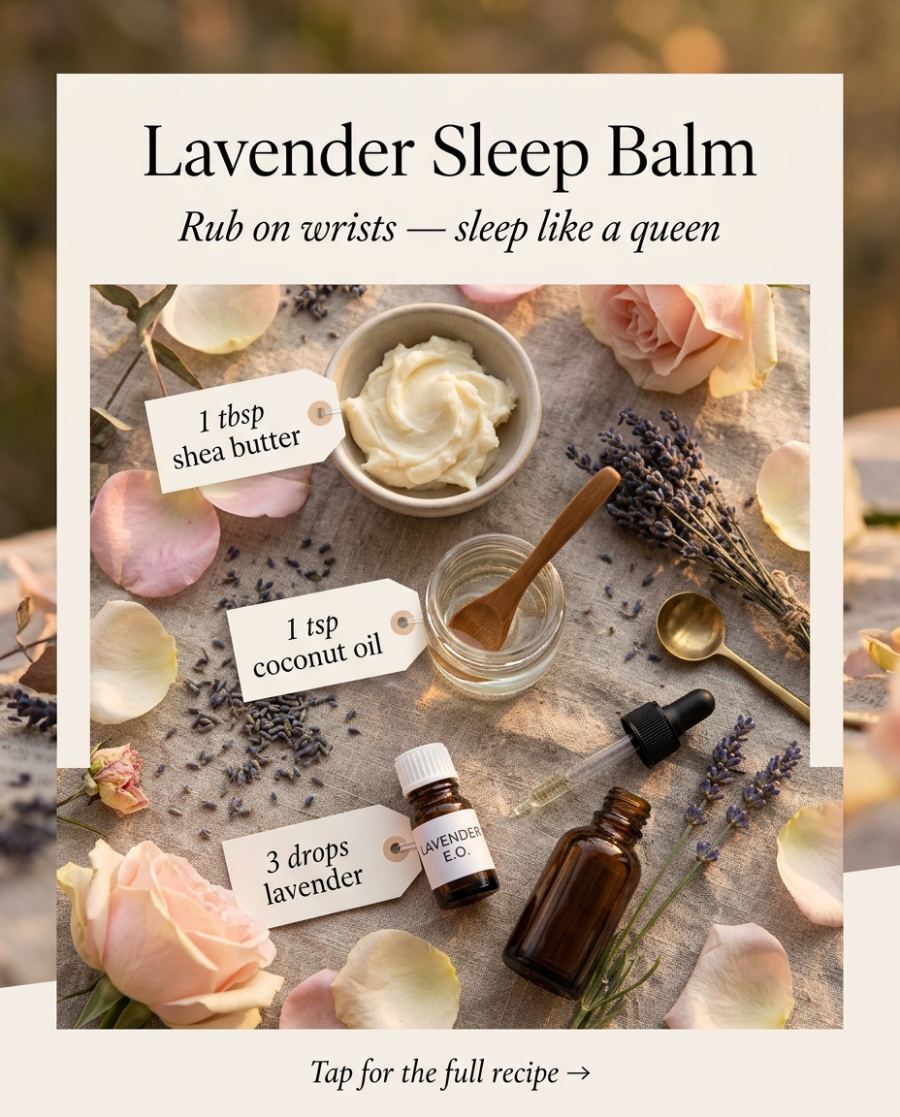
- 1 tbsp shea butterno shea butter? use chilled coconut oil
- 1 tsp coconut oilno coconut oil? use olive oil
- 3 drops lavender
- Melt shea and coconut oil together gently.
- Cool 5 minutes, stir in lavender drops.
- Pour into a small tin and set.
- Massage into wrists and temples at lights-out.
Shea butter does the heavy lifting in this balm. It is rich in stearic and oleic fatty acids, which sit on the skin as a soft, breathable seal — slowing water loss overnight so wrists and temples stay comfortable rather than greasy. It also melts just below body temperature, which is why a fingertip's worth glides on so easily.
Coconut oil is there for texture as much as care. On its own, shea can set firm and waxy; a teaspoon of coconut oil loosens the set, giving you a balm that yields at a touch and spreads thinly instead of dragging.
Lavender is the true point of the ritual. Its main aroma compounds, linalool and linalyl acetate, are the ones researchers keep returning to when they study relaxing scents. Held at your wrists, the warmth of your skin releases the fragrance slowly, so the association between this smell and winding down tends to deepen night after night.
The classic error is stirring the lavender into oils that are still hot. Essential oils are volatile; drop them into a freshly melted mixture and much of the scent simply lifts away with the steam, leaving a balm that smells of very little. Give the melt its full five minutes off the heat — it should feel warm, not hot, on the back of your hand — before adding the 3 drops.
Done well, the balm sets to a smooth ivory solid that gives under a fingertip like soft candle wax, with a gentle herbal-floral scent rather than a perfumey blast. If it turns grainy, the shea cooled too slowly — remelt and chill it quickly to fix. A sharp, crayon-like smell means the oils have gone off; make a fresh tin.
- 1 tsp coconut oil → 1 tsp sweet almond oil If coconut leaves your skin feeling filmy or you dislike its faint scent — almond gives a slightly softer set.
- 1 tbsp shea butter → 1 tbsp mango butter For a lighter feel and less of shea's natural nutty smell under the lavender.
- 3 drops lavender → 3 drops Roman chamomile When lavender reads too floral for you — chamomile is equally bedtime-friendly at the same dilution.
Give this one a miss during pregnancy unless your doctor has waved it through, and keep it away from babies and young children — essential oils and small skin do not mix well. Anyone with fragrance-sensitive or eczema-prone skin should be cautious too. Dab a little on your inner forearm and wait 24 hours before the first full use.
This is a nightly closer, not an occasional treat. Apply it as the very last thing before the light goes off, after teeth, skincare and phone are all done — the point is the association. It pairs beautifully with a warm shower or a few pages of a book; it pairs badly with scrolling. Nothing else in your routine needs to change around it.
Does lavender really help sleep?
Studies keep agreeing it calms the nervous system — a small, real effect worth ritualising.
Can I put it on my chest?
Yes, anywhere you'll smell it softly through the night.
My balm turned grainy — is it ruined?
No, just cosmetically sulky. Shea forms gritty little crystals when it cools slowly. Remelt the balm gently, then set the tin in the fridge so it hardens fast — quick cooling keeps the texture smooth. Add a fresh drop of lavender if the scent faded during remelting.
Can I add more lavender for a stronger scent?
Resist. The 3 drops per tablespoon of butter keeps the essential oil at a gentle dilution for leave-on use, and skin does not need more to get the benefit. If you want extra fragrance in the air, put a drop on a tissue by your pillow instead of on your skin.
Could I pour it into a lip balm tube instead of a tin?
You can, and it makes a lovely handbag version — but keep it strictly for wrists and temples, not lips. The recipe is blended for pulse points, and a stick may need a touch less coconut oil to hold its shape in warm weather.