Banana Honey Hair Smoothie
✨ Frizz drinks this up — shine is what's left
A creamy banana blend that drinks frizz and leaves shine behind.
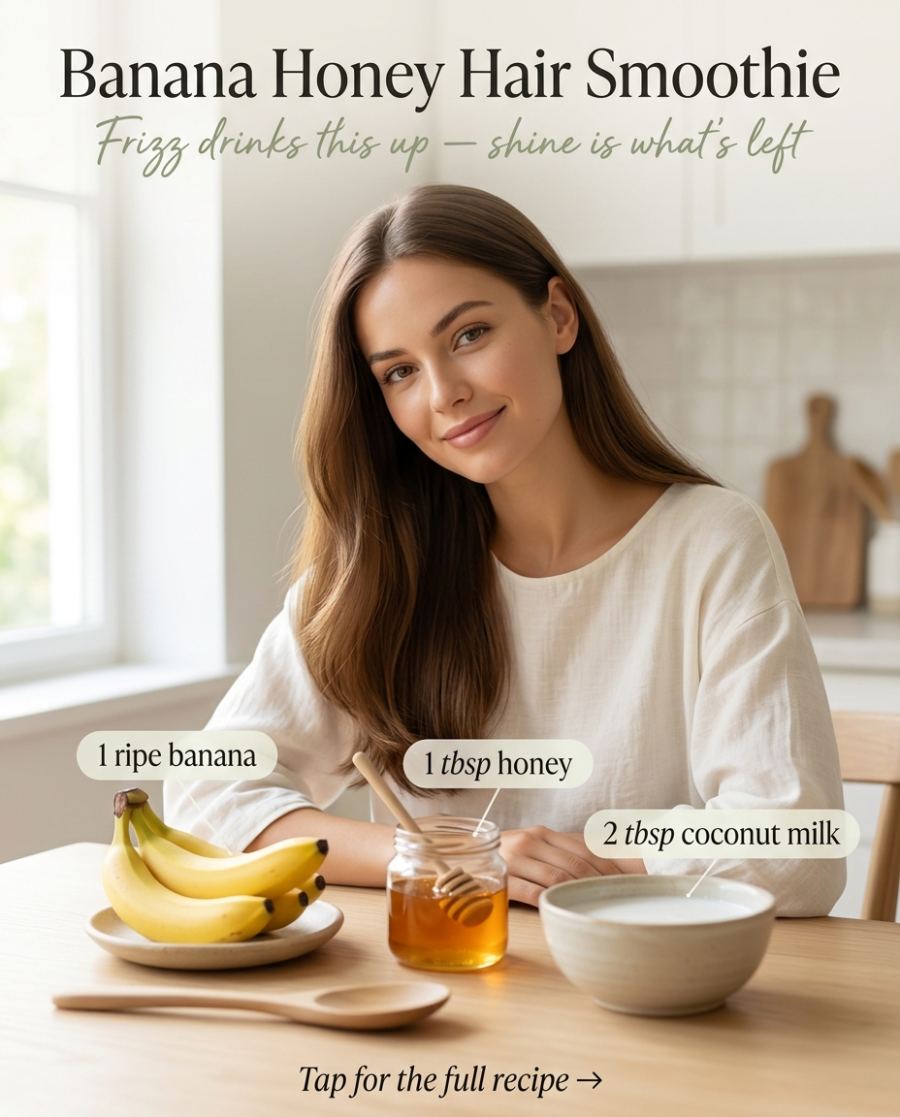
- 1 ripe banana
- 1 tbsp honeyno honey? use maple syrup
- 2 tbsp coconut milk
- Blend everything completely smooth.
- Work through damp hair, roots to ends.
- Rest under a shower cap for 15 minutes.
- Rinse thoroughly, then shampoo lightly.
Banana is the body of this smoothie, and it behaves rather like a natural styling cream. Its soft starches and sugars settle into a light film along each strand, which is what smooths raised cuticles and takes the static crackle out of frizz. The riper the fruit, the more of those sugars are free to do the work — one more reason to choose the speckled one at the back of the bowl.
Honey plays the humectant, which simply means it draws water towards itself. Worked through damp hair, it helps each strand hold on to moisture through the rinse rather than surrendering it, and well-hydrated hair tends to lie flatter of its own accord.
Coconut milk supplies the richness. It carries lauric acid and other softening plant fats that can sit lightly on the hair shaft, plus enough liquid to keep the blend spreadable. Together the three behave like a gentle rinse-out conditioner, and many people find hair dries glossier and calmer for it.
The classic error is reaching for a firm yellow banana because it looks tidier. Underripe fruit is heavy on starch, blends stringy rather than silky, and clings to wet hair like wallpaper paste. Wait until the skin is well speckled with brown — the flesh should almost fall apart on the spoon. Then rinse with cool-to-lukewarm water only; hot water thickens the banana film and makes it far harder to shift.
Done right, it pours like a thin milkshake — pale cream, faintly gold from the honey, smelling of banana bread batter. It should slip between your fingers with no grain at all. If you can see flecks or threads, blend again before it touches your hair. A greyish tinge or sharp, fermented smell means the banana has sat too long — start fresh.
- 2 tbsp coconut milk → 2 tbsp full-fat plain yoghurt When there is no tin in the cupboard, or you want a lighter blend that rinses out faster.
- 1 tbsp honey → 1 tbsp maple syrup If you keep a plant-based routine, or honey tends to leave your lengths tacky.
- 1 ripe banana → half a ripe avocado For anyone avoiding banana because of latex cross-reactivity, or for very dry, thick hair that wants extra richness.
Anyone with a latex allergy should sit this one out, as banana can cross-react. If your scalp flushes easily, honey is worth extra caution, and very fine or low-porosity hair may simply find the blend heavy. Try a strand test first, and patch test a little of the mix on your inner arm the day before.
Think of this as a once-a-week treat, slotted in at the start of wash day — a Sunday afternoon suits it well. Apply, rest, rinse, then shampoo lightly as usual. Keep it away from weeks when you are already using a rich oil treatment or a protein mask; hair rarely needs both, and layering them invites limpness.
There are banana bits stuck in my hair!
The fix is prevention: blend (don't mash) until completely smooth — twice. Rinse with cool water before shampooing.
My roots get oily fast — where do I apply?
Mid-length to ends only, and rinse very thoroughly.
Do I shampoo before or after the mask?
After. Apply the smoothie to damp, freshly rinsed hair, rest under the cap, rinse well with cool water, then follow with one light shampoo to lift any residue. Shampooing first and last strips the very softness you have just added.
Can I leave it on longer than 15 minutes?
There is little to gain past the 20-minute mark. Once the blend starts to dry it grips the hair and becomes stubborn to rinse, which is where most sticky-hair complaints begin. Fifteen minutes under a shower cap, where it stays damp and warm, is the sweet spot.
Does it matter whether my coconut milk is tinned or from a carton?
It does. Tinned full-fat coconut milk carries the plant fats that do the conditioning; carton drinking milk is mostly water and will thin the blend into a drippy mess. Shake the tin well, or stir the cream back through before measuring your 2 tablespoons.