Brown Sugar Scalp Scrub
✨ Your scalp is skin too — this is its glow-up
A once-a-week reset for the skin you never exfoliate — sugar lifts buildup and flakes while coconut oil and a whisper of peppermint leave your scalp tingling-fresh.
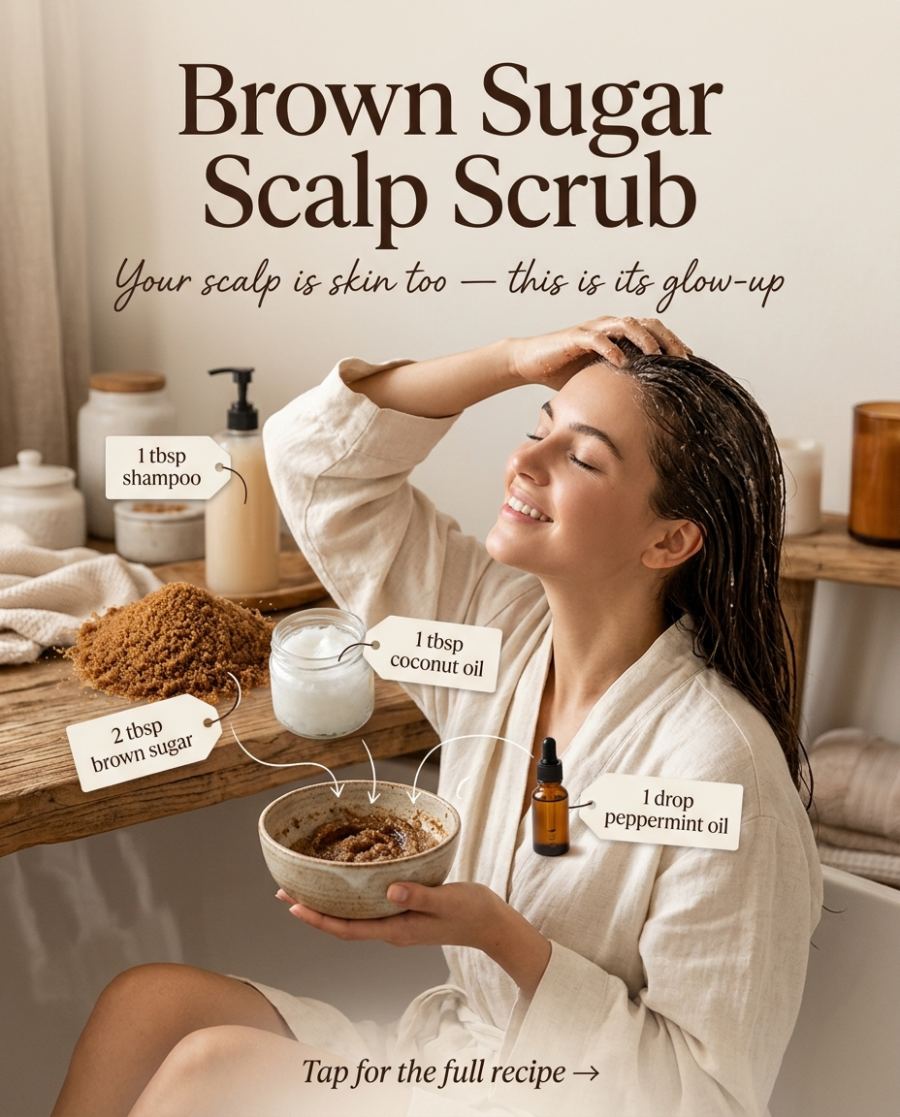
- 2 tbsp brown sugarno brown sugar? use white sugar
- 1 tbsp coconut oil, meltedno coconut oil? use olive oil
- 1 tbsp of your usual shampoo
- 1 drop peppermint oil (optional)
- Mix everything into a gritty cream just before your shower.
- On wet hair, part sections and massage the scrub straight onto the scalp with fingertips — slow circles, no nails.
- Spend a full 5 minutes covering the whole head, especially the crown and hairline.
- Rinse very well, then follow with conditioner on the lengths only.
A scalp scrub only earns its keep if it can exfoliate and then vanish, and every ingredient here serves that bargain. Brown sugar is a self-limiting polish — its crystals are softer and rounder than salt, and they begin dissolving in the shower's warmth, so the scrub literally runs out of abrasiveness before you can overdo it.
Coconut oil cushions those crystals, letting your fingertips slide in circles instead of dragging, while its fats help loosen the waxy film that styling products and sebum leave around each follicle.
The tablespoon of your usual shampoo is the clever exit strategy: its surfactants surround the oil and lift the whole mixture — sugar, sebum, softened buildup — clean away with the rinse water. Nothing occlusive stays behind, which is why oily roots end up lighter, not greasier. Peppermint is the optional flourish; menthol reads as cold to the skin's sensors, giving the fresh, wide-awake tingle many people love on the scalp.
Most people scrub their hair when they should be scrubbing skin. Worked through the lengths, the sugar tangles strands, roughs up the cuticle and never actually reaches the scalp underneath. Part the hair into sections, place the scrub on the exposed skin with your fingertips, and massage there before opening the next parting. If your hands are moving through hair rather than along skin, stop and re-part.
In the hand it is a gritty, caramel-scented cream — loose enough to spread, coarse enough to feel. On the scalp the grit should soften and melt as you massage, with a clean cool tingle if you added the peppermint. After drying, roots should feel airy and light. Greasy roots mean you under-rinsed; raw stinging means you pressed too hard or used nails.
- brown sugar → finely ground white sugar Your scalp is on the tender side — the smaller crystals polish with noticeably less scratch.
- coconut oil, melted → olive oil It is winter and coconut keeps seizing solid mid-shower, or coconut tends to sit heavily on your hair.
- peppermint oil → rosemary oil You prefer a herbal scalp ritual to a minty one — or leave the drop out entirely on sensitive days.
Give this one a miss if your scalp has scratches, sunburn, psoriasis plaques or weeping patches — grit on broken skin helps nothing. Freshly coloured hair deserves a fortnight's grace, as scrubbing can nudge dye to fade faster, and braids or sewn-in styles trap the granules. Patch test the peppermint version behind one ear before committing a full head.
Anchor it to one wash day a week — ideally the deep-clean one before a slower weekend. Scrub, rinse thoroughly, condition the lengths, and if your ends run dry, follow with a hair mask; a clean scalp is the best base for one. Keep it well away from colouring day and any chemical treatment, with a clear week on either side.
Will it help dandruff?
It clears light product buildup and dry flakes — but true dandruff is fungal and needs a treatment shampoo, not a scrub.
My hair is oily — is coconut oil safe?
Yes, because it rinses out with the shampoo that is already in the mix. Your roots will feel lighter, not greasier.
Is it safe for colour-treated hair?
Yes, with a caveat — the scrub stays on the scalp, but vigorous exfoliating plus a thorough rinse can hurry colour fade slightly at the roots. Wait two weeks after fresh dye, keep the massage strictly to the skin, and stretch the ritual to fortnightly if fading bothers you.
Do I need to shampoo again afterwards?
Usually not — the tablespoon of shampoo inside the scrub does the cleansing as you rinse. If you use heavy waxes, dry shampoo or thick creams during the week, a quick second lather on the roots only will catch anything the scrub loosened but left behind.
My scalp feels tight afterwards — is that normal?
A brief, just-cleaned tautness that fades within the hour is common, especially the first few uses. Tightness that lingers, flakes more or itches suggests you scrubbed too long or too often — drop back to every ten days and shorten the massage to three minutes.