Honey & Rose Glow Mask
✨ Do this twice a week — glowing skin in 14 days
A silky, dewy mask that melts into the skin — honey to hydrate, rose to soothe, oats to gently polish.
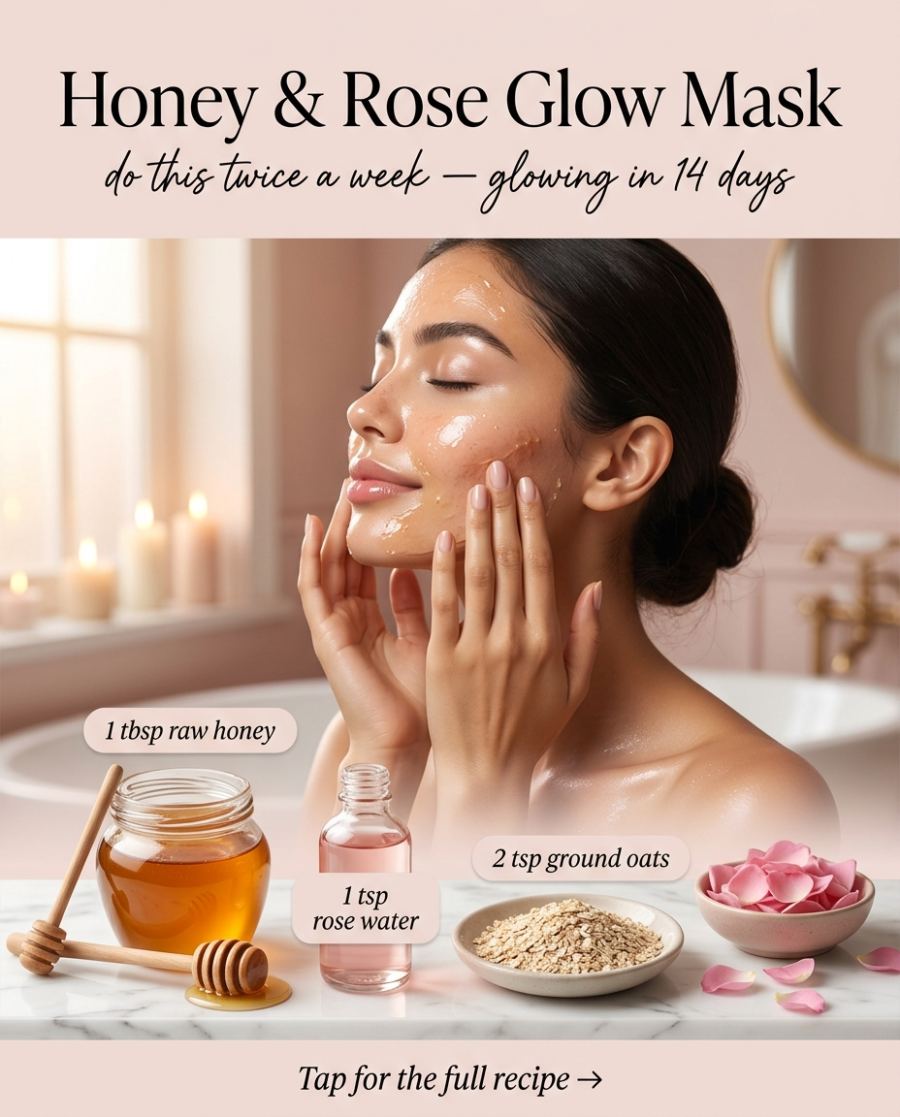
- 1 tbsp raw honeyno raw honey? use maple syrup
- 1 tsp rose water
- 2 tsp fine ground oatsno ground oats? use rice flour
- 1 drop sweet almond oilno sweet almond oil? use olive oil
- Warm the honey between your fingertips until silky.
- Stir in rose water and ground oats to a soft paste.
- Smooth over clean skin, avoiding the eye area.
- Rest for 12 dreamy minutes.
- Rinse with lukewarm water — hello, glow.
Raw honey is a humectant, meaning it draws water towards the surface of the skin — both from the air and from the deeper layers below — so your face tends to feel plumper and more supple after rinsing. Left unfiltered, it also keeps trace enzymes and a mild natural acidity that sits comfortably alongside the skin's own pH.
Rose water adds a light, cooling touch. Many people find it eases the tight, flushed feeling that follows cleansing, and its scent turns twelve minutes of waiting into something closer to a ritual. The finely ground oats work harder than they look: they contain saponins, soap-like compounds that lift away dull surface residue, and beta-glucan, a soothing polysaccharide that helps skin hold on to moisture.
That single drop of sweet almond oil is deliberate — an emollient rich in oleic acid, it leaves the faintest satin film so the mask rinses off without any squeaky tightness.
The classic error is microwaving the honey to loosen it. High heat thins the mask so it slides straight off your chin, and it dulls the delicate enzymes that make raw honey worth buying in the first place. Warm it only between your fingertips, as the recipe says, or stand the jar in a cup of warm water for a minute. The paste should hold its shape on the back of a spoon before it goes anywhere near your face.
Made properly, this is a soft golden paste flecked with pale oat, thick enough to cling without dripping, with a scent like roses stirred into warm honey. On the skin it feels cushioned and slightly tacky, never gritty. If it runs, separates into a watery layer, or smells sharp and fermented, the balance is off — start again with fresh honey.
- 1 tsp rose water → 1 tsp cooled chamomile tea When rose water is hard to find, or your skin flushes easily and prefers something plainer.
- 1 drop sweet almond oil → 1 drop jojoba oil If nut allergies are a concern in your household, or you simply have jojoba on the shelf.
- 2 tsp fine ground oats → 2 tsp rice flour For anyone avoiding oats — rice flour gives a similar soft polish with a slightly silkier finish.
Take extra care if you react to pollen, honey or oats, as all three appear here, and choose the jojoba swap if nuts are an issue. Skin that is broken, freshly exfoliated or sunburnt will find the honey stings. Whatever your skin type, smooth a little inside your elbow and wait 24 hours before using it on your face.
Twice a week suits most people — perhaps Sunday and Wednesday evenings, after cleansing and before your usual moisturiser. It pairs beautifully with a facial steam beforehand, when skin is warm and receptive. Keep it away from nights you use strong exfoliating acids or retinoids; layering the two tends to leave skin cross rather than glowing.
Can I use this every day?
2–3 times a week is the sweet spot — honey hydrates, but oats polish, and skin loves a rest day between.
My skin is very sensitive — any change?
Leave out the oats and keep just honey + rose water for a gentler, polish-free version.
Can I use instant or rolled oats instead of fine ground oats?
Yes, but grind them first. Pulse rolled or instant oats in a clean coffee grinder or blender until they resemble flour, then measure your 2 teaspoons. Whole flakes sit on the skin without releasing their beta-glucan properly, and the coarse edges can feel scratchy on the cheeks.
Why is my mask sliding off my face?
Almost always the honey was too warm, or a runnier variety than raw set honey. Chill the mixed paste in the fridge for five minutes to firm it up, or add an extra pinch of ground oats. Applying to skin that is dry rather than damp also helps it grip.
Can I take it down my neck and chest?
Certainly — the neck and décolletage enjoy the same softening treatment, and the mask is gentle enough for both. You may want to make one and a half times the quantity so you are not scraping the bowl, and drape a towel over your clothes, as honey drips are inevitable.