Mango Butter Melt
✨ Tropical butter for winter-proof skin
Mango butter whipped with coconut oil — tropical armour for winter-proof skin.
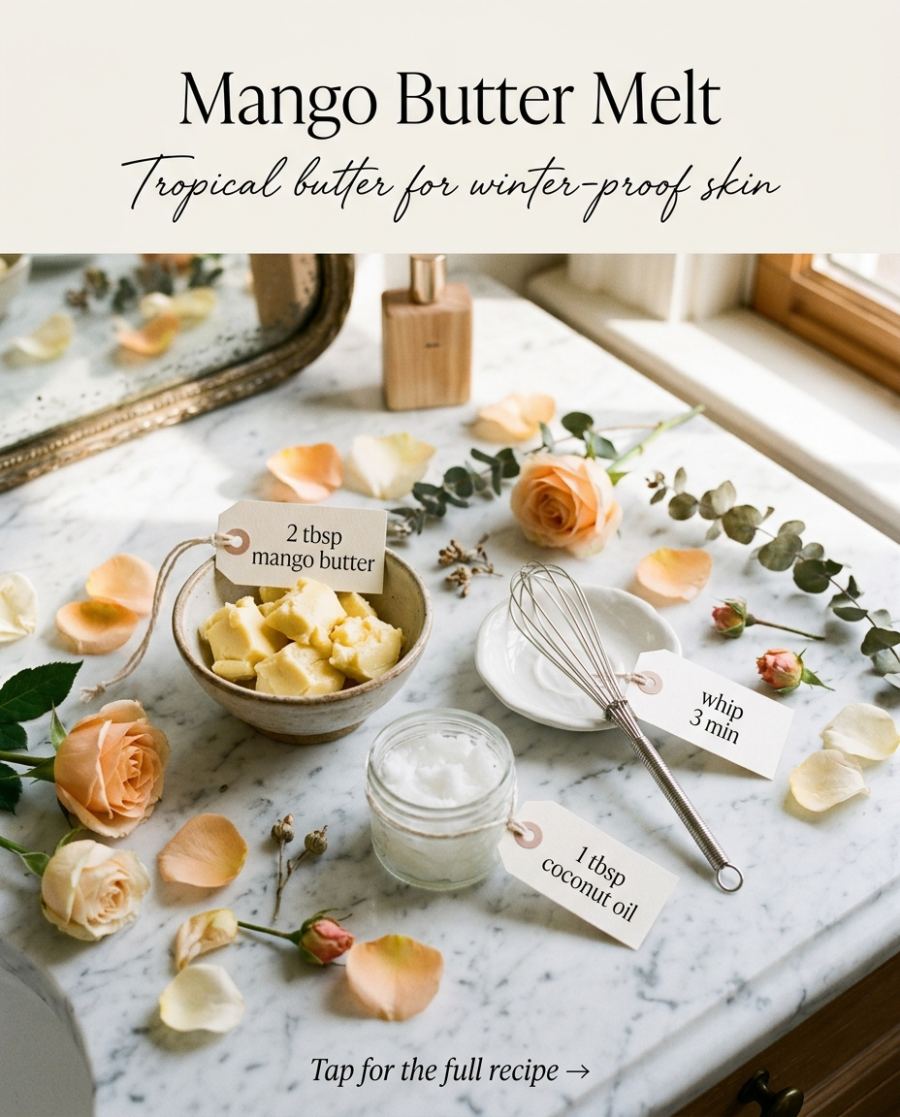
- 2 tbsp mango butterno mango butter? use shea or coconut oil
- 1 tbsp coconut oilno coconut oil? use olive oil
- Soften mango butter and coconut oil together.
- Chill until just set.
- Whip 3 minutes to soft peaks.
- Jar it and slather on damp post-shower skin.
Pressed from the kernel inside the fruit, mango butter is rich in oleic and stearic acids — close cousins of the lipids skin's own barrier is built from. It melts on contact at body temperature yet sets firm in the jar, which is why it feels substantial without the greasy drag heavier butters can leave. As an emollient, it works by filling the microscopic gaps between skin cells, smoothing rough texture and slowing water loss through the surface.
Coconut oil is the texture-fixer. Whipped alone, mango butter can turn stiff and waxy; one tablespoon of coconut oil softens the crystal structure so the finished melt stays cloud-light and spreadable, while adding quick-absorbing fatty acids of its own.
And the three minutes of whipping is not decoration. Forcing air into the cooling fats changes how they crystallise — smaller, finer crystals mean no gritty bits, an easy scoop, and a texture that glides over damp skin rather than tugging at it.
Graininess is the heartbreak here, and it nearly always comes from whipping at the wrong moment. Whip while the mixture is still liquid and nothing happens; let it set rock-hard and soft peaks become impossible. Chill only until it turns opaque and yields like softened butter — check every ten minutes — then whip straight away. If a batch has already gone grainy, re-melt it fully and cool it faster in the fridge before whipping again.
A proper batch is pale ivory and holds soft peaks like a chilled mousse, with a mild, faintly sweet nuttiness from the coconut. It should melt within seconds of touching warm skin and sink in on damp skin without a heavy film. Gritty little beads or a slick of loose oil pooling on top are the signs it set too slowly — re-melt and try again.
- coconut oil → sweet almond oil Coconut tends to congest your skin or you dislike its scent — almond keeps the whip a little softer, too.
- mango butter → shea butter Mango is hard to find locally — expect a richer, slightly nuttier result that suits very parched winter skin.
- coconut oil → jojoba oil You get breakouts on your chest or back — jojoba sits closest to skin's own sebum and rarely causes trouble.
Mango belongs to the same plant family as cashew and pistachio, so anyone with a tree-nut allergy in that direction should be especially careful, even though the butter comes from the seed. Those prone to body breakouts may prefer the jojoba swap for the coconut oil. In all cases, patch test on your inner arm for a day or two first.
In deep winter, this can follow every shower; in milder weeks, two or three evenings suffice. Apply within a minute of towelling off, while skin is still damp — that is where the moisture lock happens. Give it ten minutes to settle before dressing, and keep it as your final body step; nothing needs to go over it.
Mango vs shea?
Mango is lighter and less greasy — summer-weight butter with winter power.
Face use?
Body first — it can be rich for acne-prone faces.
Why has my batch melted back into liquid?
Almost certainly heat — the whip loses its structure above about 24°C, so a sunny windowsill or a warm bathroom will collapse it. It is still perfectly usable as a melt, or you can chill it until just set and whip it back to peaks in a couple of minutes.
Can I add essential oils for scent?
Yes — stir in four or five drops of a skin-friendly oil such as lavender during the final minute of whipping so it distributes evenly. Keep it modest; this covers a lot of skin, and the natural mango-coconut scent is quietly lovely on its own.
How much should I use at a time?
Less than you think — an almond-sized scoop per limb is usually plenty, because it spreads a long way on damp skin. If you feel greasy an hour later, you have used too much or applied it to dry skin; the water underneath is what makes it sink in.