Honey Butter Cuticle Balm
✨ Rescue your cuticles while you watch TV
Honey and shea butter, with an optional drop of lavender — TV-time care for neglected cuticles.
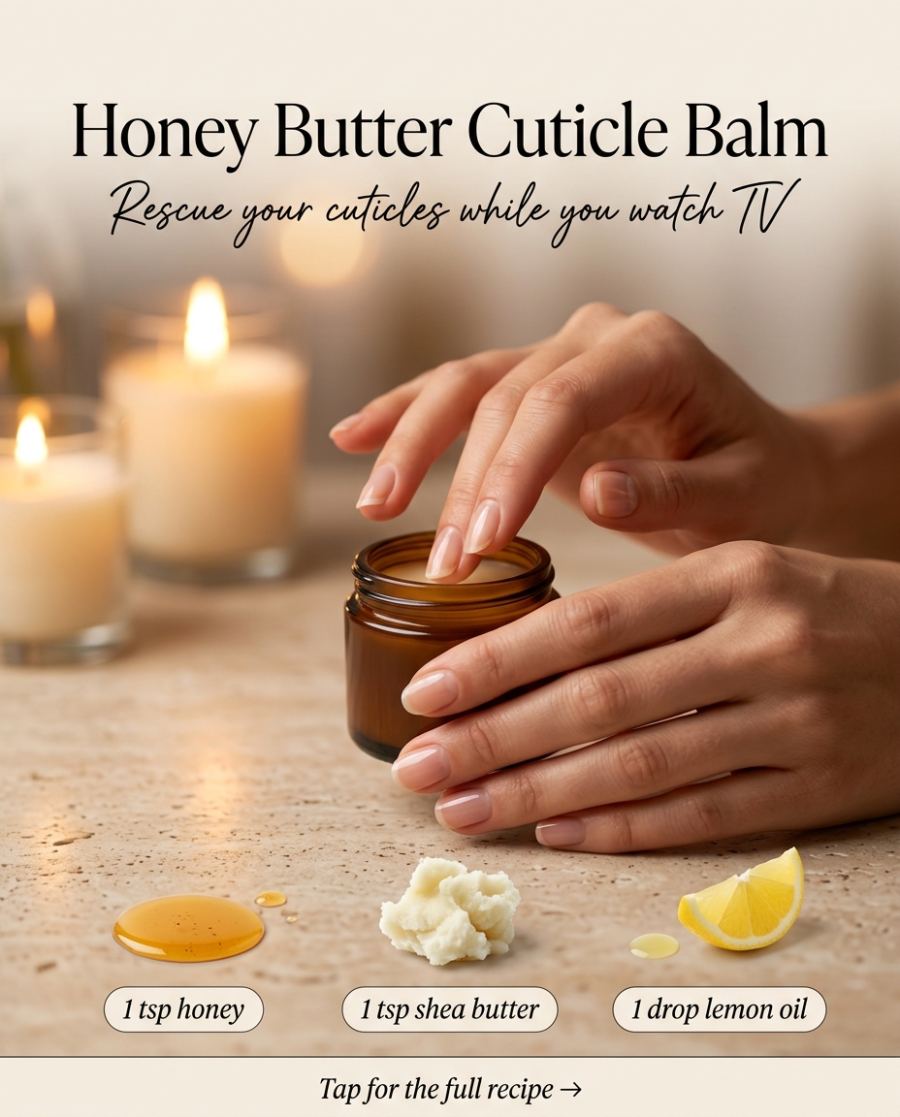
- 1 tsp honeyno honey? use maple syrup
- 1 tsp shea butterno shea butter? use chilled coconut oil
- 1 drop lavender oil (optional)no lavender? simply leave it out — the balm works unscented
- Soften the shea between your fingertips or over a cup of warm water; blend in the honey and, if using, the single drop of lavender.
- Massage a rice-grain amount into each nail bed.
- Let it work through one episode.
- Tissue off the excess.
Honey and shea approach dryness from opposite directions. Honey is a humectant, tugging water up into the parched skin around the nail; shea butter is an emollient rich in stearic and oleic triglycerides that fill in rough patches, plus the unsaponifiable fraction shea is prized for, which seals that moisture in place. One attracts water, the other stops it leaving — a pairing well suited to skin as chronically dry as a cuticle.
The massage counts for as much as the mixture. Working the balm into each nail bed brings warmth to the zone where new nail forms, and softened cuticles push back cleanly instead of tearing into hangnails. It will not make nails grow faster or stronger — nothing rubbed on the outside does — but tidy, un-torn cuticles make hands look cared for, and that is the honest aim.
As for the lavender, one drop keeps the balm smelling of something other than sweetness, and at that dilution it sits comfortably within the limits for something left on skin — which is precisely why the recipe insists on one drop and not a cheerful splash. We do not use citrus oils in a leave-on balm at all; they can sensitise skin in daylight, and hands see more sun than almost anything else.
The temptation is always the scent. One drop looks meaningless in a teaspoon of shea, so people add three or four for a stronger smell — and essential oil at that strength on thin cuticle skin is how irritation happens. Measure the single drop from an actual dropper and stir it through completely. If you cannot count drops reliably, leave it out; the balm works perfectly well unscented.
Made right, this is a dense golden salve — honey-sweet with a faint herbal note — that softens on contact and leaves a light tack until you tissue it away. Cuticles should look glossy and slightly plumped afterwards. If honey pools in amber beads on the surface, the shea was too cool when you blended; soften it further and stir again.
- 1 tsp shea butter → 1 tsp cocoa butter You want a firmer balm that travels without melting.
- 1 drop lavender oil → nothing at all Fragrance tends to bother you — the unscented version is just as effective.
- 1 tsp honey → 1 tsp vegetable glycerine You would prefer a vegan balm with the same water-drawing pull.
Essential oils and reactive skin are an uneasy match, so if fragrance tends to bother you, make it without the lavender. Skip application over torn hangnails or fresh nicks — honey announces itself on broken skin — and if a cuticle is red, swollen or weeping, that is an infection question for a pharmacist, not a balm. Dab a little on one knuckle overnight as your patch test.
Nightly for the first week, then two or three evenings ongoing keeps cuticles ahead of the ragged stage. Pair it with television or a book — anything that keeps your hands idle while it sinks in. Make it the step after your final handwash of the day, and never just before painting your nails; polish grips poorly over oil residue.
How often until they look neat?
Nightly for a week makes most ragged cuticles look tidier — softer, less flaky, easier to push back. It does not change the nail itself.
Can I use it on heels too?
Yes — it is a universal rough-spot balm.
Will it interfere with nail polish?
Yes, if applied just before — polish will not grip an oiled surface. Use the balm on bare-nail evenings, or wait until a manicure has fully hardened, ideally a day. After that it actually flatters polish, keeping the surrounding skin tidy so the colour looks cleaner.
My balm turned gritty — what happened?
Shea forms grainy crystals when it melts fully and then cools slowly, or after riding around in a warm bag. The grains dissolve on skin, so nothing is wasted. To restore the texture, melt the balm completely over a warm water bath, then chill it quickly in the fridge.
Can I leave it on overnight instead of tissuing off?
You can, and cuticles respond beautifully — just add thin cotton gloves, or the honey tack will find your bedding and hair. Without gloves, keep the tissue-off habit and rely on nightly consistency instead; a rice-grain amount left on for an hour does most of the work anyway.