Warm Oil Scalp Crown
✨ The Sunday crown massage ritual
The Sunday crown ritual — warm coconut oil massaged in, wrapped, and washed to silk.
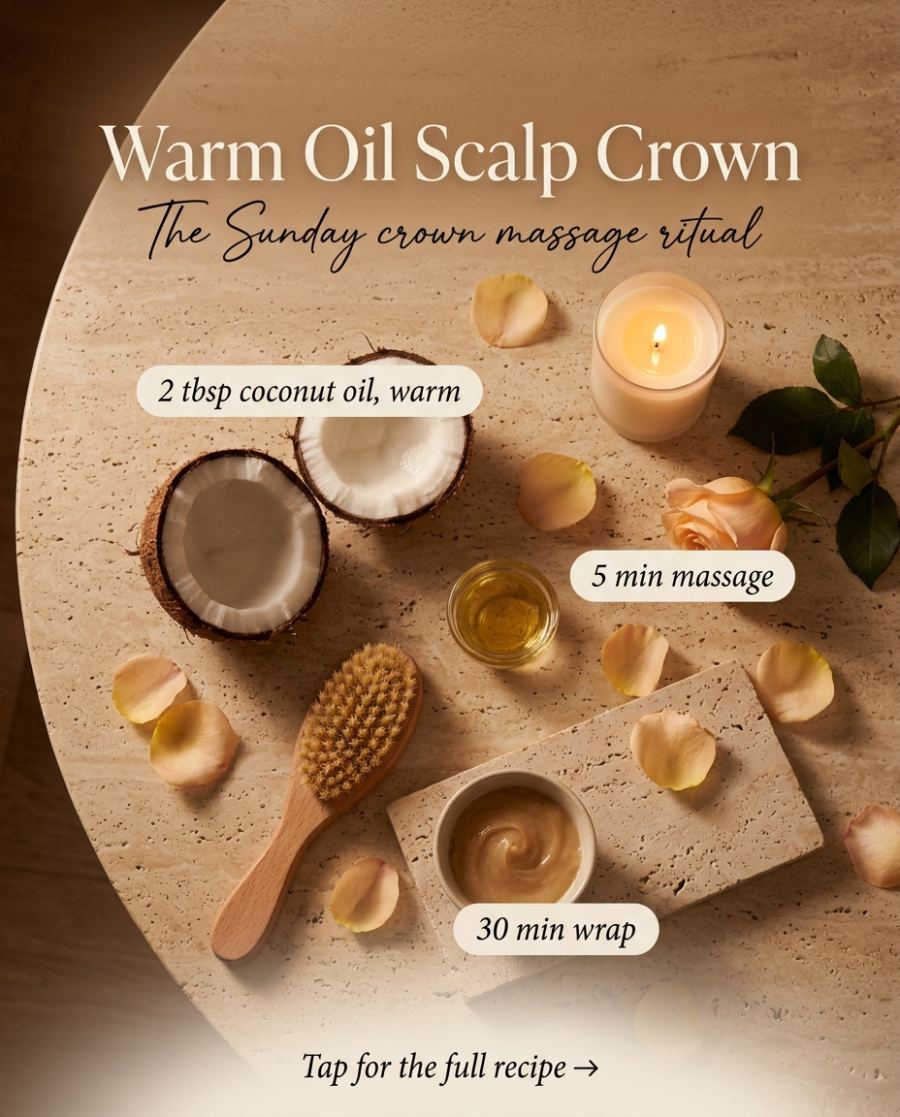
- 2 tbsp coconut oil, warmno coconut oil? use olive oil
- Warm the coconut oil until just comfortable.
- Massage into scalp 5 full minutes, then through lengths.
- Wrap in a warm towel 30 minutes.
- Shampoo twice, condition lightly.
Coconut oil is one of very few oils shown to genuinely penetrate the hair shaft rather than sit on top of it. Its dominant fatty acid, lauric acid, is small and straight enough to slip between the cuticle scales, where it helps hair hold on to its own protein through washing — the reason pre-wash oiling tends to leave lengths less prone to that rough, tangled post-shampoo feel.
The five minutes of massage are not padding. Steady fingertip pressure encourages circulation at the scalp and loosens the buildup sitting at the roots, and many people find the ritual alone eases a tight, end-of-week scalp.
Heat completes the trio. A warm towel softens the oil and gently lifts the cuticle, helping the treatment travel further in thirty minutes than it would overnight at room temperature. It is also why the oil goes on warm rather than hot — comfortable warmth does the work, and anything beyond it only risks an unhappy scalp.
Using far too much oil, then under-washing it out. Two tablespoons covers a whole head, but people pour double, skip the second shampoo, and spend three days convinced the treatment made their hair greasy. Measure the oil, concentrate on scalp and mid-lengths, and honour both shampoos — the first breaks the oil, the second actually cleans. Fine hair should halve everything and follow the extra-shampoo rule without fail.
The warmed oil should feel like bathwater on the fingertips — pleasant, never hot — and pour as a clear, faintly sweet-smelling liquid. Hair looks dark and soaked under the wrap, then dries glossy and swishy after washing. Lengths that feel coated, waxy or limp the next day were under-rinsed; a soured smell from the jar means the oil itself has turned.
- 2 tbsp coconut oil, warm → 2 tbsp olive oil, warm Coconut allergy, or coarse, thirsty hair that drinks up heavier oils.
- 2 tbsp coconut oil, warm → 2 tbsp jojoba oil, warm An oily or flake-prone scalp — jojoba is lighter and closest to the scalp's own sebum.
- 30 min wrap → a shower cap under a dry towel No dryer to warm a towel — trapped body heat does much the same job over the half hour.
Those with coconut allergies should start with the olive or jojoba version. Anyone managing seborrhoeic dermatitis or persistent flaking may find rich oils feed the trouble rather than calm it, and very fine, low-porosity hair can end up weighed down. If scalp oiling is new to you, test a small section behind one ear a day ahead.
Once a week suits most heads, and the classic slot is a slow Sunday: oil in mid-afternoon, wrapped through a cup of tea, washed out before dinner. Time it for a planned wash day rather than adding an extra one. Give it a miss the week of a colour appointment, and let it replace any leave-in oils that week, not stack on top of them.
Overnight instead?
Yes with an old pillowcase — 30 minutes gives 80% of the benefit though.
Fine hair?
Half the oil, lengths only, and one extra shampoo.
Should my hair be wet or dry when the oil goes on?
Dry, ideally a day or two after your last wash. Water sitting in the hair shaft blocks the oil from penetrating, which is the whole point of the treatment. Slightly lived-in hair also makes the five-minute scalp massage more comfortable than squeaky-clean strands ever do.
How do I warm the oil safely?
Stand the jar in a bowl of hot tap water for a few minutes until two tablespoons turn liquid, then test a drop on your inner wrist — it should feel like warm bathwater. Avoid the microwave; it heats unevenly, and a scalded scalp ends the ritual early.
Will the oil ruin my towel?
It can leave a lasting mark, so dedicate an older towel to this ritual. Wash it separately on a hot cycle with a little extra detergent, and never tumble-dry a towel that still smells oily. Many people simply keep a designated crown towel that lives beside the coconut jar.