Midnight Jasmine Bath Oil
✨ Pour, soak, and forget the whole week
Almond oil, jasmine and honey poured into midnight water — soak the whole week away.
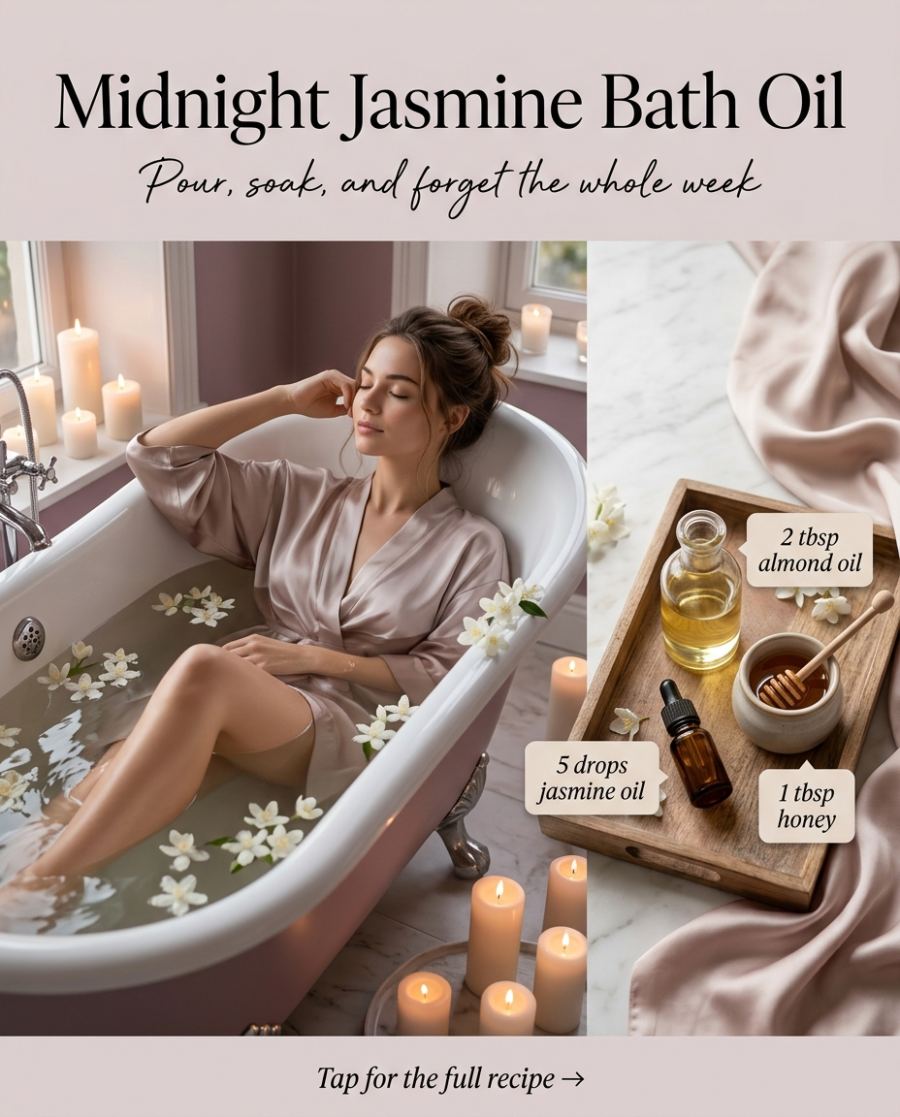
- 2 tbsp almond oil
- 5 drops jasmine oil
- 1 tbsp honeyno honey? use maple syrup
- Whisk almond oil, jasmine drops and honey.
- Pour into a full warm bath and swirl.
- Light one candle. Only one — this is a minimalist luxury.
- Soak 20 minutes; pat (don't rub) dry.
Almond oil is the quiet workhorse of this soak. It is rich in oleic and linoleic fatty acids — lipids very close to those in your skin's own barrier — so it settles onto warm, water-softened skin as a fine emollient veil. That veil slows the moisture loss that usually leaves post-bath skin feeling tight, which is why many people find bathing in oil kinder than applying it afterwards.
Honey earns its place twice over. It is a humectant, drawing water towards the skin's surface, but in the tub it also works as a rough-and-ready dispersant, helping the oil break into finer droplets instead of pooling in one slick. The result is a silkier soak and a residue that spreads evenly rather than clinging in patches.
Jasmine contributes little structure and all the atmosphere. Its scent molecules are what turn a wash into a ritual, and at five drops in two tablespoons of carrier oil, the dilution stays sensibly gentle for a long steep.
The classic error is tipping the three ingredients into the bath separately instead of whisking them first. Unwhisked, the jasmine floats on the surface as neat droplets that meet your skin at full strength, and the almond oil gathers in one slick rather than veiling the whole bath. Whisk until the honey disappears completely into the oil, pour the blend under moving water, and give it a proper swirl before you step in.
Swirled well, the water turns faintly cloudy-gold and smells softly floral — warm jasmine, never a perfume-counter blast. Your skin should glide under your hand as you soak, and afterwards a light satin film lingers without greasiness. If oil beads sit stubbornly on the surface, or the scent is sharp enough to prickle your nose, the blend never came together — whisk a fresh mix properly next time.
- almond oil → sunflower oil There is a nut allergy in the house, or you prefer a lighter film that fades faster after drying off.
- jasmine oil → lavender oil Jasmine feels too heady late at night, or true jasmine is beyond the budget — lavender gives the same wind-down signal for far less.
- honey → full-fat milk The honey has crystallised or you keep a vegan bathroom — milk fats disperse the oil almost as gracefully.
Anyone whose skin flares at fragrance should treat the jasmine with caution, and if you are pregnant and keeping essential oils to a minimum, this is an easy one to postpone. Freshly shaved or eczema-prone skin may sting in warm, oiled water. Whisk the full blend and patch test it on your inner arm the day before your first soak.
Think of this as a Sunday-night full stop — once or twice a week is plenty, always in the evening, since the oil veil works best left undisturbed overnight. Keep it away from shaving night and self-tan application, as the film interferes with both. Pair it with your gentlest cleanser earlier in the shower and skip body lotion afterwards; the bath has done that job.
Why honey in a bath?
It disperses the oil AND humectants the water — silkier soak, softer skin.
Morning version?
Swap jasmine for peppermint — same ritual, opposite energy.
How warm should the water be?
Comfortably warm, not steaming. Very hot water strips your skin's own oils faster than the almond veil can compensate, and it flashes the jasmine scent off in minutes. If you can sink in without wincing, you are at the right temperature for a full twenty-minute soak.
Will the oil ruin my bathtub?
It leaves a fine ring, like any bath oil. Rinse the tub with warm water and a squirt of washing-up liquid straight after draining and it wipes away easily. Do put down a mat for your next shower — the residue can stay slippery for a day.
Do I still need body lotion afterwards?
Most nights, no — patting dry deliberately leaves the oil film in place, which is the whole point. Elbows, shins and heels are the exception; those areas tend to drink up everything, so many people add a dab of cream there and nowhere else.