Champagne Toner Spritz
✨ Save a splash for your skin — it's the tartaric glow
A splash of flat champagne with rose water — the tartaric-acid glow the French quietly enjoy.
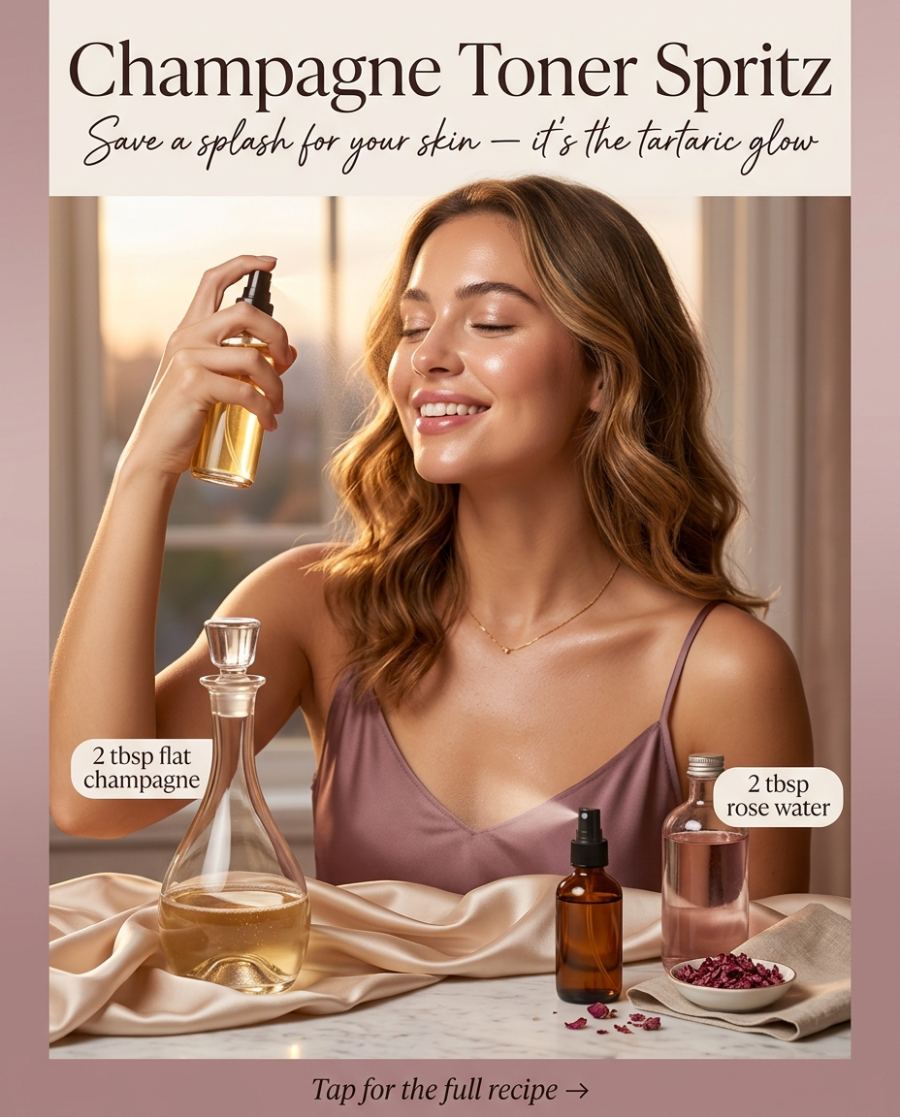
- 2 tbsp flat champagne
- 2 tbsp rose waterno rose water? use cooled chamomile tea
- Let the champagne go completely flat.
- Mix with rose water.
- Sweep over skin with a cotton pad in the evening.
- Rinse after 5 minutes and moisturise.
There is genuine chemistry beneath the glamour. Champagne carries tartaric acid — a true alpha-hydroxy acid — along with a little malic acid from the grapes. At toner strength, these tend to loosen the dull, ready-to-shed cells sitting on the surface, which is why skin often looks fresher after a short contact time and a rinse. Letting the bottle go completely flat matters more than it sounds: dissolved carbon dioxide adds sting without adding a single benefit.
Rose water is the diplomat of the pair. It halves the strength of the wine, lifts the scent from cellar to garden, and its long soothing reputation offsets the briskness of the acids and the trace of alcohol that comes with them.
That alcohol is also why this stays a five-minute, rinse-off treat. Brief contact borrows the acids' polish; a long soak would simply borrow the dryness. Two tablespoons of each is the whole idea — small, occasional, and finished within three days.
The common error is promotion. People enjoy the ritual so much they upgrade it to a daily leave-on toner — and that is precisely how the alcohol wins and skin ends up tight and flaky. This recipe works because the contact is brief: sweep it on, set a five-minute timer, rinse thoroughly, moisturise. Once a week, evenings only. If you find yourself reaching for it more often, decant sparkling water instead and save the champagne for Saturdays.
In the bottle it is the palest straw-pink, smelling of rose over a faint, dry wine note. On skin there is a brief, brisk tightness while it sits — brisk, not burning — and a fresh, slightly polished look after rinsing. Hot stinging or blotchy red patches mean rinse immediately; a vinegary sharpness from the bottle means the three days are up.
- 2 tbsp flat champagne → 2 tbsp flat prosecco or white wine no champagne is open — the tartaric acid is identical, only the story is cheaper
- 2 tbsp rose water → 2 tbsp cooled chamomile tea rose scent is not yours or your skin leans reactive — the dilution stays, calm is added
- 2 tbsp flat champagne → 1 tbsp flat champagne with an extra tablespoon of rose water you are trying it for the first time and want a gentler mix to gauge your skin's response
Sensitive or reactive skin should sit this one out entirely, as should anyone with rosacea-prone flushing, broken skin, or a week already busy with strong acids or retinoids. If you avoid alcohol for any reason, that choice extends to your toner. For everyone else, patch test the mixed dilution behind one ear the day before.
Once a week is the ceiling, always in the evening on freshly cleansed skin: sweep, five minutes, rinse, moisturise. Keep it away from nights you use exfoliating acids or retinoids — one polish per evening is enough. And be a touch more faithful with your sunscreen the following morning; freshly AHA-polished skin appreciates the cover.
Does champagne really do anything?
Tartaric acid is a genuine (mild) AHA and the fizz story is charming — think gentle glow, not miracle.
White wine instead?
It has the same acids — less glamour, same glow.
Why does it have to be completely flat?
Bubbles are dissolved carbon dioxide, which forms carbonic acid against damp skin — extra sting, zero extra glow. Leave the measured champagne uncovered for a few hours, or stir it briskly to chase the fizz out faster. Flat is not a compromise here; it is the recipe.
Can the open bottle wait a week for my next batch?
For toner purposes, yes — stoppered and refrigerated, the tartaric acid is going nowhere, though the wine oxidises and the smell sharpens. Give it a sniff before mixing: winey is fine, vinegary is not. The mixed spritz itself still only keeps three days.
It is diluted — could I just leave it on overnight?
Better not. The rose water softens the mix, but the alcohol keeps working for as long as it sits, and overnight that means moisture steadily wicking away. Five minutes takes the acids' polish; the rinse takes the dryness. That trade is the entire trick.