Oat Honey Lip Mask
✨ Chapped lips? Kitchen to the rescue
Fine oats and honey — a soft lip mask for lips that winter forgot.
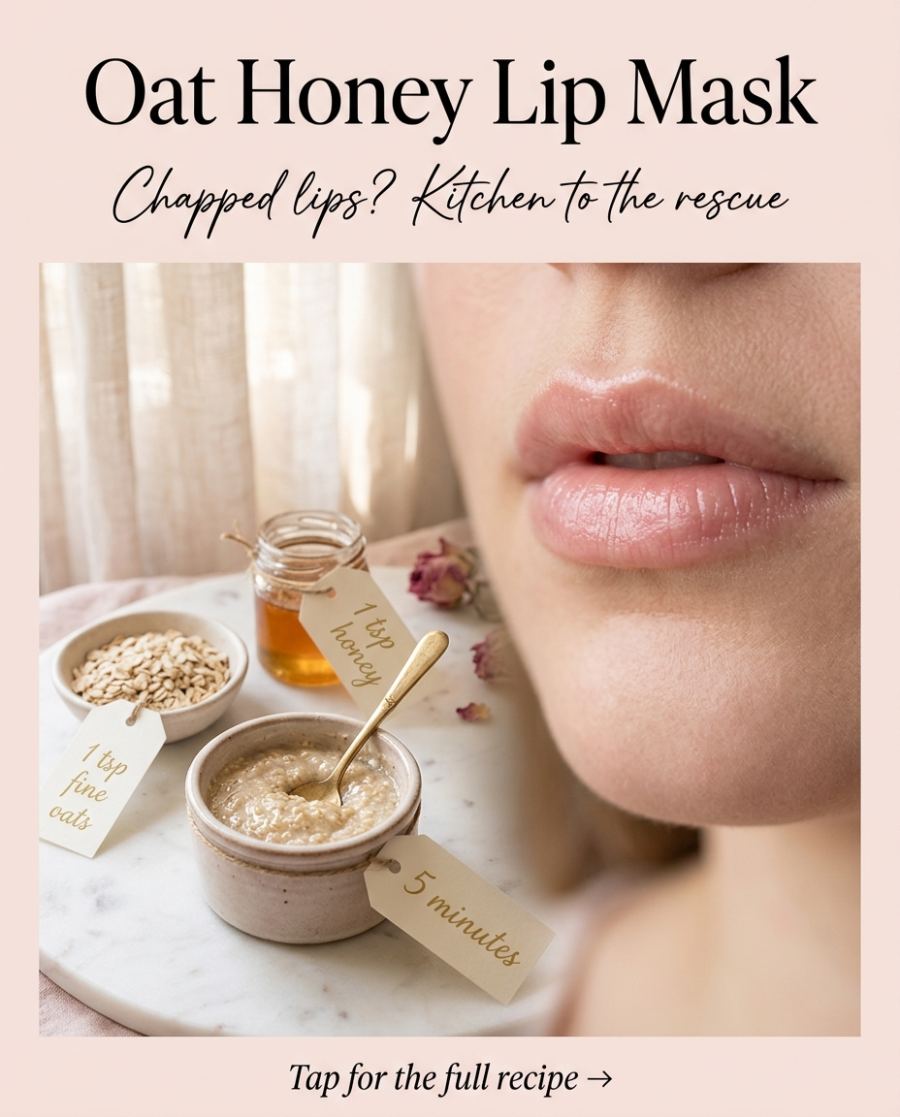
- 1 tsp fine oats
- 1 tsp honeyno honey? use maple syrup
- Grind oats extra fine.
- Mix with honey into a paste.
- Press onto lips; rest 5 minutes.
- Wipe warm and seal with balm.
Finely ground oats do two jobs at once here. Their beta-glucans — the same soluble fibres that make porridge creamy — form a soft, water-holding film over the lip surface, cushioning skin that has been chapped raw. Oats also carry naturally calming compounds, which is why oat baths have comforted irritable skin for centuries, and why this mask asks you to press rather than scrub.
Honey is the recipe's humectant: a sugar-rich syrup that draws water towards the skin and holds it there. It also binds the ground oats into a paste that stays put for the full five minutes — no dripping, no fuss.
The final act matters as much as the mask. Wiping warm rather than rubbing spares fragile new skin, and balm straight afterwards traps everything the honey has gathered. Softness, many people find, comes from that seal as much as from the soak.
Leaving the oats too coarse. Whole rolled oats have hard edges, and pressed onto chapped lips they behave like a scrub in disguise — precisely what healing skin doesn't need. Grind them until they resemble flour, not crumbs; a spice grinder, a blender's dry blade or a determined minute with a pestle will all get you there. If you can feel distinct oat pieces in the paste, grind again before it goes anywhere near your mouth.
The paste should be thick, golden and speckled, clinging to lips without sliding, and smelling gently of honey and warm porridge. During the five minutes it feels cushioning, perhaps faintly sticky, never scratchy. Afterwards lips look plumper and take balm smoothly. Stinging on contact or a gritty, sandy feel means the oats need a finer grind — wipe off and start over.
- Honey → Maple syrup You're vegan or simply out of honey — it binds and hydrates similarly, if a touch runnier.
- Oats you grind yourself → Colloidal oatmeal You want a silkier paste with zero grinding — it's sold pre-milled at pharmacies.
- Runny honey → Thick set honey Your paste keeps sliding off — set honey holds the oats in place far better.
A known oat or honey allergy rules this out, and anyone sensitive to pollen or other bee products should approach honey-based recipes with care. Lips with open, bleeding splits deserve plain balm and a few days' grace before any mask. First time round, press a little of the paste onto your inner wrist and check it the next day.
Evenings suit this best — after brushing your teeth, before bed, with balm sealing everything in overnight. During a chapped spell, make it the closing step of your night ritual for several days running, then ease back to a weekly treat once lips recover. Keep lip scrubs, even gentle ones, off the schedule entirely until the flaking has stopped.
Mask vs scrub — which for chapped lips?
Mask. Scrubs tear healing skin; masks feed it. Scrub only once healed.
How often?
Nightly until soft, then weekly.
Can I use instant or flavoured oat sachets?
Plain instant oats grind beautifully — they're already partly broken down, so they turn to flour in seconds. Flavoured sachets are the ones to avoid: added sugar, salt and sweeteners have no business on chapped lips. Check the packet reads oats and nothing else, then grind as usual.
Can I leave the mask on longer than five minutes?
Ten minutes does no harm if you're comfortable, but the honey has done most of its drawing-in by then and the paste starts to dry and tug. Five minutes, wiped warm, is the sweet spot. If you want more, repeat on another evening rather than doubling the sitting.
Why must it be made fresh each time?
Once moisture from the honey meets ground oats, the paste has no preservative to defend it, and a jar on the shelf invites spoilage within days. The quantities are tiny — a teaspoon of each — so mixing takes under a minute. Fresh means every application behaves exactly as it should.