Sea Moss Glow Gel
✨ The ocean's collagen for bouncy skin
Sea moss gel with aloe — the ocean's bounce for thirsty skin.
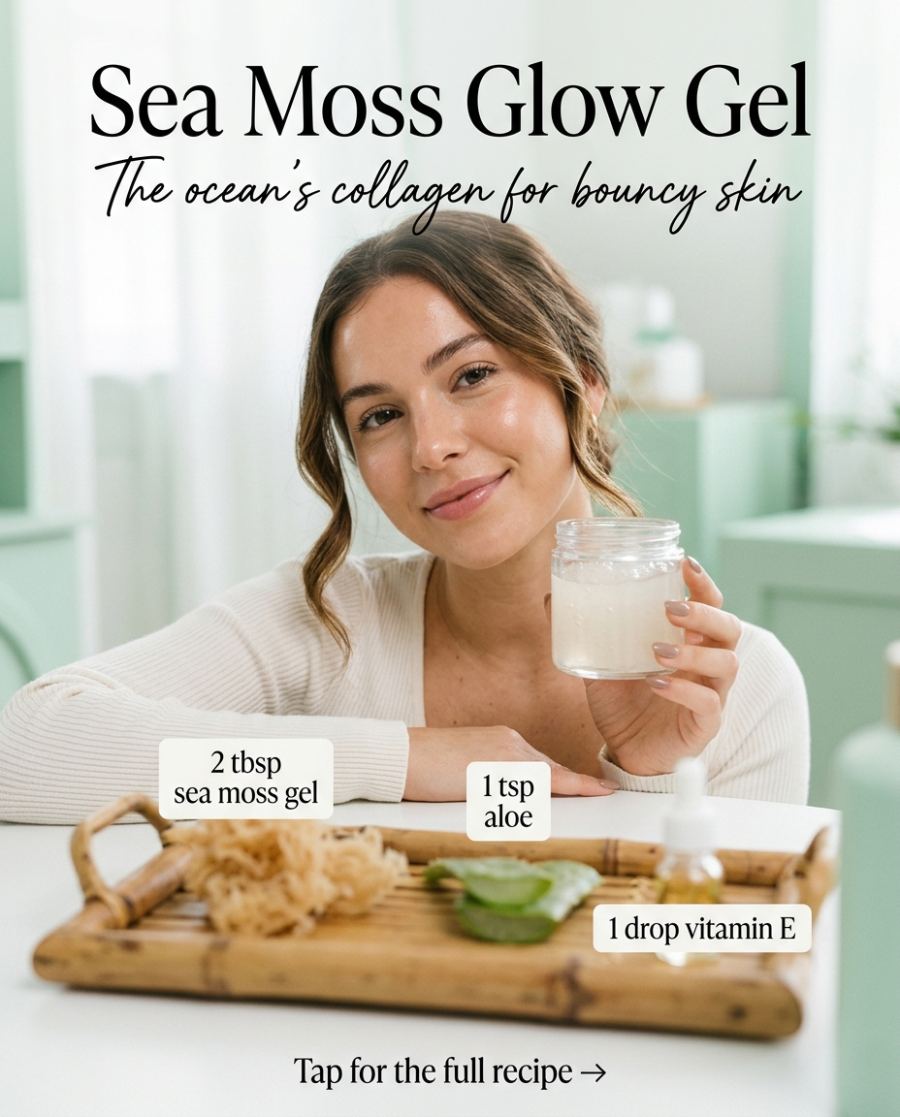
- 2 tbsp sea moss gel
- 1 tsp aloe
- 1 drop vitamin E
- Whisk sea moss gel with aloe until glossy.
- Add a drop of vitamin E.
- Press a thin layer onto damp skin at night.
- Follow with moisturiser to seal.
Think of this gel as a water-delivery system. Sea moss gel is mostly carrageenan — long chains of sugars extracted from the seaweed — and those chains do two useful things at once: they hold many times their weight in water, and they dry down into a fine, flexible film that keeps that water pressed against your skin. That film is what gives the finished gel its faint, satisfying bounce.
Aloe brings its own polysaccharides in a lighter texture, thinning the sea moss so it spreads evenly and adding the cooling, calming quality aloe is loved for. Together they behave like a simple homemade hydrating serum.
The single drop of vitamin E works backstage. It is an antioxidant, so it slows the oxidation that turns fresh preparations dull and off-smelling — a small insurance policy for a gel that lives in your fridge for a fortnight.
Most failures here are storage failures. People whisk up a beautiful batch, leave the jar on the bathroom shelf, and wonder why it smells like low tide by Thursday. This gel is fresh food for microbes — water, sugars, no preservative — so it must live in the fridge, sealed, and be finished within 2 weeks. Scoop with a clean, dry spoon rather than fingers, and make batches small enough to actually use up.
Straight from the jar it should be a glossy, pale, slightly oceanic gel that spreads thin and turns briefly tacky before damp skin drinks it in. A whisper of sea scent is normal. What is not normal: a sour or fishy smell, visible separation, or a slimy stringiness that was not there on day one — bin it and blend fresh.
- 2 tbsp sea moss gel → 2 tbsp flaxseed gel If you cannot find sea moss or react to seaweed — simmered flaxseed gives a very similar bouncy film.
- 1 tsp aloe → 1 tsp strained cucumber juice When aloe leaves your skin tingling, as it does for some — cucumber hydrates without the prickle.
- 1 drop vitamin E → 2 drops jojoba oil If you have no vitamin E capsules to hand; you lose the antioxidant boost, so finish the batch within a week.
Anyone with a seafood or seaweed allergy should sit this one out — sea moss is seaweed, however pretty the jar. Very reactive or freshly exfoliated skin may also find aloe tingly. If either ingredient is new to you, smooth a little inside your elbow as a patch test and wait a full day before using it on your face.
Slot it into evenings, three or four nights a week — or nightly if your skin is truly parched. It goes on damp skin straight after cleansing, always under moisturiser, never instead of it. It plays nicely with most routines, though on nights you use a strong exfoliating acid, many people find it kinder to keep things simple and let the gel rest.
Where do I get sea moss gel?
Health shops sell it prepared, or simmer dried Irish moss and blend.
Does it replace moisturiser?
No — it hydrates, then cream locks it in. Team effort.
Can I use it in the morning too?
Yes — it sits well under sunscreen and makeup once it has fully settled, which takes a few minutes. Keep the layer thin in the morning; a thick coat can pill under other products. Straight from the fridge, it doubles as a rather pleasant wake-up step.
Can I freeze it in portions?
You can. Spoon the gel into an ice-cube tray, freeze, then thaw one cube in the fridge as needed — each lasts a few days once defrosted. The texture loosens slightly after freezing, so give it a quick stir before pressing it onto damp skin.
Why has my gel gone watery?
Two usual suspects: the sea moss gel was thin to begin with — home batches vary with how much water was blended in — or wet fingers carried water into the jar. A runnier gel still hydrates; just treat it like an essence and pat it in with fingertips.