Ginger Scalp Energizer
✨ Wake up lazy roots with one root
Fresh ginger juice in warm jojoba — a tingling wake-up call for lazy roots.
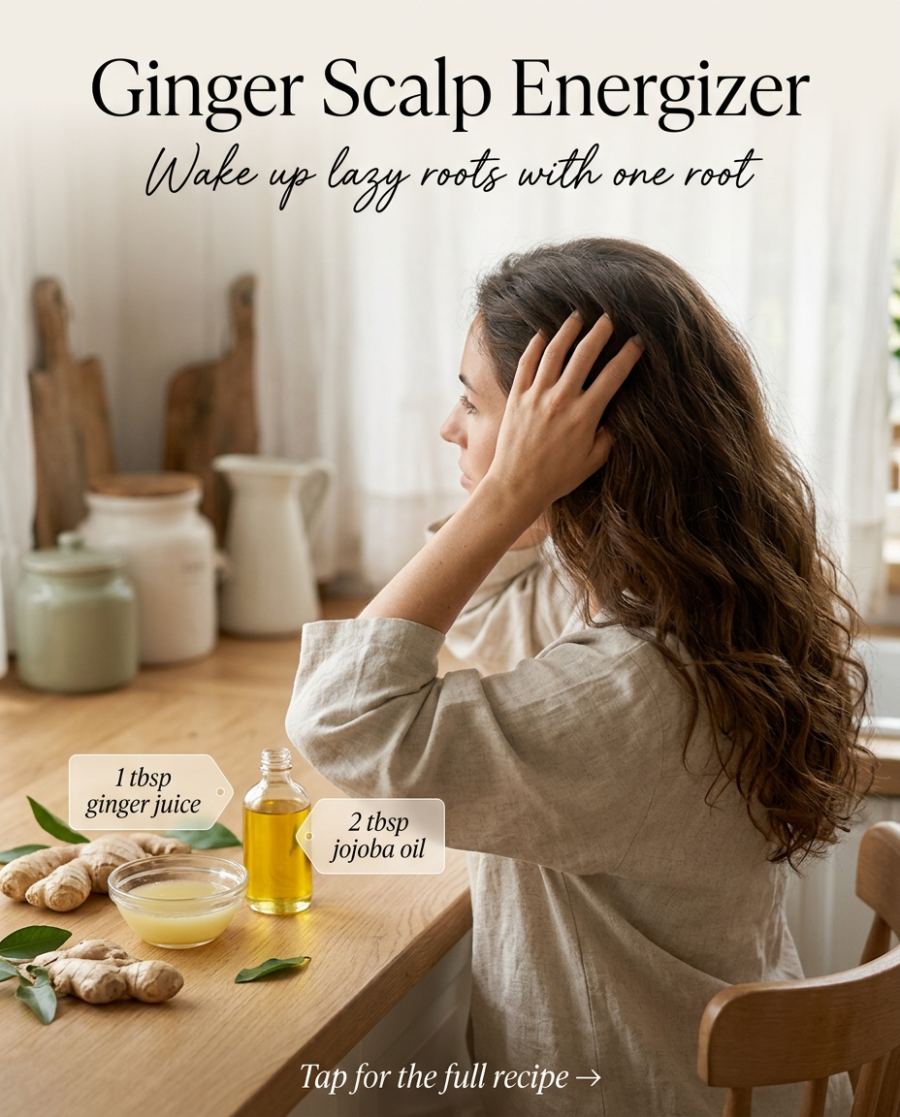
- 1 tbsp ginger juice
- 2 tbsp jojoba oilno jojoba oil? use sunflower oil
- Grate and press ginger for a tablespoon of juice.
- Whisk into the jojoba oil.
- Massage into the scalp 3 minutes.
- Rest 30 minutes, then shampoo out.
Fresh ginger juice brings gingerol, the pungent compound behind that signature tingle. Massaged in, it draws blood towards the skin's surface — you can often see the faint flush — and a well-supplied scalp tends to be a better home for the follicles doing the actual work.
Jojoba is the ideal partner because it is technically a liquid wax rather than an oil, with a structure close to your scalp's own sebum. It dilutes the ginger to a friendly strength, carries it evenly across the skin, and shampoos out without leaving roots flat or greasy.
Then there is the massage itself, which earns its three minutes. Fingertip pressure moves blood and lymph, loosens a tight scalp and helps the mixture reach skin rather than sitting on hair. The ginger provides the spark, but your hands do a surprising share of the good.
The usual blunder is doubling the ginger on the logic that more tingle means more growth. It does not — it means a burning scalp, and sometimes a day of redness. One tablespoon of juice in two of jojoba is the working ratio; stronger mixes only force an early rinse. If you feel heat rather than warmth in the first few minutes, wash it out and dilute further next time.
Expect a pale, faintly peppery-smelling oil and a warm, prickling glow that settles into gentle heat during the massage. The scalp should feel awake, not aflame. After shampooing, roots feel clean and slightly springy. Genuine burning, an itch that builds, or blotchy redness that outlasts the rinse means the mix was too strong for you.
- jojoba oil → grapeseed oil your hair is fine and easily weighed down — grapeseed is thinner and shampoos out in one wash.
- jojoba oil → sweet almond oil your scalp runs dry and nuts are safe for you — almond leaves a touch more softness behind.
- fresh ginger juice → grated ginger steeped in the warmed jojoba, then strained out you want a gentler first outing — infusing gives the warmth without the full sting.
Give this one a miss if your scalp is broken, sunburnt, freshly coloured or prone to flaring up — ginger is a deliberate stimulant, and an irritated scalp needs calm rather than spark. The same goes for the fortnight after chemical treatments. Everyone else should still patch-test the finished mix behind one ear and wait a day before the first full session.
Once a week is plenty, ideally the evening of or before wash day so the shampoo-out folds into your existing routine. Keep it apart from other scalp actives: if rosemary water is part of your week, use it on different days rather than layering the two, and let the scalp rest completely for a day or two after each ginger session.
Does ginger grow hair?
It boosts scalp circulation, which supports healthy growth — supportive, not magic.
How often?
Once a week alongside your rosemary water.
Can I leave it on overnight?
No — thirty minutes is the ceiling for good reason. Ginger keeps working for as long as it sits there, and what feels like pleasant warmth at minute twenty can become irritation by hour three. Overnight treatments suit bland oils; this one is a stimulant on a timer.
Do I need to strain out the pulp?
Yes — press the grated ginger through a sieve or clean cloth and use only the liquid. Stray fibres cling to the scalp, itch, and refuse to shampoo out cleanly. A tablespoon of clear juice whisks into jojoba far more evenly than a wet mush ever will.
Will it help with dandruff?
It is not designed for that. Flaking has several possible causes, and a stimulating oil can soothe one scalp while aggravating another. If your flakes are greasy or your scalp feels inflamed, settle that first with a gentle routine — energising treatments belong on a calm scalp.