Honey Sugar Elbow & Knee Polish
✨ Eight quiet minutes for the joints you forget
A softening paste for the spots we all forget — honey to hydrate, fine sugar to polish, a spoon of yoghurt and olive oil to leave rough elbows and knees feeling smooth.
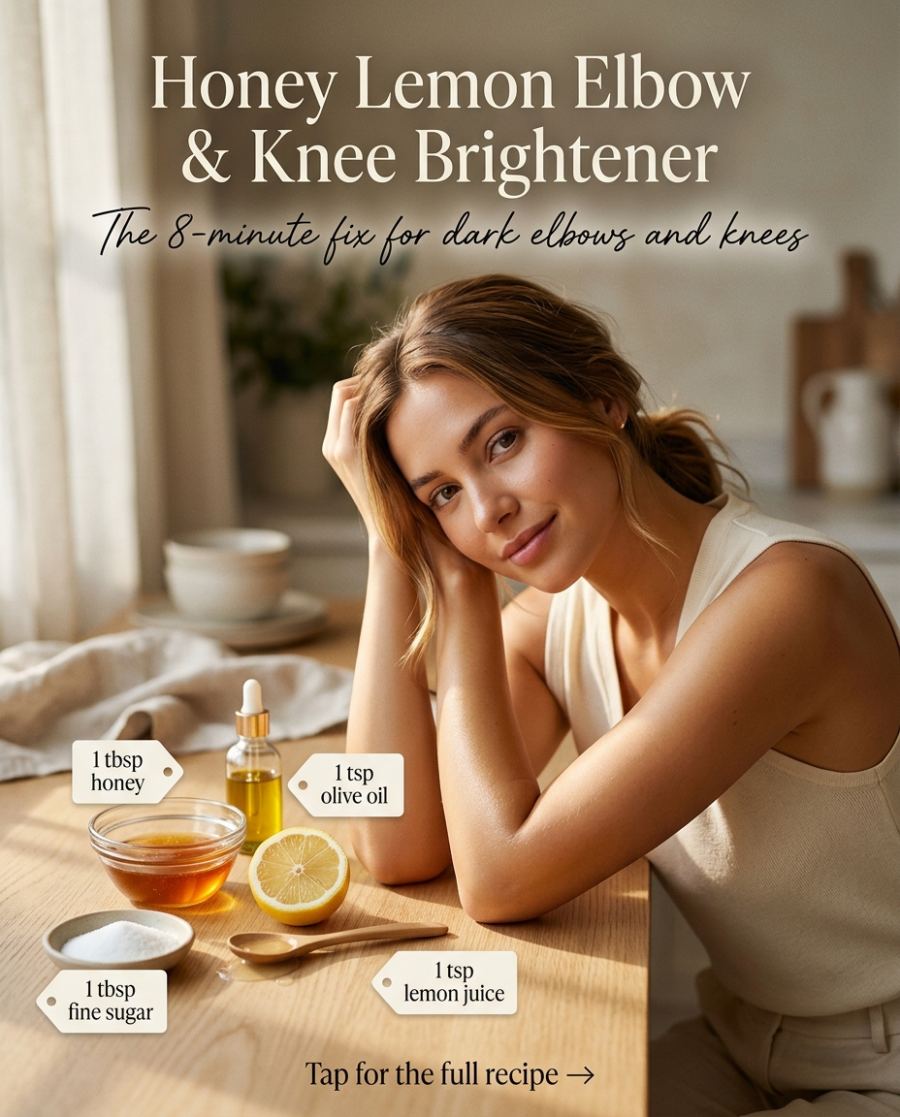
- 1 tbsp honeyno honey? use maple syrup
- 1 tbsp fine sugarno fine sugar? use finely ground brown sugar
- 1 tsp plain yoghurtno yoghurt? use a teaspoon of milk
- 1 tsp olive oilno olive oil? use sunflower oil
- Stir the honey, yoghurt and olive oil together first, then fold in the sugar so the crystals stay whole.
- Massage onto damp elbows and knees in slow, light circles for a full minute each.
- Let it sit for eight minutes so the honey and yoghurt can soften the skin.
- Rinse warm, pat dry, and seal with a drop of olive oil or your usual body cream.
Each spoonful has one job. Honey is the cushion and the humectant — it binds water into skin that has grown thick and thirsty, and gives the paste its cling so it stays put through the eight-minute rest. A teaspoon of plain yoghurt adds a soft, creamy slip and a whisper of lactic acid, the gentlest of the fruit-and-milk acids, in a dose small enough to be comfortable on intact skin.
The fine sugar is the polish, and a self-limiting one — its crystals soften and begin to dissolve as you massage, so the scrub grows gentler the longer you go rather than harsher. That is why fine sugar beats coarse here.
Olive oil rounds out the formula. It lubricates the massage so the sugar glides instead of scratching, and it leaves a trace of lipids behind on skin that elbows and knees, forever leaning on desks and floors, chronically lack. What you get is softness. What you will not get is a change in skin colour — thickened, darker-looking joints are a friction habit, not a stain, and no scrub lightens them. Regular moisture makes them look less dry and less grey; that is the honest whole of it.
Scrubbing harder in the hope of faster results. Pressure does not lift thickened skin more effectively — it just leaves elbows red and tender, and tender skin is exactly what you cannot exfoliate next time, so the twice-weekly rhythm breaks. Keep the circles slow and light for one minute per joint, then stop; the eight-minute rest is where the honey does the real softening.
The paste should be thick, grainy and amber, smelling warmly of honey with a faint dairy tang — it clings to a bent elbow without sliding off. Skin afterwards feels notably smoother and comfortable. A little warmth during the rest is normal; actual stinging, or redness that outlasts the evening, means rinse immediately and wait a week before trying it with less sugar.
- 1 tsp plain yoghurt → 1 tsp mashed banana You avoid dairy — banana gives the same soft slip without the tang.
- 1 tbsp fine sugar → 1 tbsp soft brown sugar White sugar feels scratchy on you — brown crystals are rounder and more forgiving.
- 1 tsp olive oil → 1 tsp sweet almond oil You would rather not smell faintly of the kitchen — almond is lighter and near-scentless.
Give this one a miss on broken, freshly shaved or eczema-prone skin, where sugar will announce itself unkindly. Skip the yoghurt if you react to dairy on your skin, and keep the paste off the face entirely — it is a body scrub. Patch test the finished paste on your inner forearm the day before.
Twice a week, in the evening so skin can rest overnight. Tuesday and Friday, say, for three weeks, with body cream on the joints every day in between; the daily moisture matters as much as the scrub days do. Do not run it alongside any other exfoliant on the same patches.
Why are elbows and knees darker?
Constant friction and pressure thicken the skin there, and thick, dry skin looks duller and greyer than the skin around it. Gentle regular polishing plus daily moisture is what makes them look cared for — it does not change the skin's actual colour, and nothing in a kitchen does.
Can I use this on my face?
No — sugar is too harsh for facial skin. Keep it for the tough zones: elbows, knees and heels.
How long before elbows feel smoother?
Softness usually arrives within the first week. Thickened skin built up over years does not change in a fortnight, and the daily cream between scrub days does as much for the end result as the paste itself.
Can I use the same paste on knuckles or heels?
Knuckles, yes — same slow circles, but half the time, since the skin there is thinner than an elbow's. Heels tolerate the full treatment happily and often welcome an extra minute of massage. Keep it off the tops of the feet and any cracked skin.
Why must the skin be damp first?
Water is the lubricant that lets sugar glide rather than drag. On dry skin the crystals catch and scratch; on damp skin they roll, polishing without scoring. A quick warm rinse before you start also softens the outer layer slightly, so the paste has less resistance to work against.