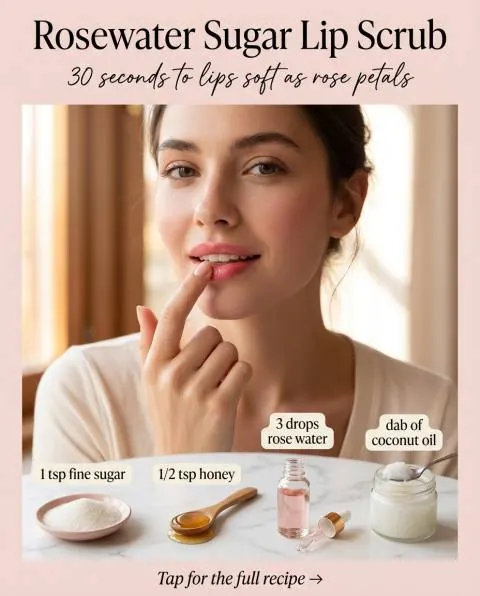
Sugar Vanilla Lip Scrub
A sweet little scrub that buffs away lip flakes — fine sugar polishes while honey and coconut oil leave lips baby-soft and glossy.

You will need
- 1 tsp fine sugarno fine sugar? use soft brown sugar
- 1/2 tsp honey
- 1/2 tsp coconut oilno coconut oil? use olive oil
- 1 drop vanilla extract
The ritual
- Stir everything into a soft, grainy paste.
- Massage onto lips in tiny circles for 30 seconds.
- Let it sit one minute so the honey can soften.
- Wipe or lick off (it's food-safe), then swipe on a balm.
The mistake most people make
Pressure is the mistake here. Lips are some of the thinnest skin on the body, yet people scrub as though cleaning a saucepan: hard circles, a full minute, then wonder why their lips sting under balm. Let the sugar do the work with featherlight pressure for thirty seconds, and stop. If your lips are already cracked or split, skip the scrub entirely until they recover; sugar on broken skin helps nobody.
Why these ingredients
- 1 tsp fine sugar
- The polish — fine grains lift flaky bits without tearing at lip skin the way coarse sugar does.
- 1/2 tsp honey
- Binds the scrub and holds moisture so lips don't feel raw afterwards.
- 1/2 tsp coconut oil
- Gives slip, so you're gliding rather than scrubbing.
- 1 drop vanilla extract
- Scent and a little sweetness — it's a lip scrub, it should be nice.
Smart swaps
- 1 tsp fine sugar → Caster sugar, or brown sugar for a softer grain.
- 1/2 tsp honey → Maple syrup (vegan).
- 1/2 tsp coconut oil → Olive or almond oil.
- 1 drop vanilla → A drop of peppermint, if you like the tingle.
Keep it clean
Mix with freshly washed hands and clean, dry bowls and spoons. If a recipe is stored, use a jar or bottle washed in hot soapy water and dried completely, and never dip wet fingers into the batch.
Who should skip it
Anyone with actively cracked, split or cold-sore-prone lips should sit this one out until things calm down, since friction can make both worse. A coconut allergy means swapping the oil, and if flavoured balms tend to set your lips tingling, go cautiously. Rub a little of the mix on your inner wrist first as a patch test.
Storage & when to let go
Small jar, cool spot, up to 1 week. Use a clean finger each time.
What to expect — honestly
Thirty seconds and lips are noticeably smoother — lipstick sits better, and that's the whole promise. It won't stop lips chapping; that's usually weather, licking, or dehydration, and a balm plus water does more. Never scrub cracked, split or bleeding lips — let them heal first. Once or twice a week is plenty; daily scrubbing makes lips more raw, not less.
Where it fits in your week
Once or twice a week covers almost everyone; lips renew quickly and do not need daily polishing. It slots in nicely before bed, or before lipstick, since smooth lips hold colour better. Always follow with a proper balm while lips are still slightly damp. Give minty or menthol balms a miss straight afterwards, as they can tingle sharply on freshly scrubbed lips.
Common questions
How often?
2-3 times a week; over-scrubbing makes lips more chapped.
Can I use brown sugar?
Yes, but grind it fine — coarse grains are too rough for delicate lips.
Can I make a bigger batch and store it?
You can, with care. A small jar of sugar, oil and honey keeps for a week or two provided no water gets in, because water is what turns these mixes. Scoop with a clean, dry spoon rather than a wet finger, and keep the lid on away from shower steam. If it smells odd, start fresh.
Why do my lips feel dry an hour after scrubbing?
Usually the balm step was skipped or rushed. Scrubbing lifts flaky skin, but that ragged layer was, in its own way, holding a little moisture in. Freshly scrubbed lips want something protective on top within a minute or two; a thick balm, or a dab of the leftover coconut oil, does nicely.
Is it a problem if I swallow a bit?
Everything here is kitchen food, so a stray lick is fine; that is half the charm. Still, it is a scrub rather than a snack, and vanilla extract contains alcohol, which is one reason the recipe keeps it to a single drop. Keep the jar away from small children who may not see the difference.
This recipe is shared for general cosmetic enjoyment, not medical advice — see how we research and write in our editorial policy and the full safety guide.