Rose Clay Detox Mask
✨ Pink clay pulls the week off your face
Soft pink clay and rose water pull the week off your face without stripping it.
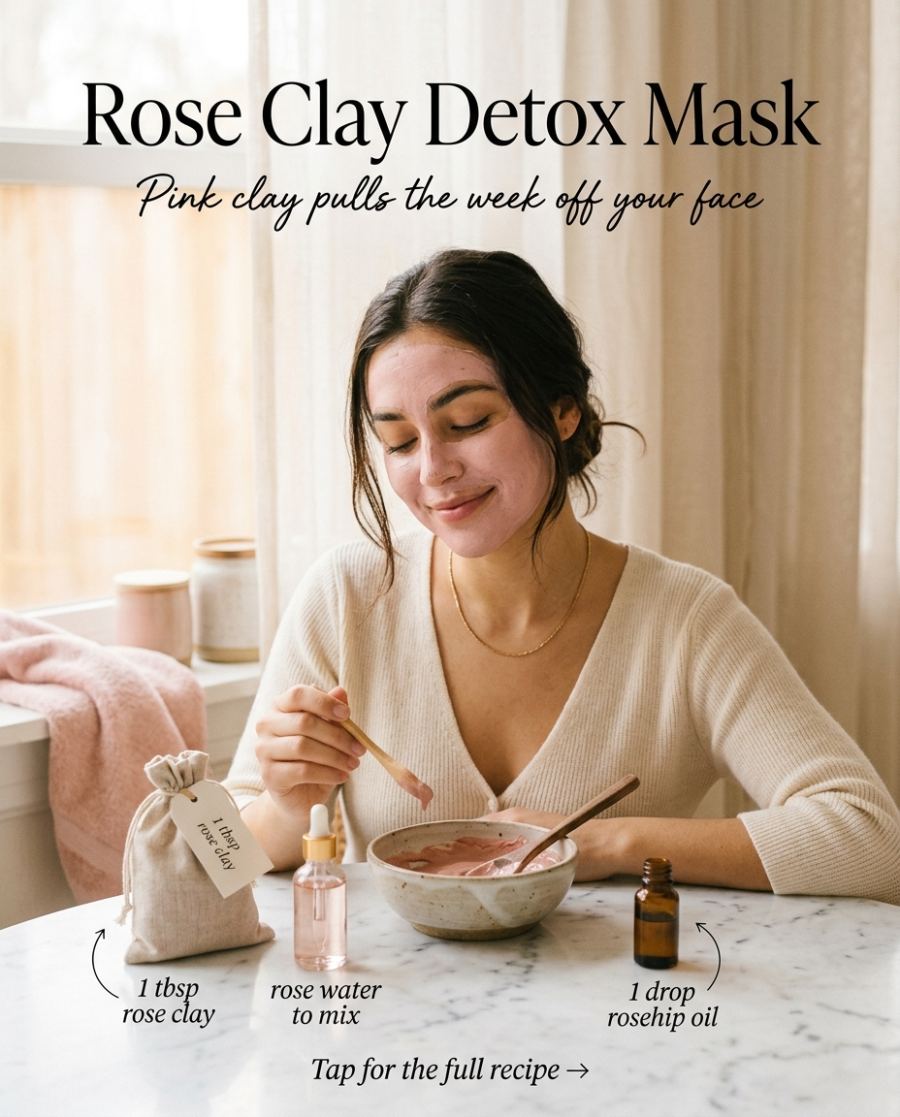
- 1 tbsp rose clay
- rose water to mixno rose water? use cooled chamomile tea
- 1 drop rosehip oil
- Mix rose clay with rose water to a yogurt texture.
- Add one drop of rosehip oil.
- Smooth on, avoiding eyes; rest 8 minutes.
- Rinse while still slightly damp.
Rose clay is essentially kaolin blushed pink by iron oxides, and kaolin is the mildest of the cosmetic clays. Its plate-like particles carry a gentle negative charge that attracts oil, grime and the day's grey film, lifting them away as the mask sets — absorption without the tight, squeaky aftermath stronger clays leave behind.
Mixing with rose water instead of tap water is a small upgrade with real logic. It keeps the paste slightly acidic and closer to skin's own pH, and its trace floral compounds tend to feel calming on a face that has spent the week in city air.
The single drop of rosehip oil is the counterweight. Rich in linoleic acid, it slips a whisper of lightweight lipid back into the mix, so the clay draws out excess oil without borrowing from the moisture your skin actually needs. One drop is deliberate — more would blunt the clay's grip.
Letting the mask dry to a pale, cracked crust is the error that undoes everything. Fully dried clay starts pulling water back out of your skin, which is why faces feel tight and parched afterwards. Set a timer for eight minutes and rinse while the mask is still tacky and deep pink at the edges. If it goes chalky before the timer sounds, you mixed it too thin — aim for yogurt, not soup.
Mixed right, the paste is a dusky rose colour with the body of thick yogurt — it should sit on the back of a spoon without sliding. On skin it cools, then firms gently, with a light rose scent. Rinsed off, your face should feel clean, soft and faintly polished. Itching or hot red patches that persist beyond a few minutes are your signal to rinse sooner next time — or retire the mask.
- rose water to mix → cooled chamomile tea you are out of rose water, or fragrance of any kind tends to irritate you
- 1 drop rosehip oil → 1 drop jojoba oil rosehip is beyond budget or oxidises too fast in your cupboard — jojoba keeps far longer
- 1 tbsp rose clay → 1 tbsp white kaolin clay rose clay is hard to find locally — white kaolin behaves almost identically, minus the pretty pink
Very dry, flaking or eczema-prone skin rarely thanks any clay mask, however gentle — the oil it lifts may be oil you need. The same goes for skin mid-flare from retinoids or peels, and fragrance-sensitive faces should note the rose water. Smooth a little mixed paste behind your ear and wait a day before the first full mask.
Once a week is the sweet spot, with a second mask allowed in heavy-city or heavy-makeup weeks. Evening is ideal — cleanse, mask, rinse, then go straight into your usual moisturiser while skin is damp. Keep it away from exfoliating-acid or retinoid nights; clay plus actives on the same evening is more stripping than either alone.
Rose clay vs charcoal?
Rose is the gentle detox for weekly use; charcoal is the deep clean for oily weeks.
Why non-metal bowls?
Tradition says metal weakens clay's charge — wooden spoon keeps the ritual pure (and it can't hurt).
Can I mask only my T-zone?
Absolutely — multi-masking suits rose clay well. An oilier nose and forehead can take the full eight minutes while drier cheeks get five, or none at all. Mix the same yogurt-thick paste and simply paint it where the shine lives. Many combination-skin people find this keeps their balance better than a full-face mask ever did.
How much rose water do I actually need?
Roughly one tablespoon for one tablespoon of clay, added a teaspoon at a time. Clays vary in thirst, so trust the texture rather than a fixed measure: stop when the paste falls thickly off the spoon like yogurt. Too runny and it dries patchily; too stiff and it drags going on.
Does leftover mixed paste keep?
No — mix only what one face needs. Once wet, clay has no preservative, and a damp paste left in a bowl overnight is a hospitable place for microbes. The dry clay is the part that keeps for a year, so keep water out of that jar and spoon out each mask fresh.