Rosehip Scar Fade Oil
✨ 3 drops nightly — a softer look over time
Rosehip oil with a drop of lavender — three patient drops a night for softer-looking marks.
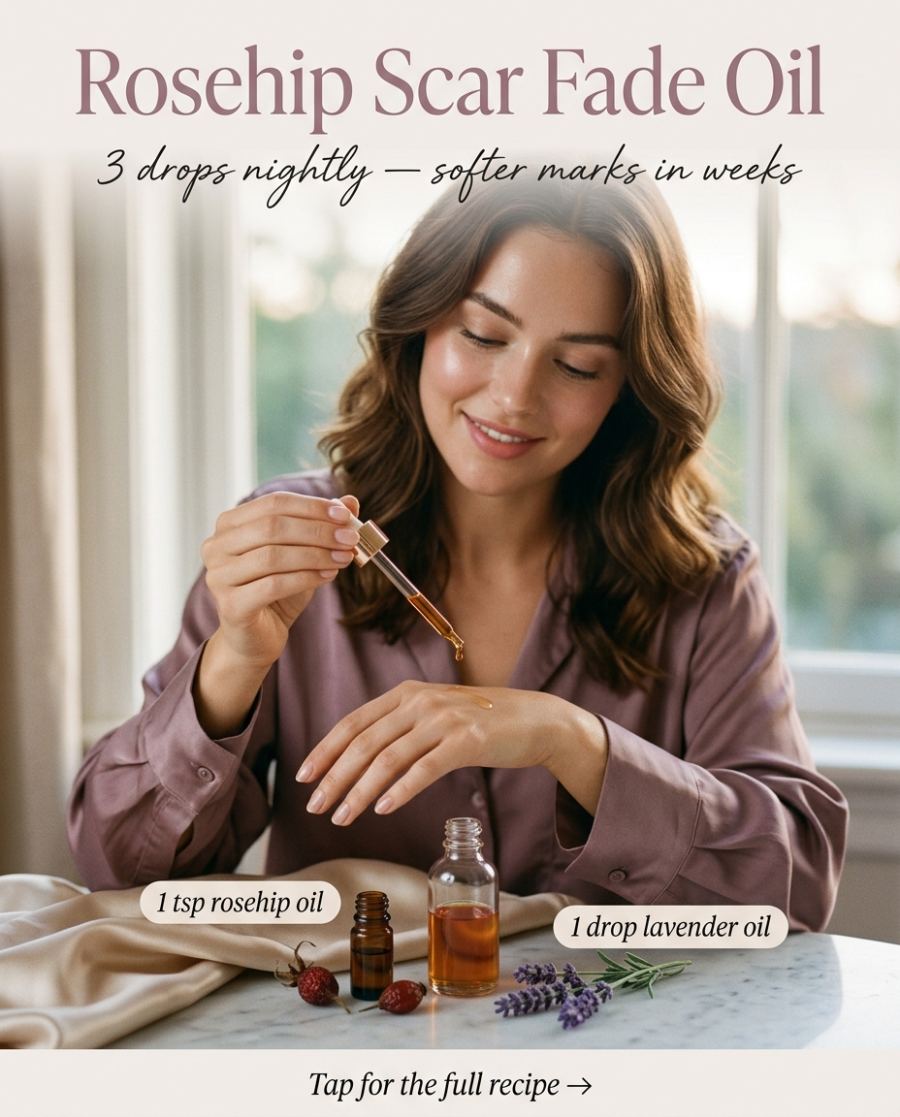
- 1 tsp rosehip oil
- 1 drop lavender oil
- Mix rosehip and lavender in a tiny dropper bottle.
- Press 3 drops onto the marks nightly.
- Massage each spot 30 seconds in circles.
- Be patient — weeks, not days.
Rosehip oil earns its reputation from two things working in tandem: a very high share of linoleic and alpha-linolenic fatty acids, which keep the skin barrier supple and well conditioned, and a natural trace of trans-retinoic acid — a gentle relative of the retinoid family that tends to encourage surface renewal with steady use. That pairing is why research on rosehip describes a softened look to marks over eight to twelve weeks, never overnight.
The single drop of lavender keeps the blend fragrant and traditional. Many people find the scent turns the nightly application into a small, keepable ritual — which is quietly the point, because consistency is what moves the needle on marks.
Then there is the massage itself. Thirty seconds of firm little circles per spot brings blood flow to the area and mechanically softens the tissue, and therapists have long paired massage with oils on healed marks for precisely that reason. The oil gets the credit; the fingertips share the work.
Giving up at week two — or the opposite, doubling the drops to hurry things along. More oil does not fade marks faster; it simply leaves a film, and extra lavender raises the odds of irritating the very skin you are trying to settle. Keep to three drops and the 30-second massage, and take a phone photo at weeks four, eight and twelve so the gradual change is actually visible to you.
Fresh rosehip is a deep amber-gold, lightly earthy under the lavender, and three drops should sink in within a couple of minutes leaving only a soft, barely-there sheen. The warning signs are unmistakable: a rancid, fishy or old-crayon smell, or oil gone pale and thin. That is oxidation, and the bottle should be replaced rather than persevered with.
- 1 drop lavender oil → nothing at all Fragrance sensitivity, or marks close to the face — plain rosehip works perfectly well alone.
- 1 tsp rosehip oil → 1 tsp tamanu oil Rosehip is hard to find locally — tamanu is thicker and stronger-scented but has its own long history on marks.
- 1 drop lavender oil → 1 drop frankincense oil You prefer a resinous scent for the night ritual — patch-test it just as carefully.
Pregnant readers and anyone sensitive to fragrance should leave the lavender out and use rosehip alone. Active blemishes, open wounds and freshly closed cuts are not ready for this — wait until marks are fully healed and sealed. Because essential oils are common sensitisers, dab the finished blend inside your wrist and give it 24 hours first.
Nightly is the whole method — this is a consistency treatment, not an occasional one. Make it your final step before bed, after cleansing and anything water-based, so the oil seals the rest in. If you use a retinoid, alternate nights on the same spots rather than layering them. By day, sunscreen over the marks quietly does the other half of the work.
Can rosehip change how marks look?
Small studies suggest rosehip oil may gradually improve the look of marks over a couple of months, but the evidence is limited and results vary. No oil removes scars, and raised, deep or new scars deserve a dermatologist’s advice.
Old scars too?
Fresh (healed) marks respond best; old ones soften subtly.
Can I apply it in the morning instead?
Night suits it better. Rosehip's fragile fatty acids prefer darkness, the amber tint and light sheen can interfere with makeup, and an evening slot turns the 30-second massage into a wind-down habit. If mornings are your only option, keep sunscreen over the top — shaded marks fade faster.
Why does it have to live in the fridge?
Rosehip is unusually rich in polyunsaturated fats, which oxidise quickly in warmth and light — and an oxidised oil smells fishy and does nothing for marks. Cold, darkness and a small dark bottle slow that decline, stretching useful life to about three months. Sniff it now and then; your nose is the best freshness test.
Does it work on stretch marks as well?
Many people use the identical routine on stretch marks, and newer, still-pinkish ones tend to respond most visibly. The same rules apply — three drops per area, the daily 30-second massage, and patience measured in months. Silvery, long-established marks may soften in texture more than they change in colour.