Grape Antioxidant Mask
✨ Crush 5 grapes — feed your skin youth
Five crushed grapes — resveratrol-rich skin food in the simplest mask we know.
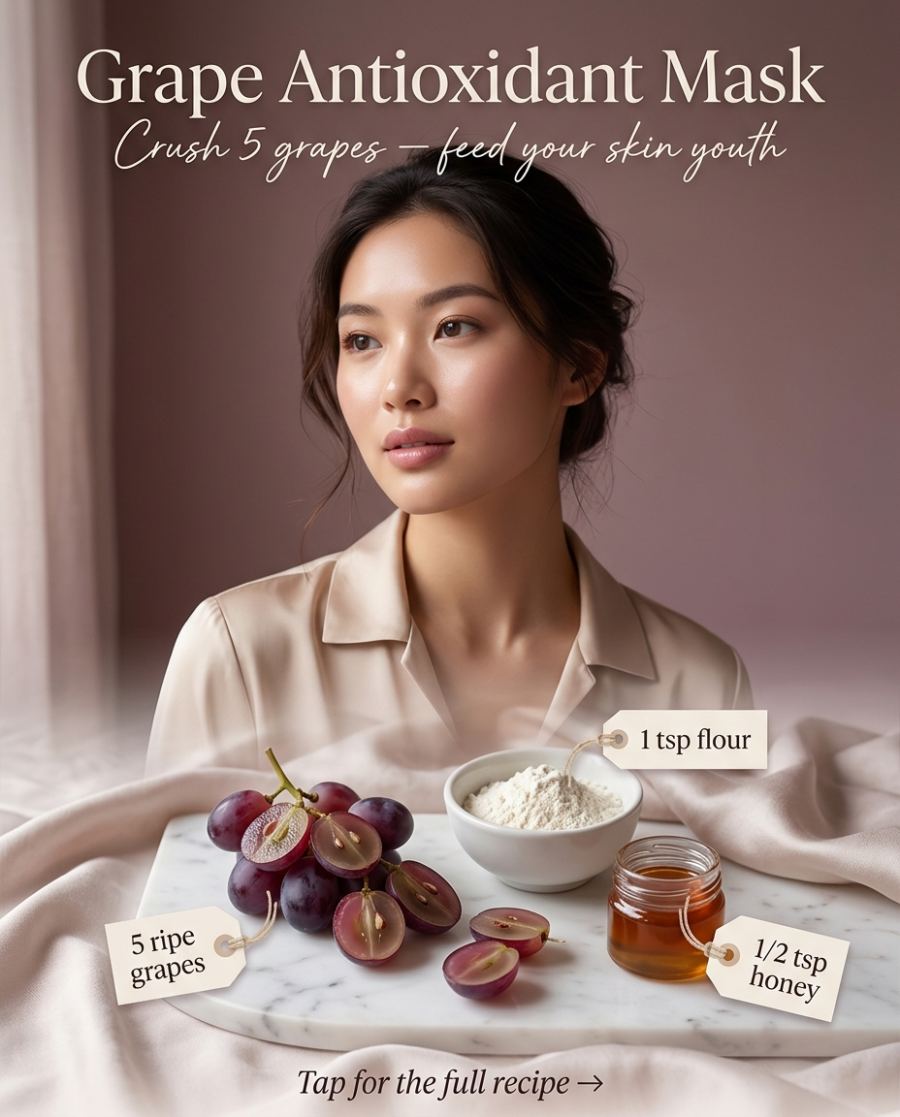
- 5 ripe grapes
- 1 tsp flour
- 1/2 tsp honeyno honey? use maple syrup
- Crush the grapes and strain off excess juice.
- Stir in flour and honey to thicken.
- Smooth over face and neck; rest 10 minutes.
- Rinse cool.
Grape skins are where the interest lies. They carry resveratrol, a polyphenol prized in cosmetic chemistry as an antioxidant — it may help neutralise the free radicals that leave skin looking dull and tired before its time. The flesh adds gentle fruit acids, chiefly tartaric, which tend to loosen the dry surface cells that scatter light unevenly.
The teaspoon of flour is quieter but just as necessary. Its starch granules absorb the runny juice and give the mask enough body to sit on skin rather than slide off it, and they lend a soft, mattifying finish as the mask dries.
Honey rounds out the trio. As a humectant it draws water towards the skin's surface and holds it there, so the fruit acids can do their gentle work without leaving you feeling tight. Many people find that half a teaspoon is exactly what makes the rinse-off comfortable rather than squeaky.
Most people go wrong by not straining properly. Crushed grapes are mostly juice, and if you stir the flour into that puddle you get a thin batter that slides down your neck within minutes — most of the goodness ends up on a towel. Press the pulp through a sieve or your fingers first, keep only the thick part, and add the flour gradually until the mixture holds its shape on the back of a spoon.
Made right, this is a dusky lilac-to-plum paste about the thickness of yogurt, smelling sweetly of fresh grapes with a faint bready note from the flour. It should feel cool and slightly tacky going on, then settle into a soft film. If it drips, it is too wet; if it smells fizzy or winey, the grapes have begun to ferment — bin it and start fresh.
- 1 tsp flour → 1 tsp finely ground oats your skin runs sensitive and you'd like a calmer, wheat-free base
- 1/2 tsp honey → 1/2 tsp maple syrup you keep a vegan kitchen — it's a fair humectant stand-in
- 5 ripe grapes → 5 dark frozen grapes, thawed fresh grapes are out of season; thaw fully and drain well before crushing
Grape sensitivity is genuinely uncommon, but the fruit acids can tingle on freshly exfoliated skin, so give this mask a miss in the week after peels, scrubs or new actives. Anyone sensitive to wheat should take the oat swap. Whoever you are, smear a little inside your wrist and wait 24 hours before the first full application.
Once a week is the sweet spot, ideally in the evening so skin can rest afterwards. It pairs happily with a gentle cleanse before and a plain moisturiser after. Don't stack it on the same night as an acid toner or retinol — the grape's own fruit acids are quite enough. If the egg white mask is also in your rotation, keep the two on separate nights.
What's resveratrol?
The famous antioxidant in grape skins — in creams it fights dull, tired-looking skin.
Seeded or seedless?
Either — crush seeds too if you're brave, they hold extra goodness.
Can I use green grapes?
You can — the mask still hydrates and softens — but the tip about dark grapes stands. Purple and black skins hold noticeably more resveratrol and anthocyanin pigments, so choose the darkest bunch the shop offers. Think of green grapes as the fallback, not the first pick.
My mask turned out grainy — did I do something wrong?
Probably just the flour clumping. Add it a pinch at a time and stir well between pinches rather than tipping it in all at once. A few flecks of grape skin are perfectly normal, though — they soften against warm skin and rinse away without any scrubbing at all.
Should I cleanse before or after the mask?
Before, always — the mask sits best on clean, slightly damp skin. Afterwards, the cool-water rinse is all you need; a second cleanse would strip away the softness the honey leaves behind. Follow with your usual moisturiser and consider the evening's work done.