Beetroot Lip & Cheek Tint
✨ One beet = lipstick AND blush
One small beet becomes a rosy lip-and-cheek tint — makeup from the vegetable drawer.
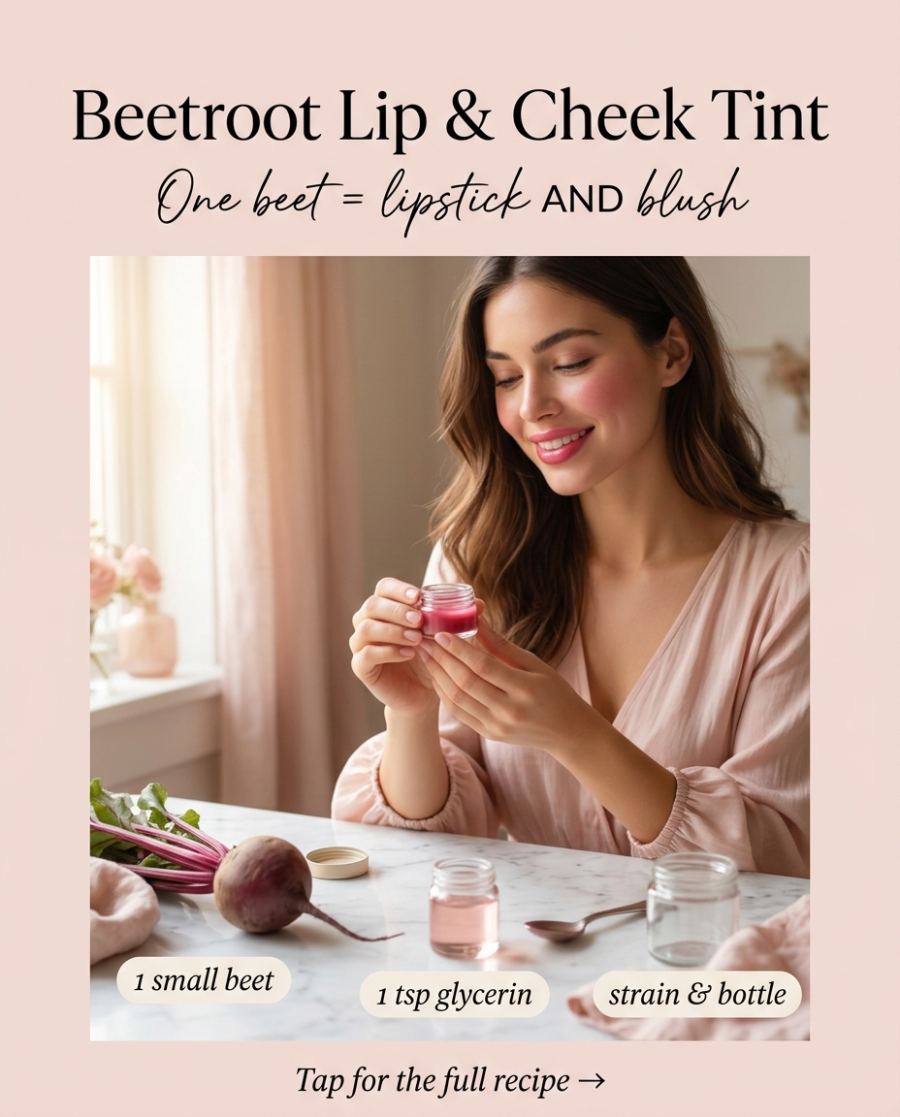
- 1 small beet
- 1 tsp glycerin
- strain & bottle
- Grate the beet finely and press out the juice.
- Simmer the juice 5 minutes to thicken slightly; cool.
- Stir in glycerin and bottle with a dropper.
- Dab a drop on lips and cheekbones and blend fast.
Beetroot owes its colour to betalains, water-soluble pigments intense enough that a single drop reads as a genuine flush on skin. Because the pigment lives in the juice rather than the flesh, grating and pressing releases nearly all of it without any added dye.
The brief simmer does two jobs at once. It reduces the water content so the tint stays where you place it instead of running towards your chin, and it thickens the texture just enough to blend like a cream stain rather than a watercolour.
Glycerin is the quiet workhorse of the pair. As a humectant it draws water towards the skin, so lips stay comfortable under the colour instead of tightening as the juice dries. It also acts as a light fixative, helping the pigment cling evenly and slowing the fade through the day. Together they behave surprisingly like a commercial stain — pigment suspended in a hydrating, slightly viscous base.
The classic error is applying this like lipstick — a generous swipe, then blending at leisure. Beet pigment sets almost immediately, so a slow hand leaves a hard-edged magenta patch that no amount of rubbing will soften. Work one small drop at a time, tap it out with your ring finger within about five seconds, and build depth in thin layers rather than one bold pass. Cheeks first, lips second, since lips forgive edges more.
Made right, the tint is a thin, silky liquid the colour of pomegranate juice, with a faintly earthy, sweet smell. On skin it dries down to a soft, diffused rosiness with no visible edges. If it turns dull brown, smells sour or slightly fizzy, or separates into cloudy layers in the bottle, the batch has turned — pour it away and start again.
- 1 tsp glycerin → 1 tsp aloe gel you want a lighter, less glossy finish that suits cheeks better than lips
- a fresh beet → 1 tsp beetroot powder whisked into 2 tbsp warm water fresh beets are out of season — skip the grating and go straight to the simmer
- the dropper bottle → a clean rollerball bottle you mostly wear it on cheeks and want quick, one-handed dabbing
If your lips are cracked or freshly exfoliated, the pigment can settle into fine lines and sting a little, so wait until they have calmed. Beetroot also stains — skin briefly, fabric and pale worktops rather permanently — so keep it well away from white collars. If your skin is sensitive or reactive, patch test a dab inside the elbow for 24 hours first.
This is a daytime finisher rather than a treatment, so it slots in after moisturiser and before any powder — most people reach for it on no-makeup mornings. Wear it as often as you like; there is nothing here that needs a rest day. Just avoid layering it directly over facial oils, which stop the stain from gripping and make it slide unevenly.
How strong is the colour?
Build it drop by drop — one is a whisper, three is a statement.
Will it last all day?
A few hours like most natural tints — reapply from the cute little bottle.
Can I make the colour deeper for a berry lip?
Yes — extend the simmer by a few extra minutes so the juice reduces further, or simply layer the finished tint in two or three thin passes, letting each set before the next. Layering gives more control than a stronger brew, because you can stop the moment the depth pleases you.
Will it stain my teeth or transfer onto cups?
Once the tint has set — give it a minute — it behaves like a stain rather than a lipstick, so transfer onto cups is minimal. Teeth are safe as long as you apply to the outer lip and blot once. Avoid pressing your lips together heavily straight after applying, before it has dried down.
Can I use shop-bought beetroot juice instead of pressing my own?
You can, provided it is pure pressed juice with no vinegar or citrus added — pickled beet juice smells exactly as you would fear on lips. Shop juice tends to be more dilute, so simmer it a minute or two longer to reach the same slightly thickened consistency before stirring in the glycerin.