Cranberry Lip Shine
✨ Holiday lips without the lipstick
Crushed cranberries strained into coconut oil — holiday-red shine without lipstick.
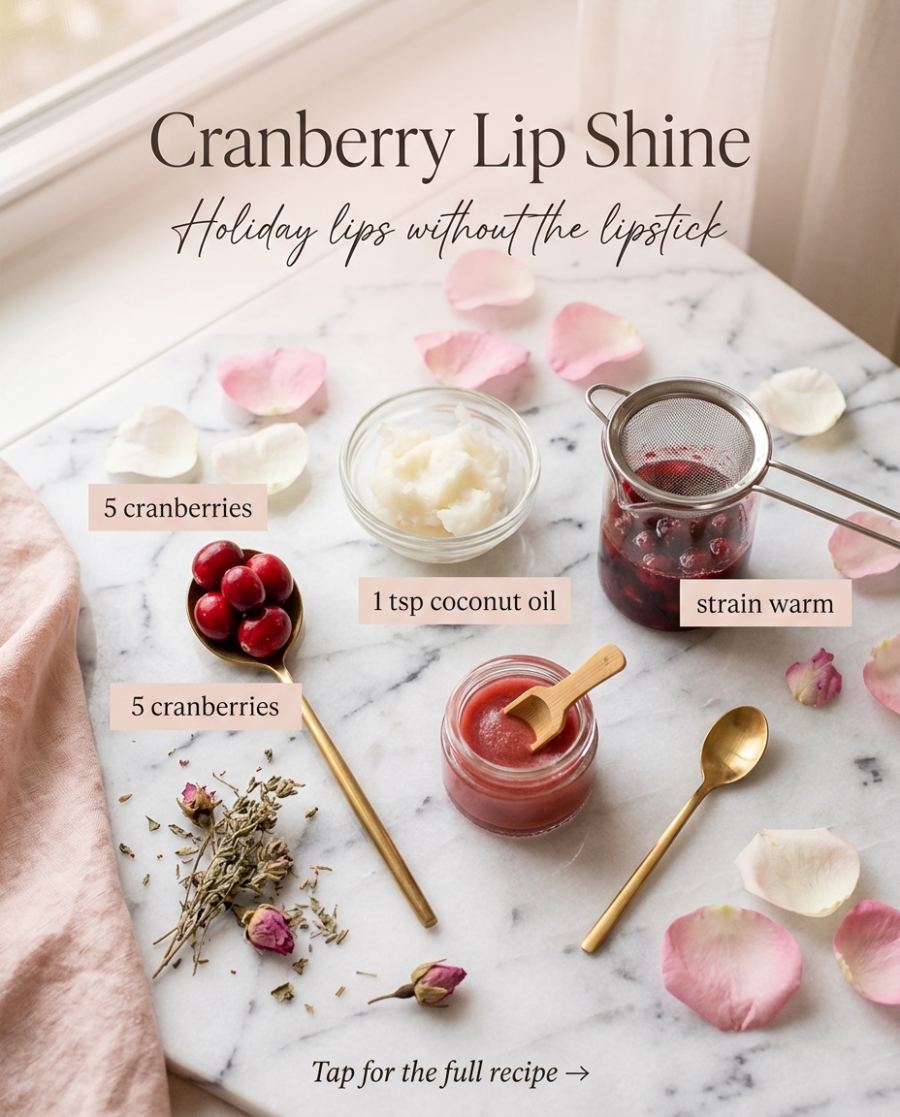
- 5 cranberries
- 1 tsp coconut oilno coconut oil? use olive oil
- Warm coconut oil gently with crushed cranberries.
- Let the colour steep 5 minutes off heat.
- Strain into a tiny pot; let it set.
- Sweep on for tinted shine.
Coconut oil does two jobs here. Its fatty acids — lauric acid chief among them — melt just below body temperature, so the finished balm sets firm in the pot yet glides on as a thin, glossy film the moment it touches lips. That film matters, because lip skin has no oil glands of its own and loses moisture faster than the rest of the face.
The cranberries supply the colour. Their skins are dense with anthocyanins, the red-violet pigments that also tint red cabbage and blackberries. Gentle warmth coaxes them into the oil; five minutes of steeping gives a sheer wash, longer gives something deeper. Crushing the berries first ruptures the cell walls so the pigment can actually escape.
Straining while warm is quieter but just as important. It removes fruit pulp and water droplets — the parts that spoil quickly — leaving only tinted oil behind, which is what lets a fresh-fruit balm last a full fortnight.
The classic error is leaving the pan on the heat for the whole steep. Cranberry pigments are fragile; simmering turns the shade brownish and can scorch the oil's sweet scent. Warm the coconut oil only until liquid, crush in the berries, then move the pan off the hob and let residual warmth do the steeping. And if flecks of pulp slip through, strain a second time — stray fruit is what shortens the shelf life.
Set properly, it is a firm, faintly rosy balm that melts the instant a fingertip touches it, smelling of coconut with the barest tart edge. On lips it reads as sheer berry shine, never opaque colour. Cloudy patches, weeping droplets, or a sour, winey smell mean water crept past the strainer — discard that pot and make a fresh one.
- 1 tsp coconut oil → 1 tsp shea butter you have a coconut allergy, or want a firmer balm that survives a warm handbag
- 5 cranberries → 5 raspberries you'd rather a soft pink flush than holiday red — steep them exactly the same way
- 5 cranberries → a spoonful of pomegranate seeds cranberries are out of season and you still want that sheer ruby tone
Anyone with a coconut allergy should go straight to the shea version, and those prone to cold sores may prefer to wait until lips are fully settled, since fruit acids can tingle on compromised skin. Very cracked or bleeding lips will notice the tartness too. Smooth a trace inside your wrist and wait a day — a simple patch test settles it.
Treat it as your everyday gloss — mornings, touch-ups, and a thicker layer at bedtime as an overnight lip mask. It sits happily over lip liner or nothing at all. If you do a weekly lip scrub, apply this straight afterwards while lips are smooth, then go gently the next day; freshly buffed lips notice the berry tartness more.
Frozen cranberries?
Thawed, yes — crush while slightly icy for the most juice.
Will it stain lips?
A soft flush, not a stain — reapply like any gloss.
Can I scale the recipe up?
You can double it, but resist a big batch — the two-week shelf life doesn't stretch, and five cranberries to a teaspoon of oil is the ratio that keeps the tint even. Two small pots made a fortnight apart will always beat one large one going soft in a drawer.
Why has my balm gone grainy?
Coconut oil crystallises unevenly when it cools too slowly, leaving a sandy texture. It is harmless and melts on lips, but if it bothers you, stand the pot in warm water until fully liquid again, then set it in the fridge — quick, even cooling keeps it smooth.
Is it a problem that I'll end up eating some?
The ingredients all come from the kitchen, so traces are nothing to worry about — that said, treat it as a cosmetic rather than a snack. If you tend to lick your lips often, you will simply need to reapply more, exactly as with any bought gloss.