Cocoa Glow Face Mask
✨ Chocolate your skin is allowed to love
Chocolate for your face — antioxidant cocoa whipped with honey and cream.
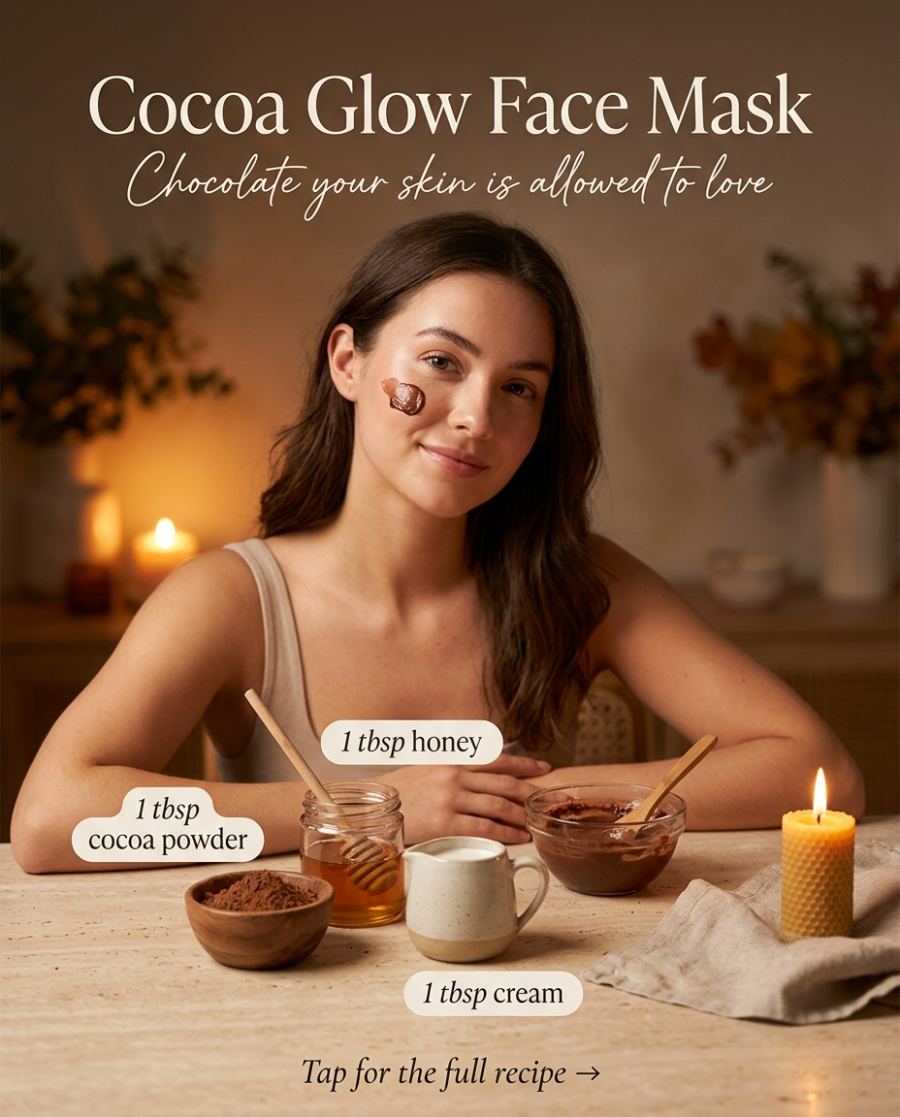
- 1 tbsp cocoa powder
- 1 tbsp honeyno honey? use maple syrup
- 1 tbsp heavy cream
- Whisk everything into a chocolate silk.
- Smooth over clean skin.
- Rest for 10 delicious-smelling minutes.
- Rinse warm and admire the softness.
Cocoa powder earns its place through polyphenols — the same family of plant antioxidants celebrated in green tea. Antioxidants are prized in skincare because they may help offset the everyday oxidative stress that leaves a complexion looking flat, and unsweetened cocoa happens to be one of the richest common sources in your kitchen. It also gives the mask its velvet slip and that frankly unfair scent.
Honey pulls against dryness from the other direction. A natural humectant, it attracts and holds water at the skin's surface, so the mask hydrates while it rests rather than simply sitting on top. It is also why honey masks tend to rinse away leaving skin supple instead of stripped.
Heavy cream is the comfort layer. Its milk fats cushion and soften much as a rich moisturiser does, and the trace of lactic acid that all dairy carries offers the gentlest whisper of surface smoothing. Whisked together, the three land somewhere between skincare and patisserie — deliberately so.
Where this one goes wrong is at the cupboard, not the bowl: people grab drinking chocolate or instant cocoa mix instead of pure unsweetened cocoa powder. Those tins are mostly sugar and milk powder, which turn the mask gritty, sticky and far too sweet to sit on pores for ten minutes. Check the label reads one ingredient — cocoa — before you measure your tablespoon, and the rest of the recipe forgives almost anything.
Whisked properly, it looks like glossy chocolate ganache and smells like brownie batter — thick enough to cling to a fingertip held upside down. On skin it should feel cool, dense and slightly tacky as it settles. If it slides or drips, the cream was over-measured; if it feels grainy, your cocoa was sweetened. Neither belongs on your face.
- 1 tbsp heavy cream → 1 tbsp full-fat Greek yoghurt In warm weather, or when you fancy a lighter, fresher-feeling version with a gentle tang.
- 1 tbsp honey → 1 tbsp maple syrup For a plant-based bowl — it keeps the humectant sweetness, though it sits a little thinner.
- 1 tbsp cocoa powder → 1 tbsp raw cacao powder If you already keep it for smoothies — same measure, and it brings its polyphenols along.
Skip this entirely with a dairy or cocoa allergy — both are front and centre here. Skin that breaks out easily around the mouth and chin may prefer the yoghurt version, as rich cream can feel heavy there. Whatever your skin type, smooth a coin-sized patch along your jaw the day before and see how it settles.
This is an evening mask by temperament — after cleansing, before your night moisturiser, ideally on a slow night when ten minutes of chocolate-scented stillness is the point. Keep it off the same evening as scrubs, acid toners or strong actives; a pampering mask works best on skin that has not just been busy with something else.
Can this cause breakouts?
Not usually — cocoa is antioxidant-rich. If you're dairy-reactive, swap the cream for coconut cream.
How often?
1–2 times a week, ideally on a cosy evening.
Will it stain my towels or hairline?
Cocoa rinses from skin without a trace, but it can leave brown marks on pale towels and cling to baby hairs. Use a dark flannel for removal, push your hair well back under a band, and rinse at the basin rather than dabbing — most of it should end up down the drain, not on the laundry.
Does it matter if my cocoa is Dutch-processed or natural?
Not much. Natural cocoa is a touch more acidic and slightly lighter in colour; Dutch-processed whisks up smoother and darker. Both carry the polyphenols that make the mask worthwhile. The only rule that truly matters is unsweetened — one ingredient on the label.
Can I extend it down my neck and chest?
Beautifully, yes — the neck and chest are usually drier than the face and take to honey and cream well. Mix one and a half times the quantities rather than saving leftovers, since cream-based masks must be made fresh each time. Rinse warm, exactly as you would the face.