Hibiscus Hair Tea Rinse
✨ The flower rinse for mirror-shine hair
Deep-red hibiscus tea poured through hair as a final rinse — shine you can photograph.
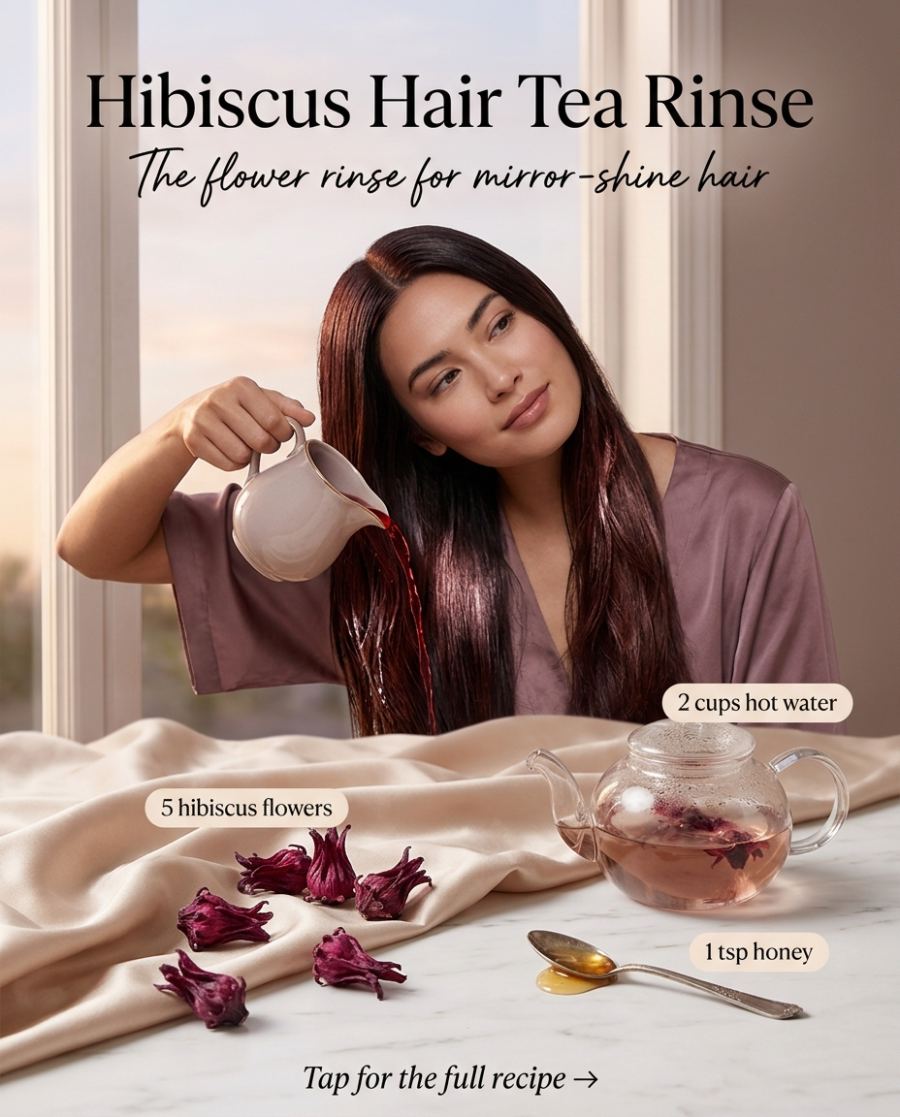
- 5 hibiscus flowers
- 2 cups hot water
- 1 tsp honeyno honey? use maple syrup
- Steep hibiscus flowers in hot water 10 minutes.
- Cool completely and stir in honey.
- After shampooing, pour slowly through hair as the last rinse.
- Do not rinse out — towel gently and air-dry.
A hibiscus rinse works mostly through pH. The petals steep into a naturally acidic tea, and slightly acidic water encourages the hair cuticle — the overlapping scales along each strand — to lie flat. Flat cuticles reflect light evenly, and evenly reflected light is all shine really is. It is the same logic behind old-fashioned vinegar rinses, delivered with considerably more romance.
Those petals also release anthocyanins, the pigments behind the stained-glass red, which bring antioxidant activity along for the ride, plus a trace of natural mucilage that lends slip and softness as the tea moves through your lengths.
Honey, dissolved to a whisper across two cups of tea, acts as a diluted humectant — enough to help hair hold a little moisture as it air-dries, never enough to turn sticky. The dilution is the trick; honey used neat on hair is a very different story.
Impatience with the cooling is what spoils this rinse. Poured warm, the tea encourages the cuticle to stay lifted — warmth opens, coolness closes — so you cancel the very shine you brewed it for, and warm honey-water trickling down your neck is nobody's idea of a ritual. Let the tea reach genuinely room-cool, or fridge-cold, before it touches your hair; brewing it before you even step into the shower times things perfectly.
The brew should be a deep, clear ruby — properly jewel-toned — with a tart, cranberry-ish scent. Hair feels smoother and slightly tighter as it dries, then settles into a soft, glassy finish. If strands dry sticky or tacky in patches, the honey was not fully dissolved; next time stir it into barely warm tea, then cool completely.
- 5 hibiscus flowers → 2 pure hibiscus tea bags loose flowers are hard to find — check the label reads hibiscus only, not a fruit blend
- 5 hibiscus flowers → a handful of chamomile flowers you are very light blonde and wary of a pink tint — you trade the red for gold
- 1 tsp honey → 1 tsp aloe gel your hair is fine and easily weighed down, or dries tacky even with well-dissolved honey
Very light blonde, bleached or highly porous hair takes up the pink tint most readily, so strand-test somewhere hidden before a full pour. Anyone with a sensitive scalp or known plant allergies should be measured too — hibiscus is food-grade, but scalps have opinions. Patch test a little cooled tea on the inner arm and behind one ear first.
Make it the closing note of one or two wash days a week — always the final step, after conditioner has been rinsed, never before shampoo. Skip it on deep-conditioning or oil-treatment days, when heavier products deserve the last word. Evening washes suit it best, giving hair time to air-dry gently rather than meeting a hot dryer straight after.
Fresh or dried flowers?
Both work — dried from the tea aisle is easiest.
How often?
Once or twice a week for steady shine.
Can I brew it stronger for more effect?
Stronger tea mostly means deeper colour, not dramatically more shine — the acidity you are after arrives at normal strength. Doubling the flowers is harmless fun on dark hair, but on lighter shades it raises the odds of a tint, and steeping far past ten minutes just turns the brew bitter-smelling.
Can I keep leftover tea for the next wash?
It is best brewed fresh, as both the colour and the acidity fade noticeably. If life intervenes, the plain tea holds for a day covered in the fridge — sniff it and discard anything dull or off-smelling. Stir the honey in only on the day you use it, so nothing ferments in between.
Will it suit colour-treated hair?
The acidity that flatters natural hair tends to suit coloured lengths too, since flat cuticles help dye look glossier rather than dulled. That said, dyes vary — fashion reds and pastels especially — so pour a little through one hidden section and let it dry fully before you trust a whole head to the rinse.