Rice Water Silk Toner
✨ The 1000-year-old secret to glass skin
The centuries-old secret — cloudy rice water for glass-smooth skin.
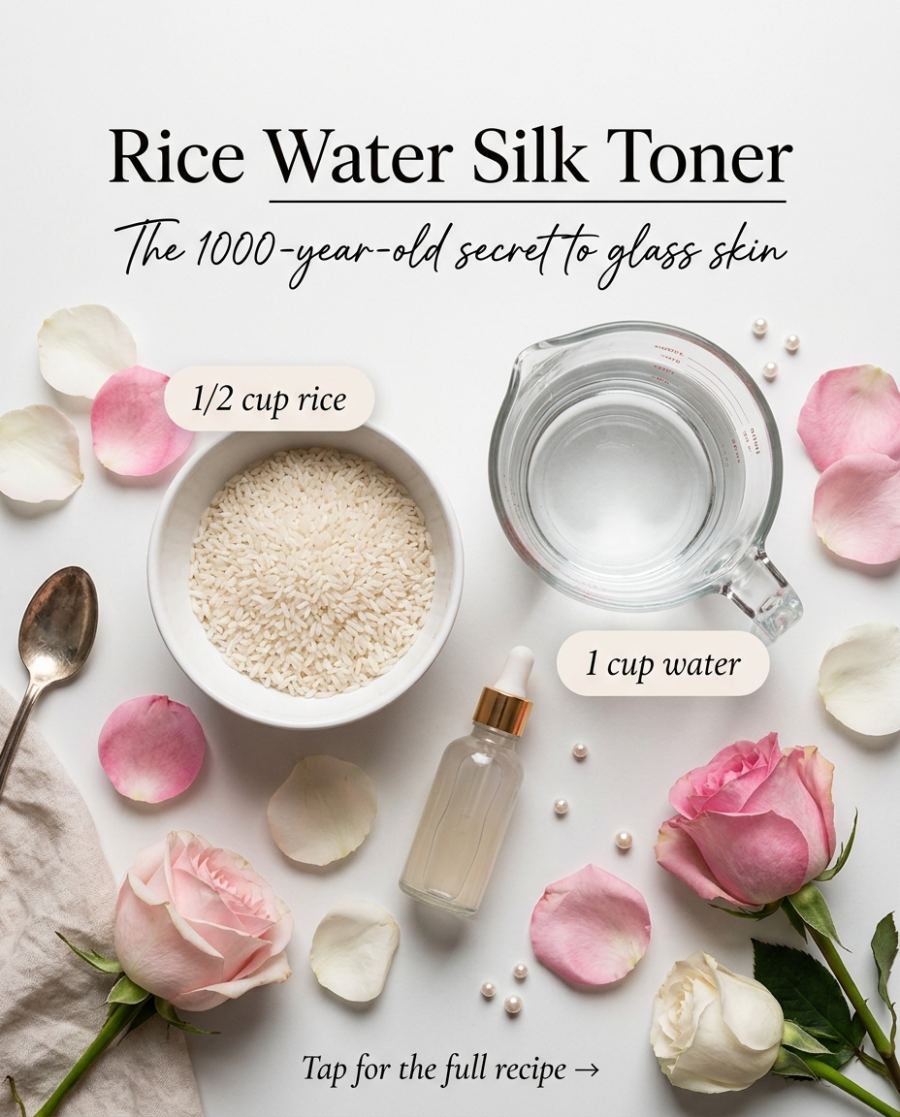
- ½ cup rice
- 1 cup filtered water
- Rinse the rice once, then soak in the water 30 minutes.
- Swirl until the water turns softly cloudy.
- Strain into a clean bottle.
- Press onto skin with a cotton pad.
The cloudy swirl you strain off is mostly rice starch, and starch is quietly useful on skin. It settles into a fine, breathable veil that leaves the surface feeling smoother and softer to the touch — which is where the glass-skin effect really comes from. It is a texture trick more than a treatment, and that is exactly why it suits almost everyone.
Beneath the starch, the soak picks up traces of amino acids, B vitamins and inositol from the grain. These are small, water-loving molecules that sit comfortably on the skin and tend to support a supple, hydrated feel. None of them are dramatic actives; their charm is that they ask nothing of your skin barrier in return.
The filtered water earns its place too. Tap water carries chlorine and minerals that vary by postcode, and because this toner has no preservative, starting clean gives you a purer soak and a slightly more predictable few days in the fridge.
Leaving the bottle out on the bathroom shelf. Rice water is essentially a light starch broth, and at room temperature it begins to ferment within a day — you have accidentally made the strong version, and it can sting. Strain it, bottle it and refrigerate it straight away, then bring out only what you need. If it ever smells sour rather than faintly starchy, that batch is done.
Made right, it looks like very weak milk — a soft, translucent white that settles if left standing, which is why you shake it. The scent is barely there: clean, faintly sweet, a little like rinsed grain. On skin it feels like slightly silky water. A sour, tangy smell or a fizzy look means fermentation has started — discard and begin again.
- Filtered water → Boiled tap water, fully cooled You do not keep filtered water at home — boiling drives off most of the chlorine and gives a similarly clean base.
- A fresh 30-minute soak → The cloudy water saved from rinsing rice before cooking You cook rice anyway and dislike waste — it is a touch milder, so it suits first-timers.
- Cotton pad → Clean cupped hands, pressed gently over the face You want zero waste, or pads feel draggy on reactive skin.
If your breakouts flare with starchy or occlusive products, introduce this slowly — some congestion-prone skins prefer it a few nights a week rather than daily. Anyone with a known grain sensitivity, or skin that reacts to most new products, should be extra careful. Try it on the inner arm for a day or two first — a simple patch test settles the question.
Use it the way you would any gentle toner: after cleansing and before moisturiser, morning or evening, as often as daily. It layers happily under serums and creams. On nights you use a strong exfoliating acid, let the toner be your only extra step — skin rarely wants both. Batch on Sunday and you are set for most of the week.
Plain or fermented rice water?
Start plain (this recipe). Fermented is stronger — try it after 2 weeks if your skin loves the plain version.
Can I use it on my hair too?
Yes! Pour it through after shampooing as a shine rinse — a centuries-old trick.
Should I rinse it off after applying?
No — it is a leave-on step. Press it in with the pad, wait a minute or two until the skin feels dry-ish, then follow with your usual moisturiser. Rinsing would wash away the fine starch film that gives the smooth finish.
Does the type of rice matter?
Not much. White short-grain and jasmine give the classic milky water; brown rice soaks a little slower and smells nuttier. Whatever you cook with is fine — just rinse it once first to lift off surface dust before the proper soak.
Can I keep it in a spray bottle instead?
Yes, and it makes a lovely midday refresh over or under makeup. Keep the bottle in the fridge between uses, shake before misting, and stick to the same 4–5 day life — the format changes, the shelf life does not.